


Table of Contents
- What Makes a Watch Affordable Luxury?
- Quick Comparison: 7 Affordable Luxury Watches for Men
- The Sango 878 Collection: Automatic Watches for Men
- The Pharaoh Collection: Men's Luxury Watches Under $500
- Sapphire Crystal Watches: Scratch Resistance That Lasts
- Stainless Steel Watches for Men: Build Quality and Durability
- Automatic vs. Quartz: Which Movement Fits Your Routine?
- Cost Per Wear and Long-Term Value
- Frequently Asked Questions
Last Updated: October 19, 2026
What Makes a Watch Affordable Luxury?
Affordable luxury watches for men sit in a narrow band where materials, movement quality, and finishing stop being compromises and start being deliberate choices.
What most buyers get wrong is chasing a logo instead of a specification. A timepiece with a solid steel case and a sapphire crystal will outlast one with a famous name and mineral glass.
Quick Comparison: 7 Affordable Luxury Watches for Men
Every model shares the same core build standards and a two-year warranty, so the differences come down to movement, finish, and color.
| Watch | Price | Movement | Colorway | Best For |
|---|---|---|---|---|
| The Sango 878 Crimson Dawn | $369 | Automatic (Seiko NH38) | Rose gold | Warm-toned everyday wear |
| The Sango 878 Gunmetal Eclipse | $369 | Automatic (Seiko NH38) | Gunmetal and silver | Understated office wear |
| The Sango 878 Midnight Current | $369 | Automatic (Seiko NH38) | Blue and gold | Dressing up |
| The Thutmos3 | $309 | Quartz | Black | Bold, low-maintenance wear |
| The Xerxes | $289 | Quartz | Silver | Clean corporate look |
| The Tutankhamun | $319 | Quartz | Gold | Refined formal wear |
| The Djoser | $289 | Quartz | Rose gold | Entry point into the collection |
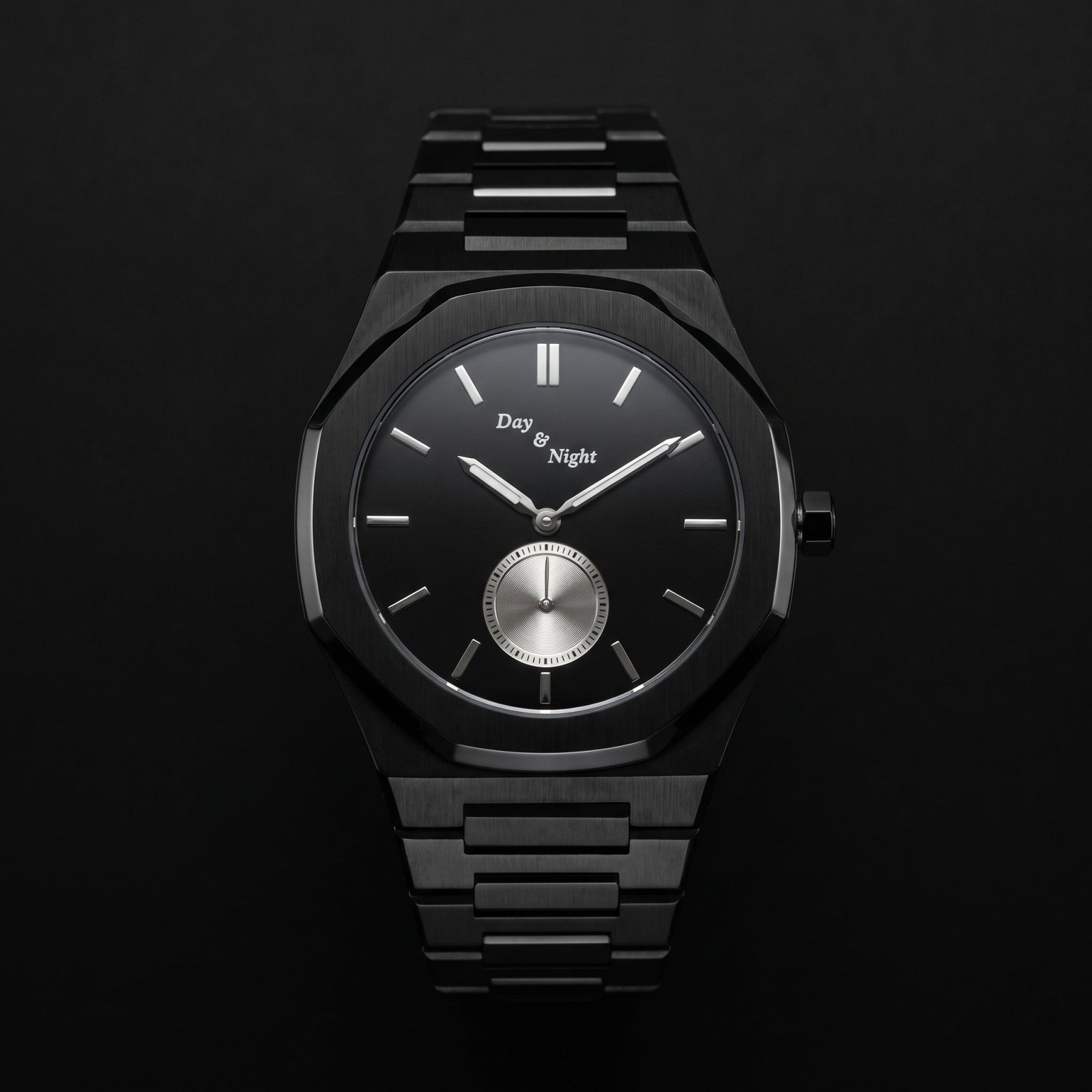
The Sango 878 Collection: Automatic Watches for Men
The Sango 878 is where automatic watches for men stop being a compromise. Each model runs on the Seiko NH38, a caliber with a long reliability record and a power reserve that carries you through a weekend off the wrist.
Three colorways, one platform:
- The Sango 878 Crimson Dawn brings a rose gold finish that reads warm without tipping into flash.
- The Sango 878 Gunmetal Eclipse pairs a gunmetal case with silver tones for a quieter, more technical look.
- The Sango 878 Midnight Current sets a blue dial against gold for the most formal of the three.
All three are rated to 100 meters of water resistance, enough for rain, handwashing, and a swim, with a 316L stainless steel case and a sapphire crystal.
The Sango 878 Crimson Dawn
The Crimson Dawn is the warmest of the trio and the easiest to wear with brown leather, tan boots, and earth-toned tailoring. The rose gold case catches light without shouting, and the NH38 means no battery to think about. At $369, it is the one we would hand to someone who wants a single watch to do everything.
The Sango 878 Gunmetal Eclipse
Gunmetal suits people who find silver too bright and black too severe. It sits between them, making the Gunmetal Eclipse the most versatile of the three for a desk job, pair it with a gray suit or a plain oxford shirt and it disappears in the right way.
The Sango 878 Midnight Current
Blue and gold reads as deliberate. The Midnight Current is the dress watch of the collection, correct with a navy suit at a dinner you did not organize, with the same NH38 movement, sapphire crystal, and 100-meter rating.
The Pharaoh Collection: Men's Luxury Watches Under $500
If you want a watch you can pick up and wear without thinking, quartz is not a downgrade. The Pharaoh Collection delivers men's luxury watches under $500 with a precision quartz movement, 316L stainless steel construction, and 50 meters of water resistance.
The Thutmos3: Bold Black Quartz
The Thutmos3 is the statement piece of the Pharaoh line. A black dial on a stainless steel bracelet gives it strong wrist presence with casual wear and a black jacket. At $309, it is the version to choose if you want the watch noticed.
The Xerxes: Clean Silver Quartz
The Xerxes is the most neutral watch in this guide: silver case, clean dial, quartz movement, $289. If you own one watch and need it to work with everything from a polo shirt to a charcoal suit, this is it.
The Tutankhamun: Refined Gold Quartz
Gold on a stainless steel case is a balancing act, and the Tutankhamun keeps it tasteful. The finish is refined rather than bright, appropriate for formal occasions without looking like costume jewelry. $319.
The Djoser: Rose Gold Quartz
The Djoser closes the collection at $289 with a rose gold finish and sharp dial detailing, the natural first step into the Pharaoh line for anyone who wants warmth in the case but prefers quartz simplicity.
Sapphire Crystal Watches: Scratch Resistance That Lasts
Sapphire crystal watches solve the most common failure point on a daily-worn timepiece. Mineral glass picks up hairline scratches within months; sapphire resists nearly everything short of diamond, which is why every watch we make uses it.
The practical test is simple: run a steel key across a mineral crystal and you will leave a mark; do the same to sapphire and the crystal wins.
Stainless Steel Watches for Men: Build Quality and Durability
Stainless steel watches for men live or die on the alloy grade. We use 316L, the same grade as surgical instruments, because it resists corrosion from sweat and salt water far better than cheaper alloys.
Build quality shows in the small things: how the bracelet articulates, whether the end links sit flush, whether the deployment clasp snaps with authority.
Automatic vs. Quartz: Which Movement Fits Your Routine?
Automatic wins on horology and heritage; quartz wins on convenience and accuracy. Neither is better in the abstract, the answer depends on how you wear a watch, how often you service it, and what you want it to mean ten years from now.
How an Automatic Movement Actually Works
Inside an automatic watch, a weighted rotor spins with wrist motion and winds the mainspring, which releases energy through a gear train to the escapement. The Seiko NH38 in The Sango 878 is a 24-jewel automatic with roughly 41 hours of power reserve and typically lands within about -20 to +40 seconds per day, normal for an entry-level mechanical caliber.
The trade-off is attention. An automatic that sits in a drawer for a week will stop and need resetting, and it needs periodic servicing, cleaning and re-oiling, every five to seven years for a daily-worn watch.
How a Quartz Movement Actually Works
A quartz watch runs on a battery that sends current through a quartz crystal vibrating at a stable frequency, typically 32,768 times per second, and a circuit counts those vibrations to drive the hands.
The trade-off is character and longevity. A quartz movement is sealed and generally replaced rather than serviced when it fails, and the battery needs changing every two to three years.
The Ownership Math
| Factor | Automatic (The Sango 878) | Quartz (The Pharaoh Collection) |
|---|---|---|
| Accuracy | About -20 to +40 seconds/day | About 15 seconds/month |
| Power source | Wrist motion, ~41-hour reserve | Battery, 2-3 year life |
| Service need | Cleaning and re-oiling every 5-7 years | Battery replacement; movement replaced if it fails |
| Daily routine | Reset after days off the wrist | Pick up and go |
| Character | Sweeping second hand, mechanical feel | Precise, low-maintenance |
- Choose automatic if you wear the same watch most days, enjoy the sweep of a mechanical second hand, and want a movement with a power reserve that rewards regular wear. The Sango 878 is built for this buyer.
- Choose quartz if you rotate watches, travel often, or simply want to pick a watch up after two weeks and find it still keeping time. The Pharaoh Collection is built for this buyer.
Cost Per Wear and Long-Term Value
The number that matters is not the sticker price but cost per wear: purchase price divided by the days you actually wear the watch. A $369 automatic worn four days a week for five years lands under a dollar a day, and keeps falling. But cost per wear is only honest if you include post-sale costs, servicing, batteries, repairs, which most buying guides leave out.
The Full Ownership Math
Take The Sango 878 at $369, worn four days a week. Over five years that is roughly 1,040 wear days, or about $0.35 per wear before maintenance.
Now compare a quartz model from The Pharaoh Collection at $289. Over the same five years you will replace the battery once or twice, and the movement is generally replaced rather than serviced if it fails.
| Cost Category | The Sango 878 (Automatic) | The Pharaoh Collection (Quartz) |
|---|---|---|
| Purchase price | $369 | $289-$319 |
| Routine service | Cleaning and re-oiling every 5-7 years | Battery every 2-3 years |
| Failure mode | Serviceable; parts in production | Movement replaced, not repaired |
| Warranty | Two years | Two years |
| Longevity | Decades with service | Until the movement fails |
Why Serviceability Is the Real Value Test
A watch with a sapphire crystal and a serviceable movement can be worn for decades; one with mineral glass and a sealed movement gets replaced.
This is where the value proposition of a well-built watch separates from a cheap one. A $60 fashion watch worn daily for two years costs about eight cents a day, until the crystal scratches, the plating wears through, and it is thrown away.
The Secondary Market Angle
Most guides focus on retail, but the secondary market changes the math for affordable luxury. A well-maintained automatic with a serviceable movement holds residual value far better than a quartz fashion watch, because a buyer can verify the caliber, crystal, and case alloy. That resale floor is part of the true cost of ownership.
That is the case for treating a timepiece as a milestone purchase rather than a fashion one. A watch you wear daily becomes a record of the years you wore it, and the math above is how you make sure those years are affordable. If you are ready to start, you can take 10% off Your First Timepiece to make that first milestone a little easier on the budget.
Frequently Asked Questions
What features make a watch feel luxurious without a high price?
Focus on materials and construction rather than branding. Sapphire crystal resists scratches far better than mineral glass, and 316L stainless steel cases hold their finish over years of daily wear. A reliable movement, whether automatic like the Seiko NH38 in The Sango 878 or a precise quartz caliber, matters more than a logo. Look for solid end links, smooth bezel action, and clean dial printing. These details separate affordable luxury watches from cheap fashion pieces and keep the watch looking sharp long after purchase.
Are automatic watches better than quartz watches?
Neither is inherently better; they suit different routines. Automatic watches for men, such as The Sango 878 collection, use a mechanical movement powered by wrist motion and appeal to enthusiasts who value craftsmanship and a sweeping seconds hand. Quartz watches, like The Pharaoh Collection, are more accurate, need only a battery change every few years, and handle irregular wear without stopping. If you wear a watch daily and appreciate mechanical character, go automatic. If you want set-and-forget reliability, quartz is the practical choice.
Can an affordable luxury watch work for everyday wear?
Yes, provided the materials hold up. Sapphire crystal watches resist scratches from keys, desks, and outdoor tasks, while 316L stainless steel cases and bracelets tolerate daily knocks. Water resistance matters too: The Sango 878 offers up to 100 meters, enough for swimming and showers, while The Pharaoh models at 50 meters suit handwashing and rain. A two-year warranty adds peace of mind. For everyday wear, prioritize scratch resistance, a comfortable bracelet or strap, and a versatile dial color.
What should I look for in a stainless steel watch for men?
Check the steel grade first: 316L stainless steel resists corrosion and holds a polish well. Examine the bracelet for solid links and a secure clasp, since hollow links rattle and wear faster. Case finishing should be even, with crisp transitions between brushed and polished surfaces. Also confirm water resistance ratings and crystal type, as sapphire crystal watches offer far better scratch protection than mineral glass. These build details determine how a stainless steel watch for men ages over five to ten years of daily use.


Leave a comment