


Table of Contents
- Water Resistant Watches for Swimming Daily: What Actually Holds Up
- Watch Water Resistance Ratings Explained
- Best Watches for Swimming: Selection Criteria That Matter
- 100m Water-Resistant Watches: What That Tier Really Delivers
- Movement and Ownership: Automatic vs Quartz for Daily Pool Use
- Fit, Comfort and Dress-Code Reality for All-Day Wear
- How to Care for a Watch After Swimming
- Common Mistakes That Kill Water Resistance
- Frequently Asked Questions
Last Updated: October 19, 2026
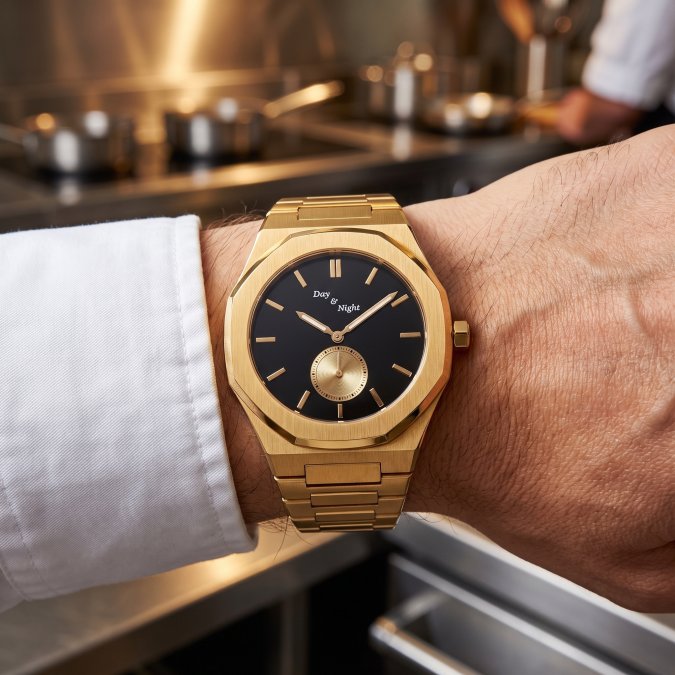
Water Resistant Watches for Swimming Daily: What Actually Holds Up
Water resistant watches for swimming daily live or die on one number: the rating stamped on the caseback. At Day & Night Watch Co., we've watched buyers fixate on movement and dial color while ignoring the spec that decides whether a watch survives a year of chlorinated laps. According to ISO 22810 water resistance standard overview, a watch's rating describes tested conditions, not a permanent guarantee, and gaskets age. That distinction matters more than any single feature.
Below, we break down how ratings actually work, which tiers survive daily swimming, and the maintenance habits that keep a watch sealed. Most guides skip the last part entirely, and it's the part that determines whether your watch is still waterproof next summer.
Watch Water Resistance Ratings Explained
Water resistance is a measure of how much static pressure a watch case can withstand in testing, not a depth rating for real swimming. A 50-meter rating does not mean you can dive 50 meters. It means the case passed a static pressure test equivalent to that depth, with no arm movement involved.
Ratings scale in tiers:
- 30 meters: splash and rain only
- 50 meters: light swimming at the surface, with caution
- 100 meters: swimming and snorkeling
- 200 meters and up: diving and water sports
Why 50 Meters Is Not a Swimming Rating
A 50-meter watch can handle a pool session, but the margin is thin. Arm strokes generate dynamic pressure spikes well beyond static test conditions, and a worn gasket erodes that margin further. The Federal Trade Commission guidance on accurate product claims applies here in spirit: a rating should mean what a reasonable buyer expects. For daily swimming, treat 50 meters as a floor, not a target.
Best Watches for Swimming: Selection Criteria That Matter
The best watches for swimming share four traits: a screw-down crown, fresh gaskets, a solid caseback, and a rating of at least 100 meters. Skip any one and the others matter less.
Screw-Down Crowns, Gaskets and Casebacks
The crown is the weakest point on any case. A push-pull crown relies on a single O-ring; a screw-down crown threads into the case and compresses its gasket under tension. Casebacks follow the same logic: threaded or screw-in backs seal better than snap-on backs. Gaskets, usually rubber or silicone, are the real heroes and the first parts to fail. They dry out, crack, and lose elasticity with age and chlorine exposure.
Criterion |
Why It Matters |
Minimum Standard |
|---|---|---|
Rating |
Static pressure tolerance |
100 meters |
Crown |
Primary water entry point |
Screw-down |
Caseback |
Secondary seal |
Threaded or screw-in |
Gaskets |
Wear item, seals everything |
Replaced at service |
Crystal |
Seal integrity under pressure |
Sapphire, properly set |
100m Water-Resistant Watches: What That Tier Really Delivers
100m water-resistant watches are the sweet spot for daily swimmers. That tier handles pool laps, open-water swims, and showering without drama, while staying slim enough for office wear. It's also where case design improves: thicker gaskets, better crown threading, and more strong crystal seating.
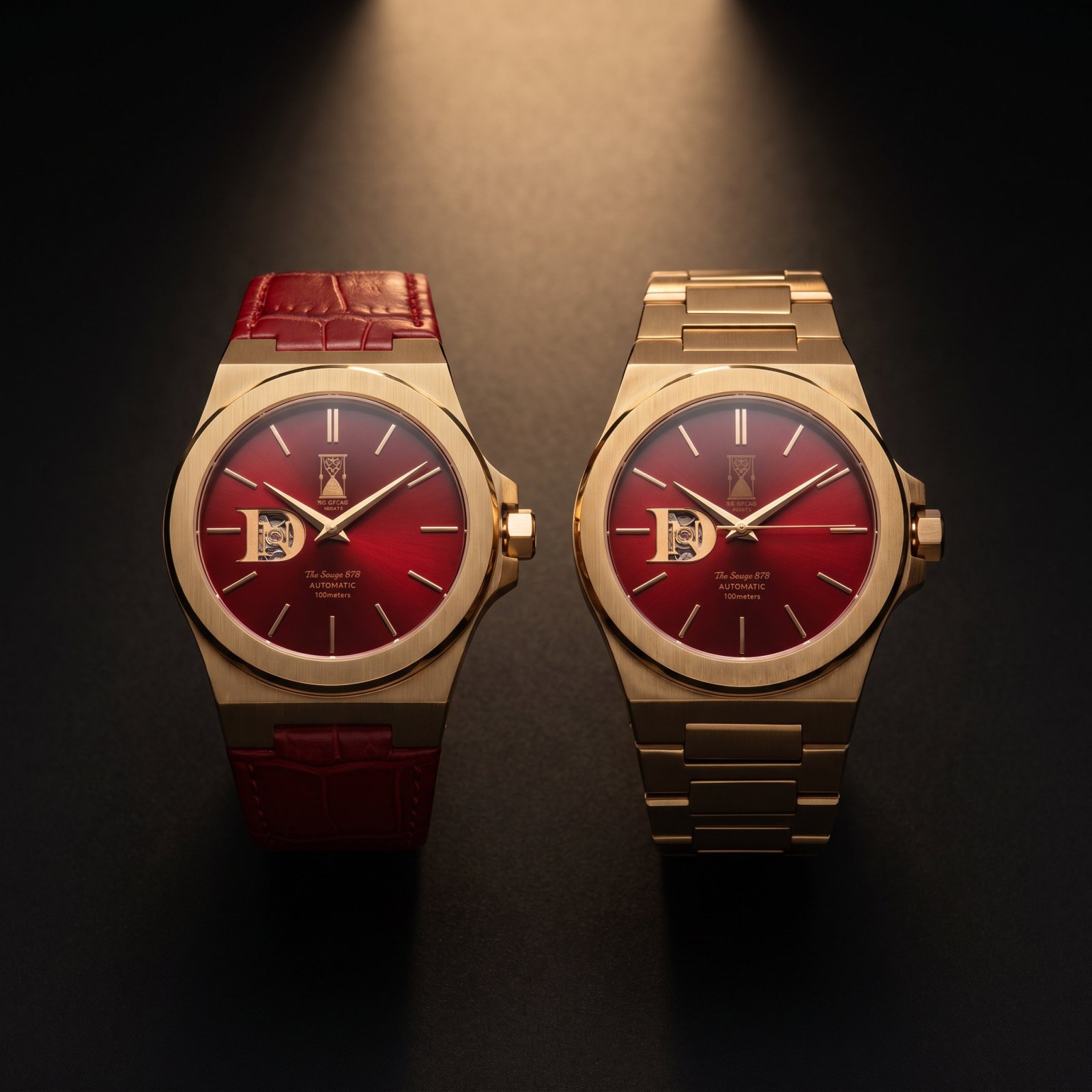
Our own The Sango 878 sits in this tier, rated to 100 meters with a 316L stainless steel case and sapphire crystal. The NIOSH guidance on chemical exposure and material degradation is a useful reminder that chlorine and salt are active chemicals, not just water. Stainless steel and sapphire resist them far better than plated cases and mineral glass.
Movement and Ownership: Automatic vs Quartz for Daily Pool Use
For daily pool use, the movement choice shapes not just maintenance but how the watch behaves between swims. Quartz movements are the lower-maintenance choice, while automatics reward owners who accept service costs and appreciate mechanical craftsmanship. The trade-offs are concrete and worth understanding before you buy.
Power Reserve and Winding Behavior
A quartz watch runs on a battery that typically lasts two to three years, after which it stops until replaced. An automatic watch, like the NH38 movement in The Sango 878, builds power reserve from wrist movement, usually around 40 hours when fully wound. If you swim daily and wear the watch regularly, the automatic stays wound; if you take it off for a weekend, it may stop and need a reset.
Accuracy Expectations
Quartz movements are typically accurate to within 15 seconds per month, while automatic movements are often rated to -20/+40 seconds per day (though real-world performance varies). For swimming, accuracy matters less than sealing, but if you time laps or need precise timekeeping, quartz has the edge. Automatics offer mechanical heritage and a sweeping seconds hand, but require acceptance of slight daily variation.
Service Intervals and Maintenance Costs
Quartz watches need a battery change every few years, and it's wise to have gaskets checked at the same time, often a modest add-on at a jeweler. Automatics need a full service every several years (commonly every 5-7 years, though usage and environment affect this), which includes disassembly, cleaning, lubrication, and resealing the case. That service is more involved and costs more than a battery change, but it preserves the movement and seals. Neither is "better" in the abstract; the right pick depends on whether you value low upkeep or mechanical craftsmanship.
Factor |
Quartz |
Automatic |
|---|---|---|
Power source |
Battery (2-3 years) |
Wrist movement (≈40-hour reserve) |
Accuracy |
~15 seconds/month |
-20/+40 seconds/day (typical) |
Routine maintenance |
Battery change + gasket check |
Full service every 5-7 years |
Water-resistance risk |
Seal aging similar |
Seal aging similar; service reseals |
Best for |
Low-fuss daily wear |
Owners who accept service costs |
Our guide to watch movement types explained covers the trade-offs in more depth, but the key for swimmers is that both movement types can be sufficiently water-resistant, the difference is in ownership rhythm and cost structure.
Fit, Comfort and Dress-Code Reality for All-Day Wear
Fit decides whether a watch survives all-day wear, and dress codes decide whether it survives the office. A case that shifts on the wrist catches on cuffs and desk edges, stressing the crown and caseback seals over time. The most common fit mistake is choosing a case diameter that's too large for the wrist, anything over 42mm often feels bulky under a shirt cuff and can bang against desk edges. Aim for a case diameter between 38mm and 42mm for versatile daily wear, with thickness under 12mm for easy cuff clearance.
Bracelet adjustment is equally important. A steel bracelet should allow a snug fit that prevents the case from rotating, but not so tight that it leaves marks. Many bracelets offer micro-adjustments or half-links; use them. A leather strap should be neither too loose (allowing sliding) nor too tight (causing pinching). The goal is a watch that stays centered on the wrist through arm movement, reducing stress on the crown and caseback seals.
Dress-code reality is simpler than most buyers expect. A clean dial, stainless steel case, and leather or steel strap reads professional in nearly any setting. Sportier dive-style watches with bold bezels can work in casual offices but may clash with formal dress. The versatile middle ground: a slim case, restrained dial, and sapphire crystal that resists desk scratches. That's the design brief behind The Pharaoh Collection, which pairs 50-meter resistance with a dress-ready profile for days when you're not swimming.
How to Care for a Watch After Swimming
Rinse your watch in fresh water after every swim, dry it with a soft cloth, and check the crown before storage. Chlorine and salt linger in the bracelet links and around gaskets, where they slowly degrade seals. A ten-second rinse removes most of the risk.
A practical post-swim routine:
- Rinse the case and bracelet in fresh water
- Dry with a soft microfiber cloth
- Confirm the crown is fully screwed down
- Store away from heat and humidity
- Schedule a gasket check at the first sign of fogging
Fogging under the crystal means moisture is already inside. Stop swimming with the watch and get it serviced. The American Watchmakers-Clockmakers Institute can point you to a qualified watchmaker for seal replacement.
Common Mistakes That Kill Water Resistance
The fastest way to destroy a water-resistant watch is to assume the rating is permanent. Gaskets are wear items; heat, chlorine, and time all degrade them. A watch rated to 100 meters five years ago may not be today.
Other frequent errors:
- Pressing pushers underwater. Chronograph pushers can admit water unless specifically rated for it.
- Hot tubs and saunas. Heat expands seals and can force moisture past gaskets.
- Skipping service. A gasket check every few years costs far less than a water-damaged movement.
- Trusting "waterproof." No watch is truly waterproof; the term itself is discouraged by manufacturers.
A common mistake is treating a worn watch as still sealed. If your watch is more than a few years old and has never been serviced, get the gaskets checked before your next swim.
Swimming daily with a watch demands more than a rating on a spec sheet. It demands the right tier, a screw-down crown, and a maintenance habit you'll actually keep. At Day & Night Watch Co., we build timepieces for exactly that balance: The Sango 878 pairs 100-meter water resistance with 316L stainless steel and sapphire crystal, while The Pharaoh Collection delivers dress-ready refinement with 50-meter protection. Both come with a two-year warranty. Get started with Day & Night Watch Co. and wear a watch built to hold up, in the water and at the desk.
Frequently Asked Questions
What water resistance rating do I need for swimming?
For lap swimming and regular pool sessions, look for 100 meters minimum. The rating is a static pressure test, not a depth guarantee, so a 100m figure covers surface swimming, splashes and shallow dives with margin. A 50m watch is fine for handwashing and rain but not for repeated submersion. If you swim open water or dive, move to 200m. Check that the crown screws down and the caseback is sealed, since those two points decide whether the rating holds in practice.
Can I swim with a watch rated to 100 meters?
Yes. 100m water-resistant watches are built for swimming, snorkeling and showering, provided the seals are intact. Two conditions apply: the crown must be fully pushed in or screwed down before you enter the water, and the watch should not be taken into a hot tub or sauna, where heat expands the gaskets. Have the seals pressure-tested roughly every one to two years if you swim daily, since rubber gaskets harden with chlorine and time.
Does water resistance decrease over time?
It does. Gaskets, O-rings and caseback seals are rubber or silicone components that compress, dry out and harden with age, chlorine and sun exposure. A watch rated to 100m when new can drop well below that after several years of daily pool use without service. Signs include fogging under the crystal or moisture beads on the dial. A pressure test at a watchmaker is inexpensive and tells you exactly where the watch stands before you trust it in the water again.
Should I rinse my watch after swimming in a pool?
Rinse it with fresh water every time. Pool chlorine and salt water both leave residue that attacks gaskets and dulls a stainless steel bracelet over months of daily wear. Run lukewarm tap water over the case and bracelet, work the bracelet links gently, then dry with a soft cloth. Do not use soap on the case unless the watch is rated for it, and never rinse a leather strap, which absorbs water and breaks down. This one habit is the core of how to care for a watch after swimming.


Leave a comment