


Table of Contents
- Power Reserve vs. Total Lifespan: Two Different Numbers
- How Long Should an Automatic Watch Last? The Real Answer
- The Automatic Watch Service Interval: What the Manufacturer Won't Tell You
- Automatic vs. Quartz Lifespan: Which Movement Outlasts the Other?
- Signs Your Watch Needs Service (Don't Ignore These)
- Daily Wear vs. Storage: How Your Habits Affect Longevity
- Conclusion
- Frequently Asked Questions
Last Updated: September 25, 2026
Power Reserve vs. Total Lifespan: Two Different Numbers
Power reserve is how long an automatic watch runs after you take it off. Total lifespan is how many years the movement keeps time before it needs an overhaul. Confusing these unrelated figures is the most common mistake buyers make.
A typical automatic movement stores 38 to 42 hours of running energy in its mainspring, one winding cycle, nothing more. The watch's actual life, the decades-long question of how long should an automatic last, depends on lubrication, wear, and how you treat it.
Someone reads "40-hour power reserve" and assumes the watch is good for 40 hours; someone else hears "automatic watches last a lifetime" and assumes no maintenance is ever required.
Power reserve is a tank of gas; total lifespan is the engine's service life. A full tank says nothing about how many miles the engine runs before a rebuild.
How Long Should an Automatic Watch Last? The Real Answer
A well-maintained automatic watch lasts 20 to 30 years or more before major component replacement, and many run longer. The movement has no fixed expiration date; what wears out is the lubrication protecting its moving parts.
The mechanical movement inside an automatic watch contains dozens of interacting components, mainspring, gear train, escapement, balance wheel, each depending on a thin film of oil that thickens, migrates, and eventually dries. When it does, metal grinds against metal and damage compounds until accuracy collapses.
So the honest answer to how long should an automatic last is about maintenance, not manufacturing. A neglected automatic might struggle past 10 years; a serviced one can outlive its original owner.
Movement-Specific Longevity: Not All Calibres Age the Same
Not every automatic calibre ages at the same rate; longevity depends on build quality, jewel count, and wear resistance.
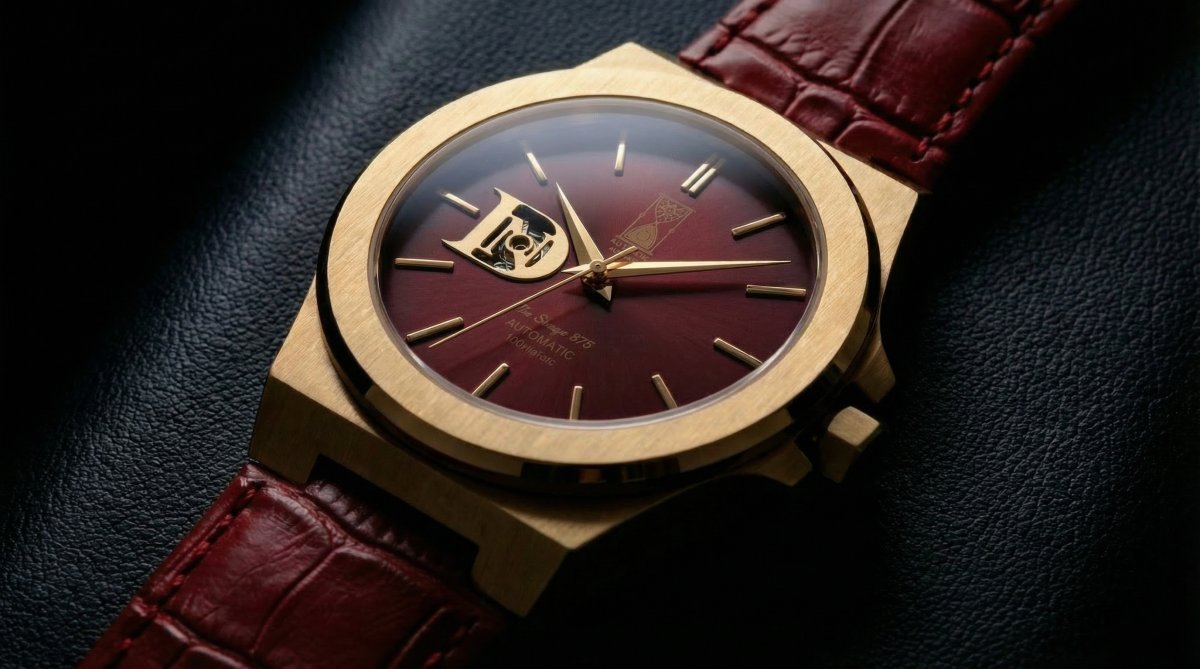
Entry-level movements with fewer jewels and simpler finishing wear sooner, especially around the rotor pivot and winding mechanism. Higher-grade calibres use more jewels at friction points, better finishing, and tighter tolerances, which slow wear. A workhorse like the Seiko NH38 in our Sango 878 collection is built for dependable daily service.
The practical takeaway: cheaper movements often need servicing sooner, but cost less to service. The math tends to even out.
The Automatic Watch Service Interval: What the Manufacturer Won't Tell You
The automatic watch service interval most watchmakers recommend is every 5 to 7 years, though modern synthetic oils can stretch that to 8 or 10 in favorable conditions. Manufacturers rarely print this schedule, so many owners never service their watches.
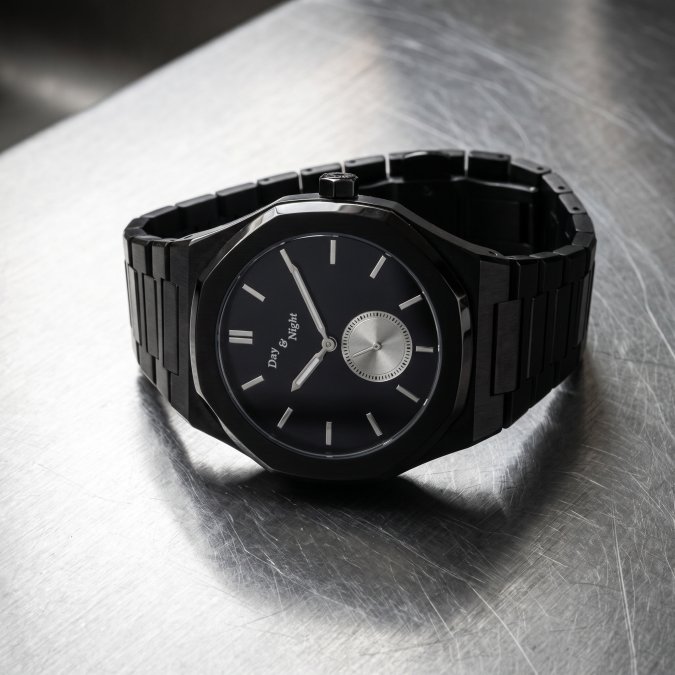
A full service, or overhaul, involves disassembling the movement, cleaning every component, replacing worn gaskets and jewels, re-lubricating with fresh synthetic oils, and re-calibrating for timekeeping.
The interval is not fixed: a watch worn daily in a humid climate needs attention sooner than one worn twice a week in a dry office. The 5-to-7-year figure is a baseline, not a rule.
What Actually Drives the Interval
Four variables move the service window more than anything else:
- Wear frequency. A daily-worn automatic accumulates roughly 8,000 to 10,000 hours of running time per year; one worn twice a week, a quarter of that. Lubricant breakdown tracks running hours, not calendar years.
- Movement grade. A basic three-hand caliber stresses its lubrication points differently than a high-beat chronometer-grade movement running at 28,800 vibrations per hour, where faster oil shear accelerates breakdown.
- Environment. Humidity accelerates corrosion on steel pivots and can emulsify oils. Magnetic fields, phones, tablets, speakers, magnetic clasps, magnetize the hairspring and force the movement to work against itself, raising friction and heat at the escapement.
- Water resistance integrity. Every time a gasket is compressed, it ages. A watch rated to 100 meters that has never had its gaskets replaced is not actually rated to 100 meters anymore.
Cost-Benefit Analysis: When Servicing Makes Sense
Servicing makes financial sense when the watch's value, sentimental or monetary, exceeds the service cost. The framework watchmakers and collectors use:
1. Establish the service cost relative to replacement. A full service typically runs a meaningful fraction of what the watch cost new. If the quote approaches or exceeds a comparable replacement, the economics favor replacement.
2. Separate a clean-and-lube from a parts rebuild. A movement serviced on schedule usually needs only cleaning, fresh gaskets, and re-lubrication.
A Practical Decision Rule
If you would replace the watch rather than repair it, you can stretch the interval and accept the risk. If you intend to keep it for decades, service it on schedule. The middle ground, a watch you like but would not rebuild, is where the 5-to-7-year baseline earns its keep, because catching wear early keeps the repair cheap.
Automatic vs. Quartz Lifespan: Which Movement Outlasts the Other?
Quartz movements typically run 10 to 15 years before needing attention, but the comparison is misleading. Quartz watches have fewer moving parts and rely on a battery and circuit, so there is less mechanical friction to manage.
Signs Your Watch Needs Service (Don't Ignore These)
Recognizing the signs your watch needs service early can save the movement from permanent damage. The warning signals are gradual, which is why they get ignored.
Watch for these:
- Timekeeping drifts noticeably, running fast or slow by more than a few seconds a day
- The power reserve shortens, so the watch stops overnight when it used to run through
- The rotor feels stiff or the winding action becomes rough
- The watch gains or loses time inconsistently rather than steadily
- You notice a faint grinding or scraping sound when the rotor spins
Signs of Dry Lubricants: The Silent Killer
Dry lubricants are the most damaging and least visible problem an automatic watch can develop. There is no warning light, no obvious symptom until the damage is done: the oil that once separated metal surfaces has evaporated or migrated away, and the movement runs metal-on-metal.
How Dry Lubricants Actually Present, Stage by Stage
Stage 1, Oil migration. Lubricants creep away from the pivots and pool in adjacent areas. Nothing is visibly wrong and timekeeping is normal, though a timing machine may already show amplitude a few degrees below spec.
What You Can Check Without a Timegrapher
You cannot measure amplitude at home, but you can watch for the proxies:
- Positional variation. Wear the watch dial-up overnight, then dial-down the next night. If it gains or loses noticeably differently in each position, friction is uneven, a lubrication warning.
- Power reserve drift. Time how long the watch runs after a full wind. If it used to run 40 hours and now stops at 30, the mainspring or gear train is losing efficiency.
- Rotor feel. With the watch off the wrist, tilt it slowly and listen. A healthy rotor glides. A dry one has a faint rasp or catches slightly.
- Start-up behavior. A well-lubricated automatic starts ticking within a few shakes.
Daily Wear vs. Storage: How Your Habits Affect Longevity
How you wear and store an automatic watch affects its lifespan as much as build quality. Daily wear keeps the movement running and lubricants distributed; long storage lets oils settle and thicken, and a watch left stopped for years can seize when restarted.
Environmental Impact on Longevity
Environmental factors quietly shorten a watch's life. Humidity is the worst offender, driving moisture past worn gaskets into the case where it corrodes steel components. Magnetic fields from phones, speakers, and laptops magnetize the hairspring and throw off timekeeping, while temperature swings expand and contract materials, stressing seals and joints.
Conclusion
Every automatic watch asks the same thing of its owner: attention. Movements that last for decades are not simply better built, they are serviced on schedule, stored with care, and protected from the environments that quietly wear them down.
Frequently Asked Questions
Which lasts longer, quartz or automatic?
Quartz watches typically run 10 to 15 years before needing attention. The automatic watch service interval matters more than the movement type itself. With regular servicing every 5 to 7 years, an automatic watch's mechanical components are designed to be cleaned, oiled, and rebuilt rather than replaced.
Do automatic watches break if not worn?
They don't break immediately, but prolonged storage allows lubricants to settle and thicken. If an automatic watch sits for years without winding, the oils can dry out and cause friction when you wear it again. Wind it manually every few weeks during storage to keep the mainspring and gears moving. This simple habit prevents the most common storage-related damage.
How much should it cost to service an automatic watch?
At Day & Night Watch Co., the Sango 878 collection uses the Seiko NH38 movement, which is widely serviceable.
Is it normal to lose 30 seconds a day with an automatic watch?
Losing 30 seconds per day is outside the normal range for a healthy automatic watch. Most well-regulated movements stay within -10 to +15 seconds per day. A sudden drop in timekeeping accuracy is one of the clearest signs your watch needs service. Have a watchmaker check the amplitude and regulate the movement before the problem worsens.
A watch that lasts a lifetime is not an accident. It is the result of choosing a movement worth maintaining and then maintaining it. Explore the Sango 878 and the Pharaoh collections at Day & Night Watch Co. and invest in a timepiece built to be passed down.


Leave a comment