


Table of Contents
- What Separates a Professional Automatic Watch From a Hobbyist's Timepiece
- The Sango 878 Collection: Three Automatic Watches Built for the Office
- Is Sapphire Crystal Scratch Proof? Testing the Claim Against Real Office Wear
- 316L Stainless Steel Watch Durability: What It Means for Daily Wear
- Case Size, Cuff Clearance, and the Ergonomics of Wearing a Watch to Work
- Automatic Watch Maintenance Guide for Professionals Who Wear One Daily
- Long-Term Cost of Ownership: What a Daily Automatic Watch Actually Costs
- Frequently Asked Questions
Last Updated: September 29, 2026
What Separates a Professional Automatic Watch From a Hobbyist's Timepiece
An automatic watch for daily professional wear is a self-winding mechanical timepiece chosen for how it behaves over eight to ten hours at a desk: thin enough to clear a shirt cuff, restrained enough for a client meeting, and tough enough to survive doorframes and keyboard edges. The distinction from a hobbyist's piece comes down to proportions, finishing that hides wear, and a serviceable movement.
This guide from Day & Night Watch Co. covers the specs that matter at work, plus three automatic watches built for the job.
Most buying guides rank watches by price. That gets the question backwards. A hobbyist buys for the collection; a professional buys for the wrist.
The Sango 878 Collection: Three Automatic Watches Built for the Office
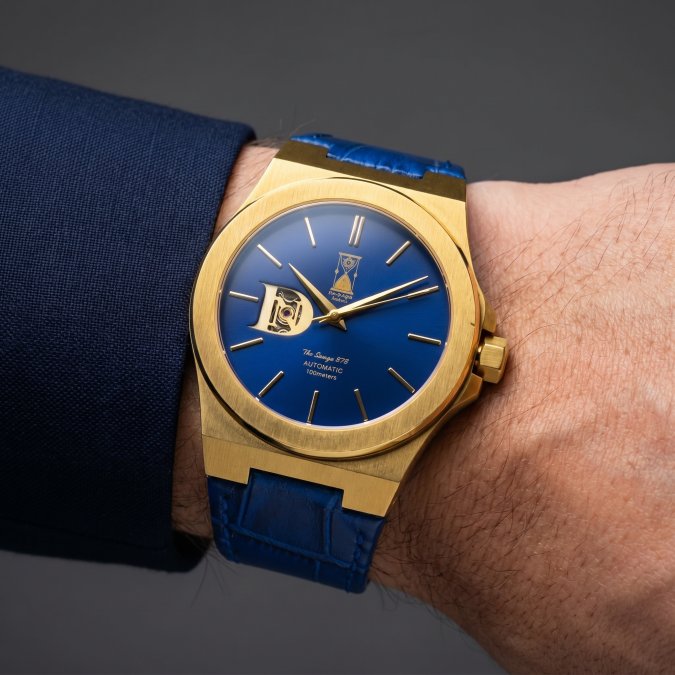
The Sango 878 Collection is Day & Night Watch Co.'s answer to the office-watch problem. All three models share the same foundation: a Seiko NH38 automatic caliber, 316L stainless steel construction, sapphire crystal, water resistance to 100 meters, and a two-year warranty. Each costs $369.
Model |
Dial and Finish |
Best For |
Price |
|---|---|---|---|
Rose gold accents |
Client-facing roles, warmer wardrobes |
$369 |
|
Gunmetal Eclipse |
Gunmetal and silver |
Neutral, everyday corporate attire |
$369 |
Midnight Current |
Blue dial, gold accents |
Business casual, evening transitions |
$369 |
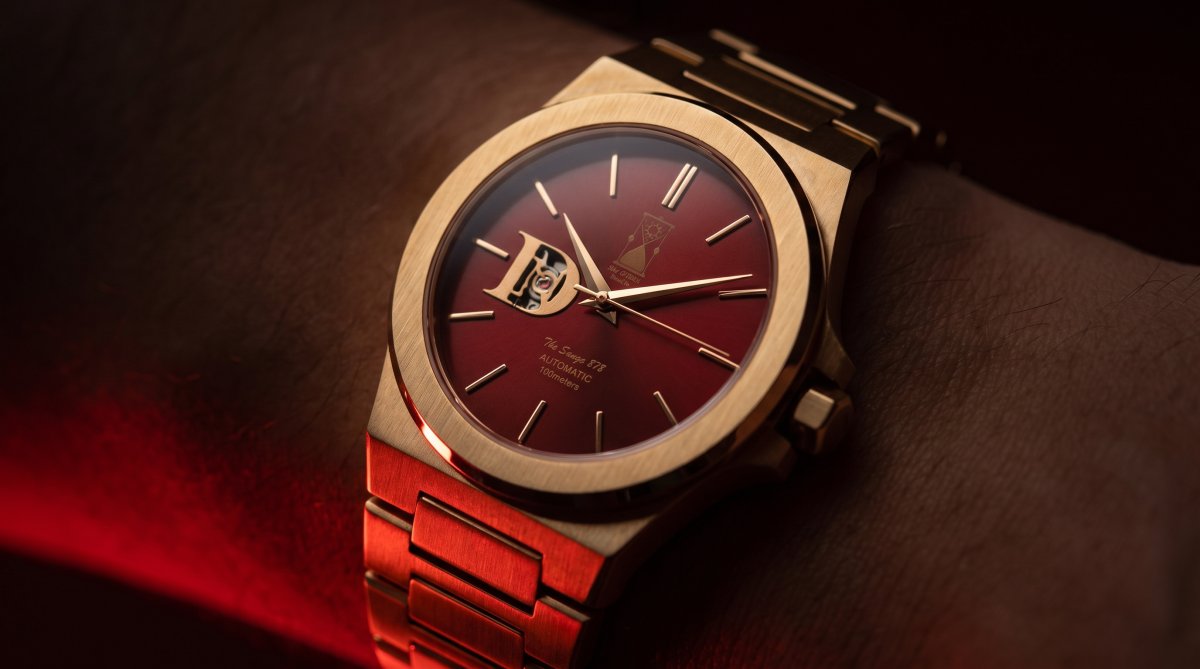
The Sango 878 Crimson Dawn
Rose gold on a steel case reads warmer than yellow gold and less flashy than two-tone, pairing well with navy, charcoal, and earth tones for sales, consulting, or client entertainment. The Crimson Dawn is the most overtly dressy of the three: strongest for suit-and-tie, weakest for a site visit.
The Sango 878 Gunmetal Eclipse
Gunmetal is the safe answer. It disappears against gray, black, and navy tailoring and hides desk scuffs better than polished surfaces. If you own one watch and want it to work from a Monday board meeting to a Friday lunch, pick this one.
The Sango 878 Midnight Current
A blue dial with gold accents sits between the other two. Blue reads professional in nearly every corporate setting, and the gold detailing gives it enough presence for dinner after work, the most versatile of the three for professionals moving between formal and casual settings in one day.
Is Sapphire Crystal Scratch Proof? Testing the Claim Against Real Office Wear
Sapphire crystal is scratch resistant, not scratch proof. It ranks 9 on the Mohs hardness scale, just below diamond, so everyday office hazards like desk edges, keys, and doorframes will not mark it. A hard strike against concrete or a diamond-set ring can still chip it.
316L Stainless Steel Watch Durability: What It Means for Daily Wear
316L stainless steel is a low-carbon, surgical-grade alloy that resists corrosion and pitting better than the 304 grade used in most budget cases. The "L" stands for low carbon, which makes the steel easier to machine and more resistant to stress corrosion cracking where the case meets the lugs and crown.
Case Size, Cuff Clearance, and the Ergonomics of Wearing a Watch to Work
Three measurements control whether that works:
- Case diameter: the width of the case across the dial, excluding the crown. Most office-appropriate watches land between 38mm and 42mm. Above 42mm, the case starts to dominate the cuff opening and the watch reads casual regardless of finish.
- Lug-to-lug distance: the span from the tip of one lug to the other. This is the number that actually determines whether the watch sits flat on top of your wrist or overhangs it. A common rule of thumb is that lug-to-lug should stay under about 80 percent of your wrist width. On a 6.5-inch wrist, that means keeping it under roughly 48mm; on a 7.5-inch wrist, up to about 52mm.
- Case thickness: the depth of the case from caseback to crystal. This is the number that fights the cuff. Anything above about 12mm starts to catch on a fitted shirt cuff, and above 14mm the watch will visibly tent the fabric. A 10 to 11mm case slides under a cuff with almost no friction.
Automatic Watch Maintenance Guide for Professionals Who Wear One Daily
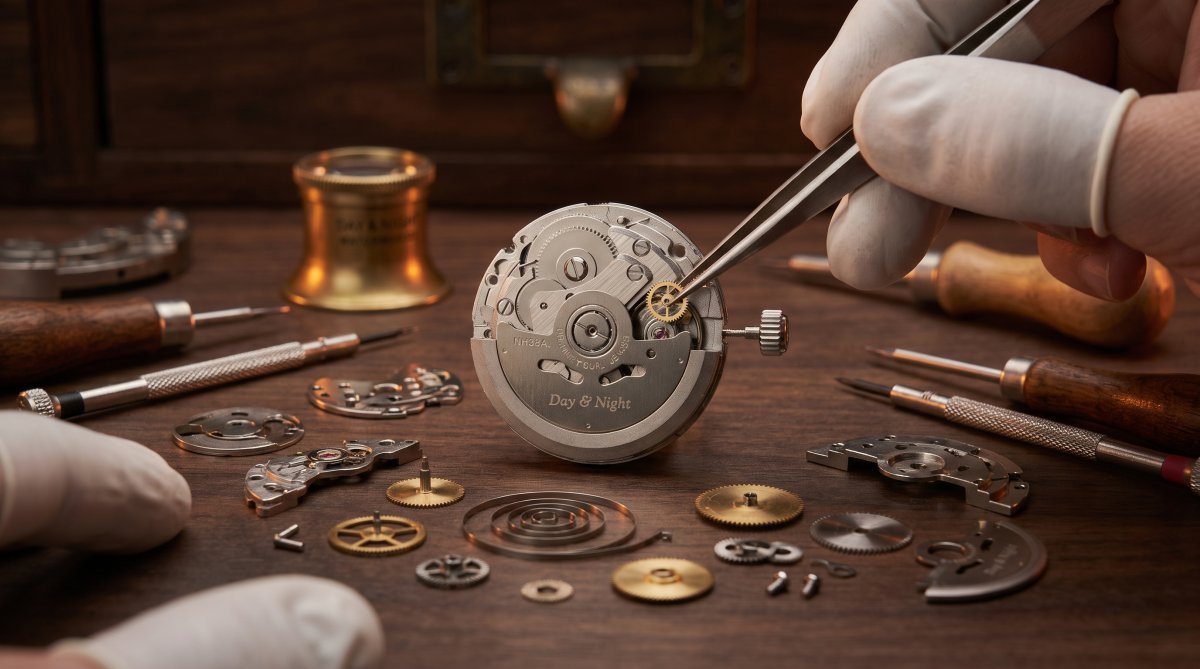
An automatic watch worn daily needs less attention than most owners assume. Wrist motion keeps the movement wound, so the main tasks are keeping it clean, keeping it dry, and servicing it on a sensible interval.
A practical routine looks like this:
- Daily: wipe the case and crystal with a soft cloth before storing it.
- Weekly: rinse the case with fresh water if it has seen sweat or sunscreen, then dry it fully.
- Monthly: check the date and time against a reference to spot drift early.
- Every 4 to 7 years: have the movement cleaned and lubricated by a qualified watchmaker.
- As needed: replace gaskets when water resistance is tested or the caseback is opened.
Long-Term Cost of Ownership: What a Daily Automatic Watch Actually Costs
Cost Category |
Frequency |
Typical Range |
Notes |
|---|---|---|---|
Purchase price |
Once |
$369 for the Sango 878 Collection |
Entry-level mechanical |
Full service (clean, lubricate, regulate) |
Every 4-7 years |
Commonly $150-$350 for a Seiko-based caliber at an independent watchmaker |
Authorized service centers charge more |
Gasket and seal replacement |
With each service |
Often included, otherwise $20-$60 |
Protects water resistance |
Crystal replacement |
If chipped |
$80-$200 for sapphire |
Sapphire is durable but not unbreakable |
For buyers thinking in decades, the automatic math works. For buyers thinking in three-year cycles, it does not. The decision is less about the watch and more about whether you intend to keep it long enough for servicing to be worth it.
Frequently Asked Questions
What is the best automatic watch for daily wear?
The best automatic watch for daily wear balances movement reliability, case size, and material durability. Look for a watch with a proven automatic caliber like the Seiko NH38, a case diameter between 38mm and 42mm for comfortable cuff clearance, and a sapphire crystal for scratch resistance. The Sango 878 collection meets these criteria with a 316L stainless steel case and 100-meter water resistance, making it suitable for office environments and weekend wear alike.
Is it okay to wear an automatic watch every day?
Yes. Automatic watches are designed for daily wear, and the self-winding mechanism actually benefits from consistent movement. Wearing your watch daily keeps the mainspring wound and the lubricants distributed, which supports long-term accuracy. The main consideration is protection: avoid knocks against hard surfaces and keep the watch away from strong magnetic fields like those near speakers or MRI machines. A daily-worn automatic typically needs servicing every five to seven years.
How does 316L stainless steel improve watch durability?
316L stainless steel is a marine-grade alloy containing molybdenum, which resists corrosion and pitting better than standard 304 stainless steel. It holds up against sweat, humidity, and incidental contact with cleaning products. For a daily professional watch, 316L stainless steel watch durability means the case and bracelet resist rust and maintain their finish through years of office wear.
Is sapphire crystal necessary for a daily professional watch?
Sapphire crystal is not strictly necessary, but it is the most practical choice for daily wear. With a Mohs hardness of 9, sapphire ranks just below diamond, so it resists scratches from keys, desk edges, and door handles. The question 'is sapphire crystal scratch proof' comes up often because the answer is nuanced: it is highly scratch-resistant but not unbreakable. It can shatter under a direct hard impact, though it will not accumulate the fine surface scratches that mineral glass develops over time.
How often should an automatic watch be serviced for daily use?
An automatic watch worn daily should be serviced every five to seven years. The service includes disassembly, cleaning, re-lubrication of the movement, and replacement of worn gaskets. Skipping service intervals allows old lubricants to thicken and grind against the gears, which leads to accuracy loss and eventually movement failure. If you notice the watch running fast or slow by more than 15 seconds per day, or if the power reserve drops noticeably, those are signs the movement needs attention sooner.


Leave a comment