


Last Updated: November 2, 2026
Quick Summary
No single automatic movement is the most accurate, because accuracy depends on how a movement is rated, regulated, and stabilized for how you wear the watch. An uncertified automatic movement commonly runs between -20 and +40 seconds per day, while a COSC-certified automatic movement has passed a standardized precision test across multiple positions and temperatures.
- Daily deviation is the seconds a watch gains or loses in 24 hours, while a chronometer has passed an official precision test.
- Regulation changes how fast or slow a watch runs; adjustment rebuilds the escapement and balance geometry.
- Positional variance, magnetism, low power reserve, and temperature swings all shift a movement's rate.
- For a watch you intend to keep, long-term stability matters more than immediate out-of-box precision.
- The Sango 878 uses the Seiko NH38, a self-winding automatic movement that is not a certified chronometer.
Table of Contents
- What Automatic Watch Accuracy per Day Actually Means
- Swiss vs. Japanese Automatic Movement Accuracy
- COSC-Certified Automatic Movement: What Certification Proves
- How to Regulate an Automatic Watch
- Positional Variance, Magnetism, and Other Factors That Move the Needle
- The Sango 878 and the NH38: A Case Study in Real-World Accuracy
- Long-Term Stability vs. Immediate Precision: What to Prioritize
- Choosing Your Accurate Automatic at Day & Night Watch Co.
- Frequently Asked Questions
What Automatic Watch Accuracy per Day Actually Means
The most accurate automatic movement is not a single caliber you can name. It depends on how the movement is rated, regulated, and stabilized for how you actually wear the watch. At Day & Night Watch Co., we explain accuracy to customers as a range, not a badge.
Daily deviation is the number of seconds a watch gains or loses in 24 hours, measured in seconds per day. A chronometer is a movement that has passed an official precision test. Those two terms get used interchangeably in marketing, and they should not be.
Daily Deviation, Beat Error, and Amplitude
Three numbers describe how a mechanical movement keeps time. Daily deviation is the net gain or loss over a day. Beat error measures how evenly the balance wheel swings in each direction. Amplitude is how far the balance rotates from center, and low amplitude usually means a tired mainspring or a movement due for service.
For a deeper look at how these figures are measured and what counts as normal, see our guide to automatic movement accuracy explained for 2026.
Swiss vs. Japanese Automatic Movement Accuracy
Neither Swiss nor Japanese automatic movement accuracy wins outright. Swiss makers often lean on COSC certification as a formal precision benchmark. The country of origin tells you less than the specific caliber and its adjustment.
A 2026 guide from Day & Night Watch Co.'s movement accuracy guide notes that uncertified automatics commonly run between -20 and +40 seconds per day, while quality calibers like the Seiko NH38 typically perform better than that band. That is the honest picture: certification narrows the range, but it does not guarantee a number on your wrist.
If you are weighing the two schools directly, our Tissot vs. Seiko automatic comparison breaks down movements, build, and value side by side.
COSC-Certified Automatic Movement: What Certification Proves
A COSC-certified automatic movement has passed a standardized precision test across multiple positions and temperatures before it leaves the factory. Certification proves the movement met a defined daily deviation threshold during testing. It does not prove the watch will hold that rate after five years of daily wear, and it does not cover the case, dial, or assembly.
That distinction matters when you compare spec sheets. A certified movement carries a documented minimum standard. An uncertified movement may perform just as well, but you are relying on the maker's word rather than an independent test.
How to Regulate an Automatic Watch
Regulating an automatic watch means adjusting its rate so it gains or loses less time per day. A watchmaker does this by moving the regulator arm or adjusting the balance to change the effective length of the hairspring. It is precise work, and on most modern movements it needs a timegrapher and a steady hand.
You can do useful things yourself before you pay for regulation. Let the watch run consistently, note the daily deviation over a week, and check whether it loses time only when you are less active. If your watch is drifting, our guide on why automatic watches lose time and how to fix it covers winding habits and magnetization checks.
Regulation vs. Adjustment: The Distinction That Matters
Regulation changes the rate: how fast or slow the watch runs. Adjustment changes the physical geometry of the escapement and balance so the movement performs consistently across positions. Regulation is a tuning job. Adjustment is a rebuild of the movement's poise.
Most owners only ever need regulation. Adjustment is a watchmaker's task for movements that are inconsistent from one position to the next.
Positional Variance, Magnetism, and Other Factors That Move the Needle
Positional variance is the change in a watch's rate depending on how it sits: dial up, crown down, crown left. Gravity shifts the load on the balance pivots and hairspring, so a movement tuned perfectly in one position can drift in another. This is why a watch that is dead accurate overnight can run fast all day on your wrist. The physics is straightforward: the balance wheel's oscillations are affected by gravity because the hairspring's center of gravity is not perfectly centered, and the pivots experience different friction depending on orientation. , and the difference between a well-adjusted and poorly-adjusted movement is often most visible in the crown-left and crown-down positions.
The Sango 878 Midnight Current →
Magnetism is the other quiet culprit. A hairspring that has picked up a magnetic charge will often run fast and stay fast. Silicon balance springs are generally less susceptible to magnetization than traditional alloy hairsprings. Silicon is non-magnetic, corrosion-resistant, and less sensitive to temperature changes, and it can be manufactured with greater precision than alloy springs.
Power reserve and thermal compensation round out the list. A mainspring near the end of its reserve delivers less torque, and amplitude drops, so the rate wanders. Temperature changes expand and contract metal components, which is why isochronism, the movement's ability to keep a constant rate as amplitude changes, is such a valued trait.
Factor |
What It Does to Rate |
What You Can Do |
|---|---|---|
Positional variance |
Drifts by resting position |
Rest watch dial-up overnight |
Magnetism |
Usually runs fast |
Demagnetize at a watchmaker |
Low power reserve |
Rate wanders as torque drops |
Wind fully, wear consistently |
Temperature swings |
Shifts with expansion |
Keep away from extreme heat |
Worn lubrication |
Slows and loses amplitude |
Service on schedule |
The Sango 878 and the NH38: A Case Study in Real-World Accuracy
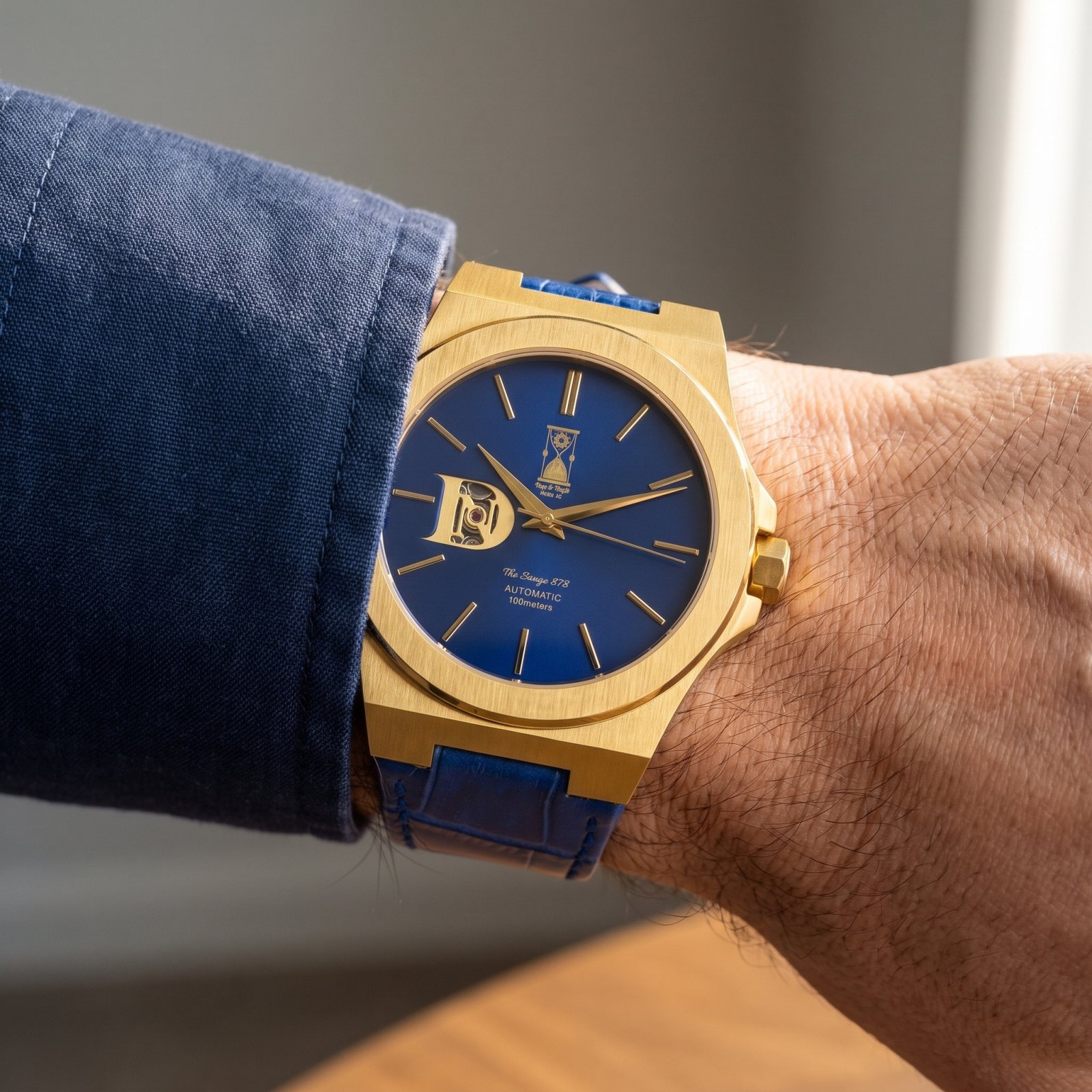
The Seiko NH38 inside The Sango 878 is a self-winding automatic movement. It is not a certified chronometer, and we do not market it as one.
F5337Ce9 D779 492E 94B8 7E0B3B9E15Ff 00001
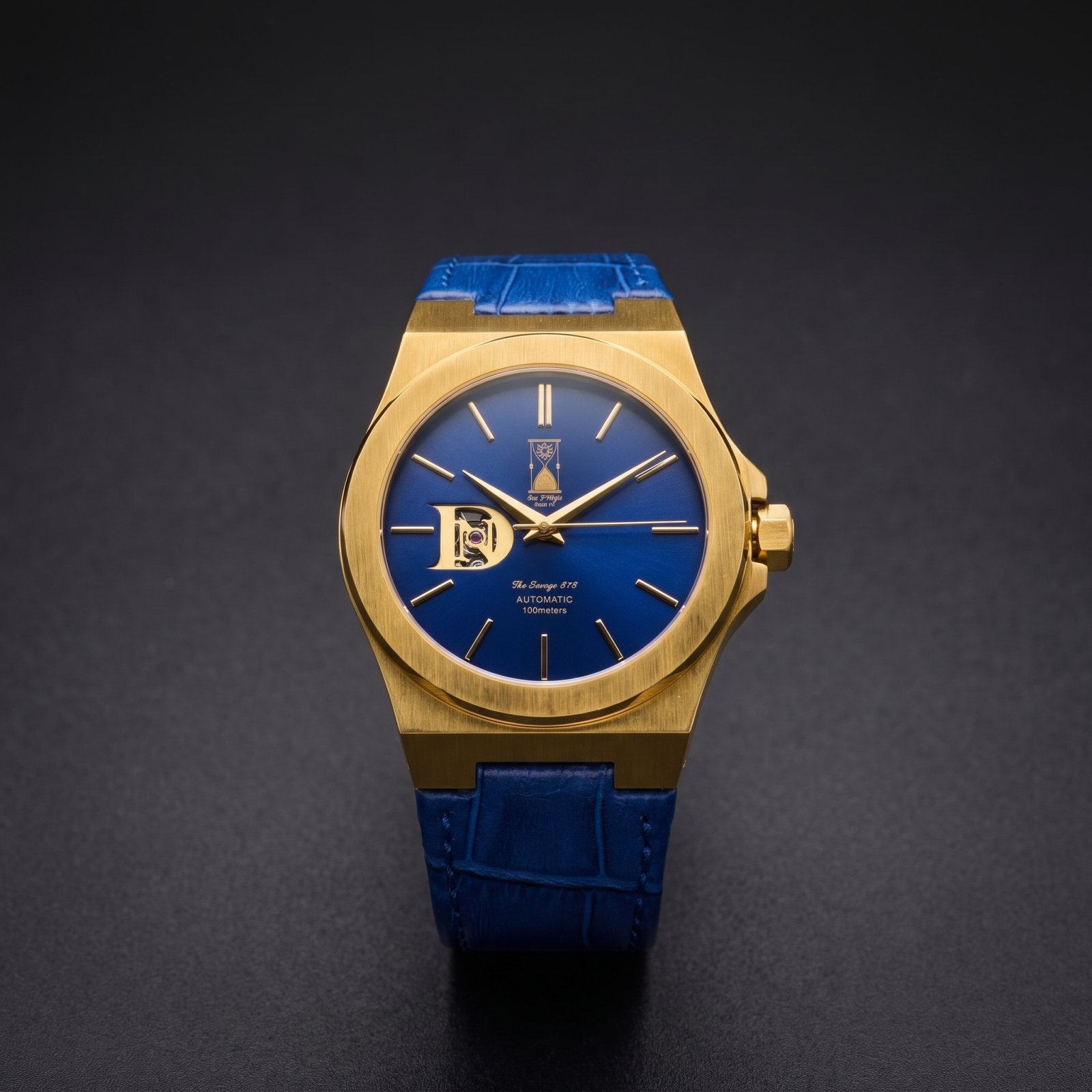
This is the case for judging an automatic movement by its caliber rather than its marketing. If you want to see the watch this movement powers, look at The Sango 878 Midnight Current, built from 316L stainless steel and sapphire crystal with a two-year warranty.
The Sango 878 Midnight Current
Long-Term Stability vs. Immediate Precision: What to Prioritize
Immediate precision is what a timegrapher shows on day one. Long-term stability is what the watch does after two years of daily wear, temperature swings, and the occasional knock against a doorframe. For a watch you intend to keep, stability wins. A movement that arrives at +2 seconds per day but drifts to +15 within a year is a worse ownership experience than one that starts at +8 and stays near +8. Stability comes from quality lubrication, a well-adjusted escapement, and a hairspring that resists magnetism.
The distinction matters because many manufacturers optimize for out-of-box precision to impress reviewers, but long-term stability requires different priorities: synthetic lubricants that resist degradation, escapement components that maintain their geometry, and hairsprings that do not lose their elasticity. A movement that is adjusted at the factory to five positions will typically hold its rate better over time than one adjusted to three, because the adjustment process reveals and corrects inconsistencies in the escapement.
When comparing movements, check the stated power reserve, frequency, and materials. The Sango 878 is powered by the Seiko NH38, and it is not a certified chronometer.
Choosing Your Accurate Automatic at Day & Night Watch Co.
Accuracy is a system, not a slogan: the caliber, its adjustment, the materials around it, and how you wear it all decide the number on your wrist. We build around that idea. Our automatic watches are crafted from 316L stainless steel and sapphire crystal, and each carries a two-year warranty.
The Sango 878 Collection puts the NH38 on your wrist in three finishes, each priced at $369.00: The Sango 878 Midnight Current, The Sango 878 Crimson Dawn, and The Sango 878 Gunmetal Eclipse. If you are still narrowing the field, our list of the best automatic watches under $1,000 is a good place to start. And if you are ready to make your first automatic your own, you can take 10% off Your First Timepiece when you order.
Frequently Asked Questions
Which automatic watch movement is the most accurate?
There is no single most accurate automatic movement. Accuracy depends on the specific caliber and its stated or measured performance, not on a brand-wide claim. Accuracy varies by caliber, so check the stated daily deviation for the specific movement you are considering. Compare the stated daily deviation for the exact caliber you are considering.
Are Swiss or Japanese automatic movements more accurate?
Neither origin is inherently more accurate. Swiss vs. Japanese automatic movement accuracy comes down to the individual caliber and whether it carries certification. A COSC-certified automatic movement has been independently tested to a defined daily deviation standard, which gives you a verifiable benchmark. The Seiko NH38 is not COSC-certified. Look at the stated accuracy for the specific movement rather than assuming Swiss or Japanese is better as a category.
How accurate are automatic watches per day compared with quartz?
Quartz is more accurate than mechanical or automatic movements. Quartz movements are generally more accurate than mechanical automatic movements. Automatic watch accuracy per day is still fine for daily wear, and many owners reset their watch weekly. If pinpoint timekeeping is your priority, quartz wins; if craftsmanship matters more, automatic is the choice.
How do I regulate an automatic watch, and should I do it myself?
Regulation is the process of adjusting a movement's rate to bring its daily deviation closer to zero. For most owners, a qualified watchmaker should handle regulation. Regulation is different from adjustment, which corrects the beat error and positional performance.
Do automatic watches become less accurate over time?
Yes, automatic watches can lose accuracy over time as lubricants degrade and components wear. A watch that ran within a few seconds per day when new may drift further after several years of daily wear. Regular servicing by a watchmaker can help restore performance. Long-term stability matters as much as out-of-box precision, so factor in service intervals when comparing movements. Storing the watch away from magnets also helps preserve accuracy.
The hardest part of buying an automatic is trusting a spec sheet you cannot test yourself. We would rather you judge us on what we can prove: a documented movement, honest materials, and a warranty that means something. Explore The Sango 878 Collection at Day & Night Watch Co. and put a caliber you can trust on your wrist.


Leave a comment