


Last Updated: November 2, 2026
Quick Summary
An automatic watch movement is a mechanical calibre that winds itself using the motion of your wrist, storing energy in a mainspring and releasing it through a geared regulator to drive the hands. Wrist motion turns a rotor, which winds the mainspring, and the escapement and balance wheel meter that energy into a steady tick. No battery or charging cable is needed, just physics repeated every time you move your arm.
- Wrist motion spins the rotor, which winds the mainspring through a reduction gear.
- The escapement releases the escape wheel one tooth at a time, converting a fast unwind into a measured tick.
- To wind manually, turn the crown clockwise 20 to 40 times, then push it back in.
- Most modern automatic movements run roughly a day and a half to two days on a full wind.
- Magnetism from speakers, tablets, and magnetic clasps can cause large, sudden gains in time.
Table of Contents
- What an Automatic Watch Movement Is
- The Step-by-Step Energy Path Inside an Automatic Movement
- Automatic Watch Movement vs Quartz
- How to Wind an Automatic Watch
- Automatic Watch Power Reserve Explained
- Accuracy Expectations and What Affects Timekeeping
- Automatic Movement Care, Service, and Ownership Costs
- Choosing Your First Automatic Timepiece
- Frequently Asked Questions
What an Automatic Watch Movement Is
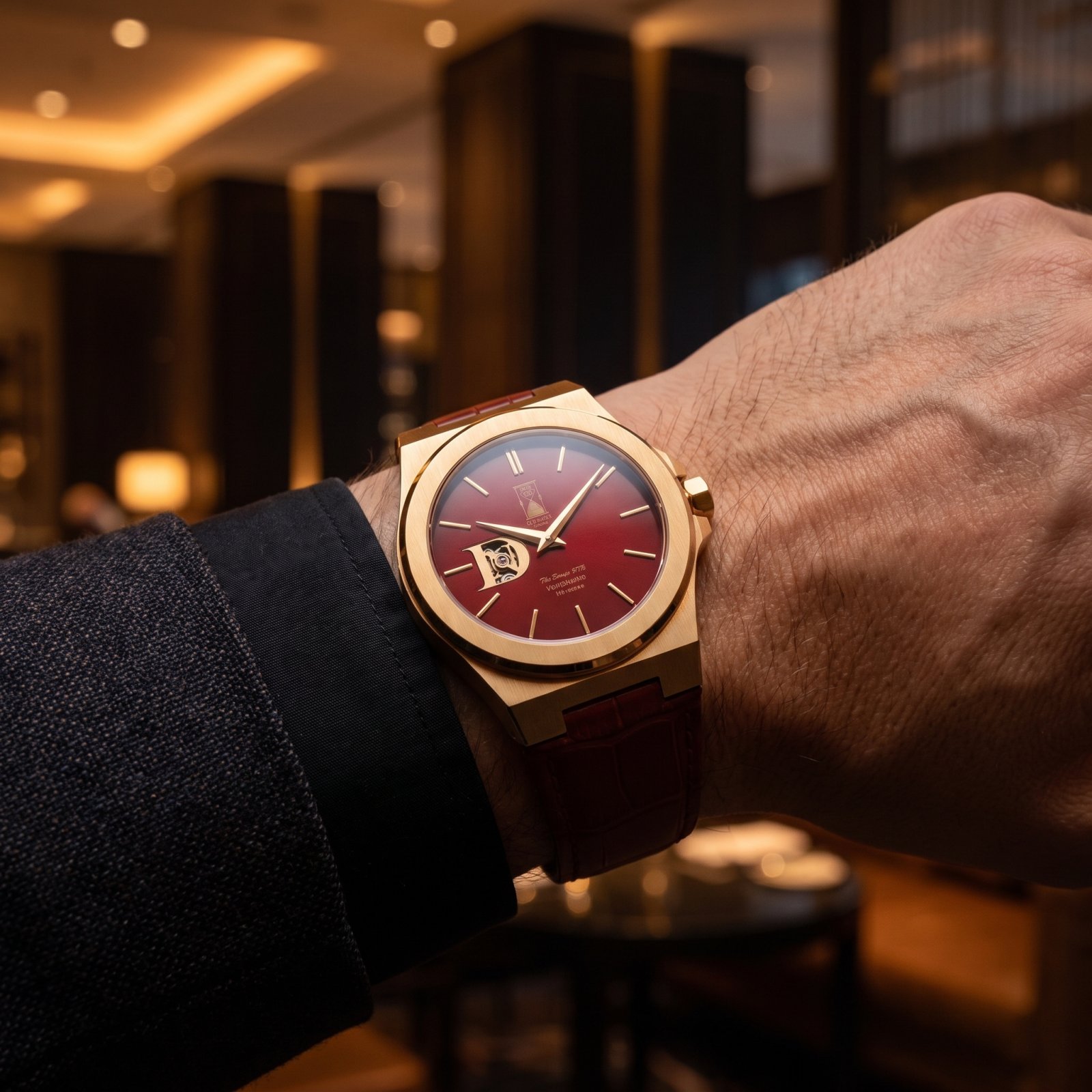
An automatic watch movement is a mechanical calibre that winds itself using the motion of your wrist, storing energy in a mainspring and releasing it through a geared regulator to drive the hands.
Daa054E8 99D7 4572 A7A8 78330Fc199F2 00001
The idea is older than most people assume. Self-winding mechanisms have powered wristwatches for roughly a century, and the core architecture has barely changed because it works.
Below, we'll trace the energy path from your wrist to the dial, then cover winding, power reserve, accuracy, and what ownership actually costs.
The Step-by-Step Energy Path Inside an Automatic Movement
Here is the full sequence, start to finish, in five numbered stages. Each stage hands energy to the next, and the loop repeats every time you move your arm.
- Wrist motion turns the rotor. The rotor, also called the oscillating weight, is a semicircular metal mass pivoting on a central bearing. As your arm swings, the rotor spins.
- The rotor winds the mainspring. Through a reduction gear, the rotor's rotation tightens the mainspring inside the barrel. Most modern calibres wind in both directions of rotor travel, so a few hours of normal wear is usually enough to keep the watch running.
- The mainspring stores energy. The mainspring is a coiled ribbon of steel. Winding it stores energy as spring tension, and that tension is the watch's only power source.
- The gear train transfers power. Stored energy leaves the barrel through the gear train: a series of wheels and pinions that step the force down and route it toward the dial-side hands. Left unchecked, that force would unwind in seconds.
- The escapement meters the release, and the balance wheel regulates the rate. The escapement locks and releases the escape wheel one tooth at a time, converting a fast, uncontrolled unwind into a measured tick. The balance wheel and its hairspring oscillate back and forth, and each swing releases one tooth of the escape wheel. That oscillation is the watch's heartbeat. Adjusting the effective length of the hairspring changes the oscillation rate, which is how a watchmaker regulates the movement.
Rotor Designs and Winding Systems
Not every automatic movement winds the same way. The two main rotor designs are the full rotor and the micro-rotor. A full rotor spans most of the movement and generates strong winding torque from modest wrist motion, which is why it dominates mass-market calibres. A micro-rotor is a smaller, denser mass set flush with the movement, which allows a thinner case but typically needs more motion to wind efficiently. Winding direction also varies: bidirectional systems wind on both swings of the rotor, while unidirectional systems wind on one direction and freewheel on the other.
From Mainspring to Hands: Gear Train and Escapement
The gear train is the transmission of the watch. It steps the barrel's slow, powerful unwinding down to the faster, lighter motion the hands need, and it routes that motion to the dial side. The escapement is the gatekeeper. A pallet fork locks and releases the escape wheel one tooth at a time, and without it the mainspring would dump its energy in seconds. Together, the gear train and escapement turn raw spring tension into countable time.
The Balance Wheel and Timekeeping
The balance wheel and hairspring form a resonant system that oscillates at a fixed rate. Each swing releases one tooth of the escape wheel, so the balance's rate directly sets the watch's rate. A watchmaker regulates the movement by adjusting the effective length of the hairspring, which changes how fast the balance oscillates. This is why position, temperature, and magnetism can shift timekeeping: they alter the balance's behavior, not the gear train's.
Automatic Watch Movement vs Quartz
An automatic watch movement is powered by a wound spring; a quartz movement is powered by a battery driving a vibrating crystal. That single difference explains almost every trade-off between them.
Feature |
Automatic |
Quartz |
|---|---|---|
Power source |
Wrist motion winds mainspring |
Battery |
Service needs |
Periodic cleaning and lubrication |
Battery replacement |
Character |
Mechanical, sweeping seconds hand |
Precise, near-zero maintenance |
Best for |
Owners who want a mechanical object |
Owners who want set-and-forget |
Neither is "better." A quartz watch is the more practical choice if you rotate watches rarely or want minimal upkeep. An automatic rewards daily wear and a little attention. The Sango 878 Collection is powered by an automatic movement, and our Automatic vs Quartz Watches guide explains that trade-off.
How to Wind an Automatic Watch
To wind an automatic watch, unscrew or pull the crown to its neutral position, turn it clockwise 20 to 40 times, then push it back in. That manual wind tops up the mainspring when the watch has been sitting unworn.
A few practical notes:
- Wind slowly and steadily. You should feel gentle resistance, never a hard stop.
- Do not force the crown past resistance; that is how winding stems break.
- If the watch has a screw-down crown, reseat it fully to protect water resistance.
- Wearing the watch daily usually makes manual winding unnecessary.
Watch out: shaking a watch to "get it going" is a common mistake. It does not wind the movement properly and puts unnecessary load on the rotor bearing.
Automatic Watch Power Reserve Explained
Power reserve is how long a fully wound automatic watch will run without being worn. Most modern automatic movements run for roughly a day and a half to two days on a full wind, though the exact figure depends on the calibre.
That number matters because it sets your habits. If you wear the watch daily, the reserve never runs dry. If you rotate several watches, a watch that sits longer than its reserve will stop and need resetting. A watch winder solves that, though it is optional rather than essential.
For a deeper look at how long a reserve lasts and what shortens it, read our guide to automatic watch power reserve facts.
Accuracy Expectations and What Affects Timekeeping
An automatic watch will not match a quartz watch for precision, and expecting it to is the fastest route to disappointment. Mechanical movements gain or lose a small amount per day, and that daily rate is the number to watch. The practical approach is to measure your own watch over a week rather than judge it from a single day.
How to Measure Your Watch's Daily Rate
Set the watch to a reference time, wear it normally for several days, then compare it to the same reference. Divide the total gain or loss by the number of days to get your average daily rate. A watch that gains ten seconds a day is behaving normally; one that gains two minutes a day has a problem worth investigating.
Factors That Shift Timekeeping
Several factors shift that rate:
- Position: a watch resting dial-up, crown-down, or on its side can run at slightly different rates. This is why a watch may keep good time on the wrist but drift overnight on the nightstand.
- Temperature: extreme cold and heat affect the hairspring and lubricants, so a watch left in a hot car or worn in freezing conditions may run fast or slow until it stabilizes.
- Magnetism: speakers, tablets, magnetic clasps, and even some phone cases can magnetize the movement and cause large, sudden gains. A watch that jumps from accurate to minutes fast overnight is a classic sign of magnetization, and a watchmaker can demagnetize it quickly.
- Wear pattern: a watch that is barely moving runs with less spring tension, which can affect rate. A watch worn daily and kept near full wind tends to be more consistent than one worn intermittently.
- Condition and servicing: dried lubricants and worn pivots increase friction, which shows up as erratic rate. A watch that has not been serviced in many years may drift more than its specification suggests.
When to Investigate
If your watch starts losing time noticeably, first check for magnetism and confirm it is fully wound. If the rate remains erratic after a full wind and a demagnetizing, a service is the appropriate next step. Our guide on why automatic watches lose time covers the fix-it checks in order. For the full picture on daily rate and how to measure your own watch, see our breakdown of automatic movement accuracy.
Automatic Movement Care, Service, and Ownership Costs
Automatic movements need periodic servicing: cleaning, fresh lubrication, and gasket replacement.
Day-to-day care matters more than most owners realize:
- Rinse and dry the case after exposure to sweat or salt water.
- Store the watch away from strong magnets.
- Have water resistance tested before relying on it for swimming.
- Keep the crown screwed down when not winding.
Our View our Watch Care & Ownership Guide covers cleaning and storage for our watch collections.
Choosing Your First Automatic Timepiece
Start with three questions: how often will you wear it, what environment will it see, and what do you want it to say about you? A daily-worn office watch and a weekend outdoor watch have different priorities.
For most first-time buyers, we recommend a versatile case material, a scratch-resistant crystal, and a movement with a proven service record. And if you're ready to make the leap, you can take 10% off Your First Timepiece to soften the entry into mechanical ownership.
Best for: professionals who want one automatic watch that moves from desk to trail without changing character. Skip if: you rarely wear a watch and want zero upkeep, in which case a quartz piece in The Pharaoh collection is the smarter buy.
Understanding how an automatic movement works changes how you wear one: you stop treating it as a battery-free gadget and start treating it as a small machine that responds to your habits.
Frequently Asked Questions
Do automatic watches need to be worn all the time?
No. An automatic watch movement winds itself from wrist motion, so it only builds power while it is being worn or moved. If you take it off for a day or two, it will keep running until the power reserve runs out, then stop. Many owners keep a small watch winder or simply give the crown a few turns before wearing it again. Wearing it regularly is the simplest way to keep it running.
How long do I need to wear an automatic watch to charge it?
There is no fixed number, because it depends on how much you move your wrist and how much reserve the movement holds. A full day of normal wear, including walking and routine tasks, usually replaces the energy used that day. If the watch has stopped, winding it manually with the crown before wearing it gives it a head start so it does not stall again the next morning.
Are automatic watches more accurate than quartz?
Generally, no. A quartz movement runs on a battery and a vibrating crystal, which holds time very steadily. An automatic watch movement relies on a balance wheel and spring, so its rate shifts with temperature, position, and how much it is worn. That does not make it worse, just different. Owners of automatic watches accept small daily variation in exchange for a mechanical movement that never needs a battery.
How do I keep my automatic watch running if I don't wear it daily?
Two options work well. A watch winder keeps the rotor turning while the watch sits in a case, so it stays wound. Or you can skip the winder and hand-wind the crown when you pick the watch up, then set the time. If you plan to store it for weeks, let it stop and keep it in a dry place. Either way, follow the care steps in your watch guide and have it serviced on schedule.


Leave a comment