


Table of Contents
- Why Automatic Watches Lose Time Daily: The Core Causes
- How a Mechanical Movement Keeps Time
- How Much Time Should an Automatic Watch Lose Per Day?
- Automatic Watch Magnetized Symptoms and Safe Checks
- How to Wind an Automatic Watch for Consistent Power
- Automatic Watch Accuracy Test You Can Run at Home
- Position, Temperature, and Wearing Habits: The Everyday Variables
- When to Seek Professional Service for Your Automatic Watch
- Frequently Asked Questions
Last Updated: October 12, 2026
Why Automatic Watches Lose Time Daily: The Core Causes
If your automatic watch loses a few seconds each day, that is normal. If it loses minutes, something is wrong.
An automatic watch is a mechanical timepiece powered by the movement of your wrist, not a battery. Inside, a weighted rotor spins with your arm and winds the mainspring.
It's a small mechanical system. Small systems drift.
Most daily variation comes from five sources:
- Magnetism from phones, laptops, and speakers
- Low power from not enough wrist movement
- Position and orientation while resting
- Temperature swings
- Dirt or dried lubricant inside the movement
The good news: you can test most of these at home in under a week.
How a Mechanical Movement Keeps Time
A mechanical movement keeps time through a chain of stored and released energy. The mainspring stores power. The gear train delivers it. The escapement releases it in steady ticks.
That rate is your watch's heartbeat. Anything that changes the swing changes the time.
The balance wheel is tiny and light. A magnetic field can pull it slightly. Thick oil can slow it. A weak mainspring can starve it of power.
How Much Time Should an Automatic Watch Lose Per Day?
There is no single number that applies to every automatic watch. What counts as normal depends on the movement inside the case and the specification the maker publishes for it. A few seconds per day is a common expectation for a well-regulated mechanical movement, but the only figure that matters for your watch is the one in its manual or on the manufacturer's product page.
Here is how to read your own results:
- A few seconds per day: Typical for a well-regulated mechanical movement and generally considered normal.
- Under a minute per day: Often correctable with a full wind or demagnetizing, but worth watching over a week.
- Several minutes per day: Usually points to magnetism, low power, or a mechanical fault rather than ordinary variation.
- Hours per day: Stop wearing the watch and have it inspected by a watchmaker.
Accuracy Tolerances by Movement and Manufacturer
Every movement family has its own accuracy target, and manufacturers publish those targets in different ways. Some rate a movement to a range of seconds per day.
This matters because two watches can show the same daily deviation and only one of them has a problem.
A practical way to set your baseline:
- Find the stated tolerance for your specific movement or watch model.
- Run the at-home test below for five to seven days.
- Average the daily deviation.
- Compare that average to the stated tolerance, not to a generic internet number.
If your average sits inside the maker's range, the watch is doing its job.
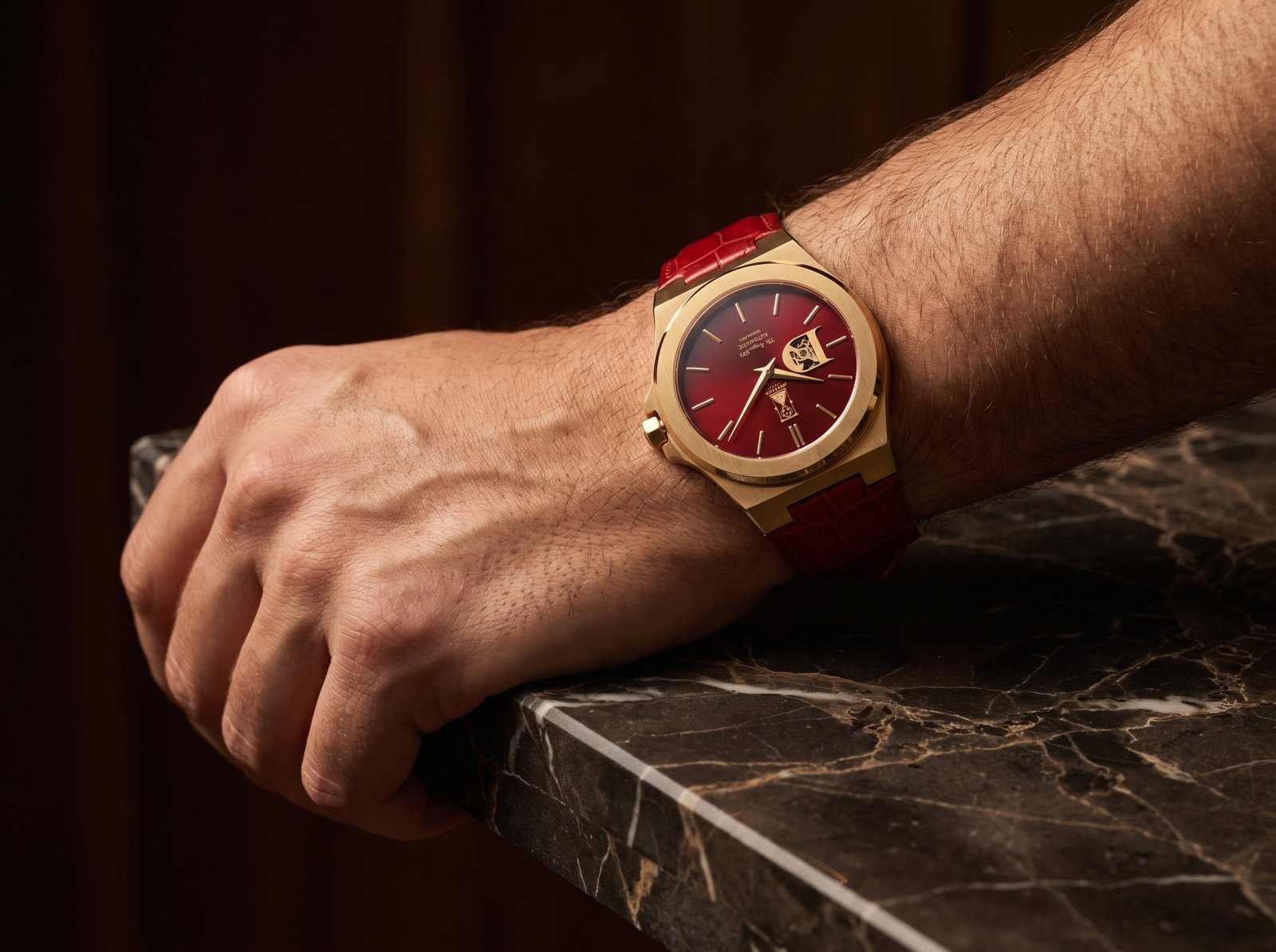
The Seiko NH38 movement in The Sango 878 is a workhorse automatic built for daily wear.
Automatic Watch Magnetized Symptoms and Safe Checks
Magnetism is one of the most common causes of a sudden, large change in rate. If your watch kept good time last week and is now minutes off, magnetism belongs near the top of your suspect list. The balance wheel and hairspring are small steel components, and a strong enough magnetic field can pull them out of their designed rhythm.
Symptoms that point toward magnetism:
- A sudden change in rate, often running fast by minutes per day
- A rate that shifts from day to day instead of holding steady
- Different behavior in different resting positions
- A rate change that appears after the watch was near electronics or a magnetic closure
Common magnetic sources in daily life:
- Phone speakers and magnetic phone cases
- Laptop speakers and wireless charging pads
- Tablet covers and folio cases with magnetic closures
- Refrigerator door seals
- Purse clasps, bag magnets, and magnetic jewelry
- Security screening equipment at public venues
Safe Screening Before You Treat Anything
A compass can give you a rough signal, but it is a screening tool, not a diagnosis. Hold a small compass a few inches from the watch and watch the needle. A noticeable deflection suggests the watch may be holding some magnetism. A steady needle suggests it probably is not. The compass tells you whether to look closer, not whether to start treatment.
A few cautions worth knowing:
- Keep the compass away from the watch when you are not testing, so you do not confuse the reading.
- Do not assume every fast-running watch is magnetized. A watch that runs fast in one position and slow in another may simply have a positional variation problem.
- Do not use improvised methods such as strong household magnets, speaker coils, or repeated tapping to "fix" a magnetized watch. These can add magnetism rather than remove it, and they risk disturbing the hairspring.
How to Demagnetize Safely
Demagnetizing is best handled with equipment made for the job. A dedicated demagnetizer is a small device sold by watch supply shops and many jewelers. It applies an alternating field that neutralizes residual magnetism in the movement.
General steps for using one:
- Confirm the watch is running and the crown is pushed in.
- Turn on the demagnetizer according to its instructions.
- Hold the watch a few inches above the unit.
- Slowly pull the watch away while the unit is still running.
- Turn the device off.
- Recheck with the compass and re-time the watch over the next day.
If you do not own a demagnetizer, a watchmaker can perform the procedure in minutes. It is one of the least expensive services in watch care, and it is worth doing before you consider a full service.
Never rest a mechanical watch on a speaker, a magnetic phone case, a charging pad, or a bag with a magnetic clasp. Even brief, repeated exposure can leave residual magnetism in the balance assembly and cause a sudden change in rate.
How to Wind an Automatic Watch for Consistent Power
An automatic watch only runs well when it has enough power. If you sit at a desk all day, your wrist barely moves. The rotor spins little. The mainspring stays under-wound.
How to wind an automatic watch by hand:
- Pull the crown out to the first position (not the time-setting position)
- Turn it clockwise about 20 to 30 times
- Push the crown back in
- Wear the watch normally
A fully wound automatic should run for its stated power reserve, often around 40 hours for standard movements. If it stops overnight, it was not fully wound.
Distinguishing Low Power from a Mechanical Fault
Low power and a mechanical fault look similar. Both cause time loss. Here's how to tell them apart.
- Low power: Watch loses time slowly, stops overnight, runs fine after a full wind
- Mechanical fault: Watch loses time even when fully wound, ticks unevenly, or stops during the day
Do a full wind and wear the watch for two days. If accuracy is still off, the issue is mechanical.

Automatic Watch Accuracy Test You Can Run at Home
You can measure your watch's daily deviation in a week with no tools. This is the most useful thing you can do before deciding what to fix.
How to run the test:
- Set your watch to an accurate reference time (use a phone clock)
- Note the exact time and date
- Wear the watch normally for 24 hours
- Note the time again at the same hour
- Record the difference in seconds
- Repeat for 5 to 7 days
- Average the daily differences
Track it in a simple table:
Day |
Start Time |
End Time |
Deviation (sec) |
Notes |
|---|---|---|---|---|
1 |
8:00 AM |
8:00 AM |
-4 |
Wore all day |
2 |
8:00 AM |
8:00 AM |
-6 |
Desk work |
3 |
8:00 AM |
8:00 AM |
-3 |
Active day |
4 |
8:00 AM |
8:00 AM |
-22 |
Near laptop speaker |
5 |
8:00 AM |
8:00 AM |
-5 |
Full wind |
A sudden spike on one day tells you what happened. A steady drift tells you the movement's baseline.
The Troubleshooting Decision Tree
Use this order to find the cause fast:
- Watch loses minutes per day? Check for magnetism first.
- Watch stops overnight? Wind it fully and retest.
- Watch loses time only on some days? Track your wearing habits.
- Watch runs fine on the wrist, off on the desk? Check position.
- Watch still off after demagnetizing and full wind? See a watchmaker.
This order saves money. Most issues resolve at step one or two.
Position, Temperature, and Wearing Habits: The Everyday Variables
Where your watch rests at night changes its rate. Gravity pulls on the balance wheel differently in each position.
Try this: note the rate with the watch face up. Then try crown up, crown down, and face down.
Temperature matters too. Ambient temperature swings affect the oil in the movement. Cold thickens it. Heat thins it.
Wearing habits are the biggest variable of all. A watch worn daily and moved often stays fully wound.
If you rotate several watches, keep a small log of each one's daily rate and resting position. After a month, you'll know exactly where each watch runs best. That knowledge beats any generic advice.
When to Seek Professional Service for Your Automatic Watch
Some problems need a watchmaker. Know when to stop troubleshooting and hand it over.
See a professional if:
- Time loss continues after demagnetizing and full winding
- The watch ticks unevenly or stops during the day
- You hear grinding or feel roughness when winding
- The watch has not been serviced in many years
- The watch was dropped or hit hard
A full service cleans the movement, replaces worn parts, and re-lubricates the gears. Most automatic watches need this every several years depending on use. Dirt and dried lubricant are slow killers.
At Day & Night Watch Co., every automatic timepiece we build is covered by a two-year warranty. The Sango 878 is crafted from 316L stainless steel and sapphire crystal, and it is designed to be worn hard and cared for simply. If you're ready to start with a watch that's built to hold its standard, you can take 10% off your first timepiece with 10% off Your First Timepiece.
Your automatic watch will drift. That's the nature of a mechanical movement. What matters is knowing why it drifts and what to do about it. Check magnetism first. Wind it fully.
Frequently Asked Questions
Why does my automatic watch lose time every day?
Automatic watches lose time daily for several reasons: insufficient winding, exposure to magnetic fields, temperature changes, or normal mechanical variation. The most common cause is low power reserve, which happens when the watch isn't worn long enough to stay fully wound. If your automatic watch loses time consistently, start by winding it fully and monitoring the daily deviation. If the loss exceeds your movement's accuracy specification, a watchmaker can check for magnetization or mechanical wear.
How much time should an automatic watch lose per day?
Most automatic watches lose a few seconds per day, depending on the movement and manufacturer's accuracy specification. The Seiko NH38 movement, used in The Sango 878, is designed for reliable daily performance. If your watch loses time consistently, it may need regulation or demagnetization. Keep in mind that daily deviation varies with position, temperature, and how fully wound the mainspring is.
Can an automatic watch run slow if it is not fully wound?
Yes. When the mainspring is under-wound, it delivers less power to the escapement, which reduces the balance wheel's amplitude and causes the watch to run slow. This is the most common reason an automatic watch loses time. To fix it, wind the watch 30 to 40 turns or wear it for 8 to 10 hours daily. If the watch still runs slow after full winding, the issue is likely mechanical rather than power-related.
How can I tell if my automatic watch needs servicing?
Signs your automatic watch needs professional service include a sudden increase in daily deviation, a stopped watch even after full winding, or visible dirt and debris inside the movement. If your watch loses time despite full winding, demagnetization, and consistent wear, a watchmaker should inspect the movement for wear, lubrication breakdown, or a mechanical fault.


Leave a comment