


Table of Contents
- What Makes a Watch Durable Enough for Construction Work
- Quick Comparison: 5 Durable Watches for Construction Work
- 1. The Sango 878 Gunmetal Eclipse: Best Overall for Construction
- 2. The Sango 878 Crimson Dawn: Automatic Durability With Style
- 3. The Thutmos3: Bold Quartz Reliability for Daily Wear
- 4. The Xerxes: Budget-Friendly Toughness in Stainless Steel
- 5. The Nitocris: Refined Durability for Women on the Jobsite
- Shock-Resistant Watches: What Actually Protects the Movement
- Frequently Asked Questions
Last Updated: October 12, 2026
What Makes a Watch Durable Enough for Construction Work
Durable watches for construction work are timepieces built to survive impact, dust, moisture, and daily abuse without losing accuracy or legibility. The difference between a watch that lasts a decade on site and one that quits in a month comes down to three things: how the case protects the movement, what the crystal is made of, and whether the movement itself can take a hit. This guide from Day & Night Watch Co. breaks down those factors, then ranks five timepieces that hold up.
Most guides treat "durable" as a single checkbox. It isn't. A watch can have a scratch-resistant crystal and still fail because the case lets dust into the movement. It can be water-resistant and still crack when it clips a ladder rung. Durability is a system, and the weakest part decides how long the watch survives.
Impact Protection and Case Construction
Impact protection starts with case construction. A shock-resistant watch absorbs sudden force through a combination of case geometry and how the movement sits inside it. The anti-shock setting, a spring-mounted bearing that lets the movement float slightly, is what keeps a hard knock from transferring straight into the gear train.
Materials matter just as much. 316L stainless steel resists corrosion and holds its shape under repeated impact, which is why it's the standard for work-grade cases. Resin and titanium appear in this category too, but stainless steel balances toughness, weight, and cost better than either for most trades.
Movement Type: Quartz vs. Automatic on the Jobsite
Quartz movement uses a battery and a vibrating crystal to keep time, which makes it accurate and largely immune to the jolts that throw off a mechanical watch. Automatic movement draws power from the motion of your wrist and carries no battery, but it has more moving parts that shock and magnetism can disturb.
For pure abuse tolerance, quartz has the edge: fewer parts, no mainspring, nothing to knock out of regulation. Automatic wins on craftsmanship and longevity, and a well-built automatic with a solid anti-shock setting handles site work fine. The trade-off is maintenance. Quartz needs a battery replacement every few years; automatic needs servicing over the long term but never stops for a dead cell.
Quick Comparison: 5 Durable Watches for Construction Work
Watch |
Movement |
Price |
Best For |
|---|---|---|---|
Automatic (Seiko NH38) |
$369.00 |
Best overall |
|
The Sango 878 Crimson Dawn |
Automatic (Seiko NH38) |
$369.00 |
Style plus durability |
The Thutmos3 |
Quartz |
$309.00 |
Bold daily wear |
The Xerxes |
Quartz |
$289.00 |
Budget toughness |
The Nitocris |
Quartz |
$289.00 |
Women on site |
1. The Sango 878 Gunmetal Eclipse: Best Overall for Construction
Our top pick for construction work is The Sango 878 Gunmetal Eclipse. It pairs a 316L stainless steel case with a sapphire crystal, the two materials that matter most when your wrist spends the day near tools and framing. The gunmetal finish hides the scuffs that show up fast on polished steel.
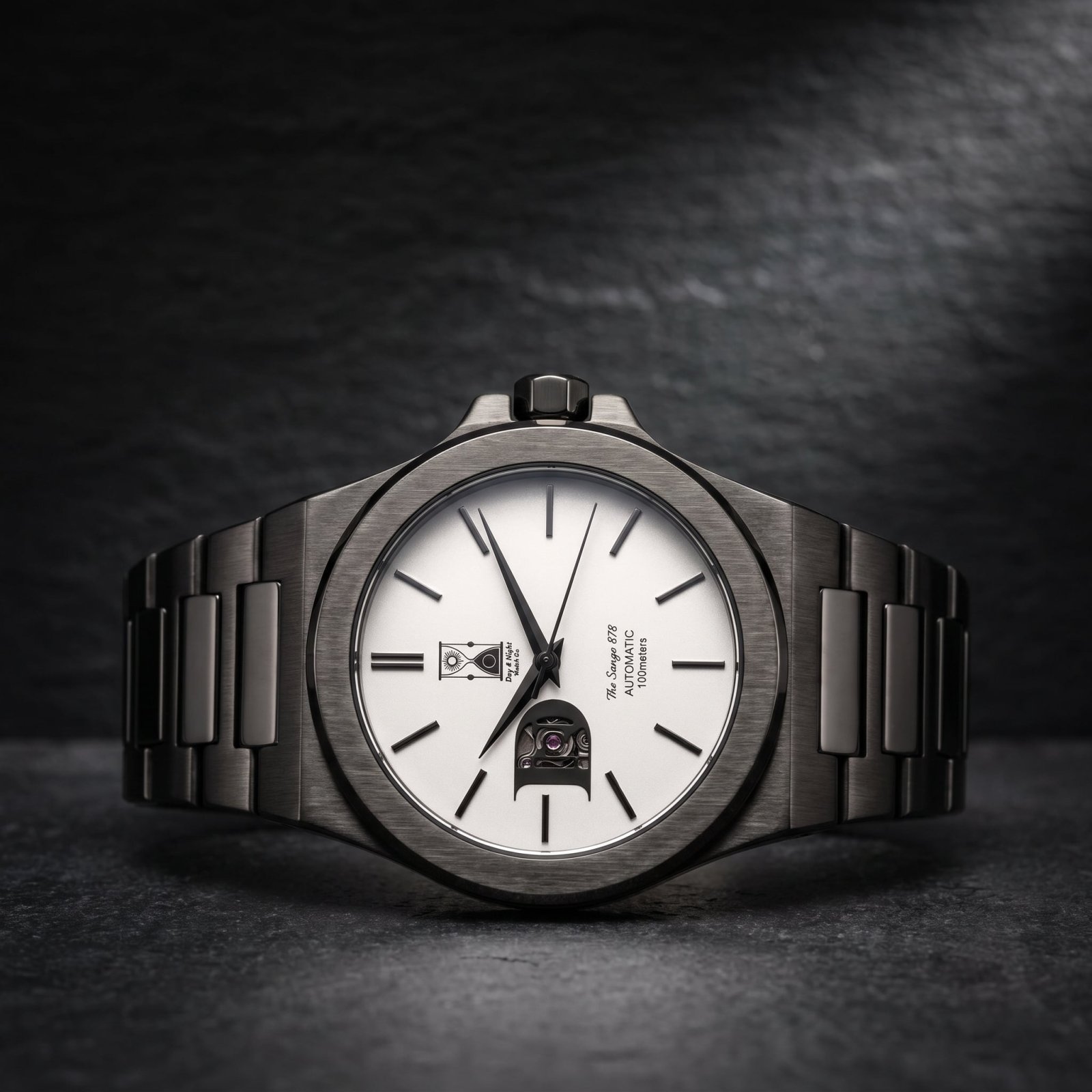
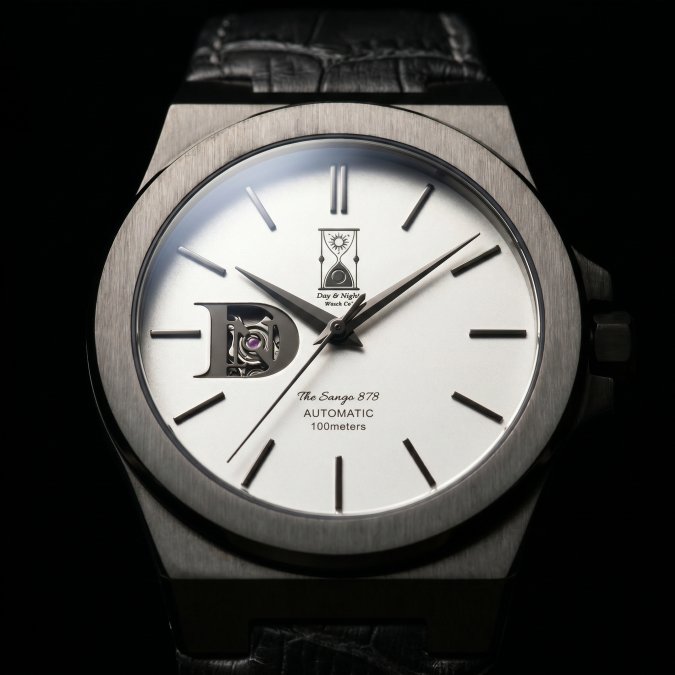
Inside, the Seiko NH38 automatic movement is a known quantity among watch enthusiasts, and the anti-shock setting helps it shrug off the knocks that come with the trade. Water resistance up to 100 meters covers rain, washdowns, and the occasional splash from a hose. The one honest limitation: an automatic movement rewards a wearer who keeps it moving. Leave it in a drawer for a week and you'll reset it before you strap it on.
2. The Sango 878 Crimson Dawn: Automatic Durability With Style
The Sango 878 Crimson Dawn runs the same Seiko NH38 automatic movement and the same sapphire crystal as our top pick, wrapped in a rose gold finish that reads dressy enough for the office. If you move between a site trailer and a client meeting, this is the version that doesn't look out of place in either.
Durability here is identical to the Gunmetal Eclipse: 316L stainless steel case, sapphire crystal, 100-meter water resistance, two-year warranty. What changes is the look. The rose gold tone will show wear differently than gunmetal, and if you're hard on finishes, a darker case hides scratches better. Pick this one for the colorway, not for a durability upgrade.
3. The Thutmos3: Bold Quartz Reliability for Daily Wear
If you want the set-and-forget reliability of quartz, The Thutmos3 delivers it in a stainless steel bracelet watch with a black dial. No battery anxiety mid-project, no resetting after a weekend off the wrist. Quartz movements simply don't care whether you wore the watch yesterday.
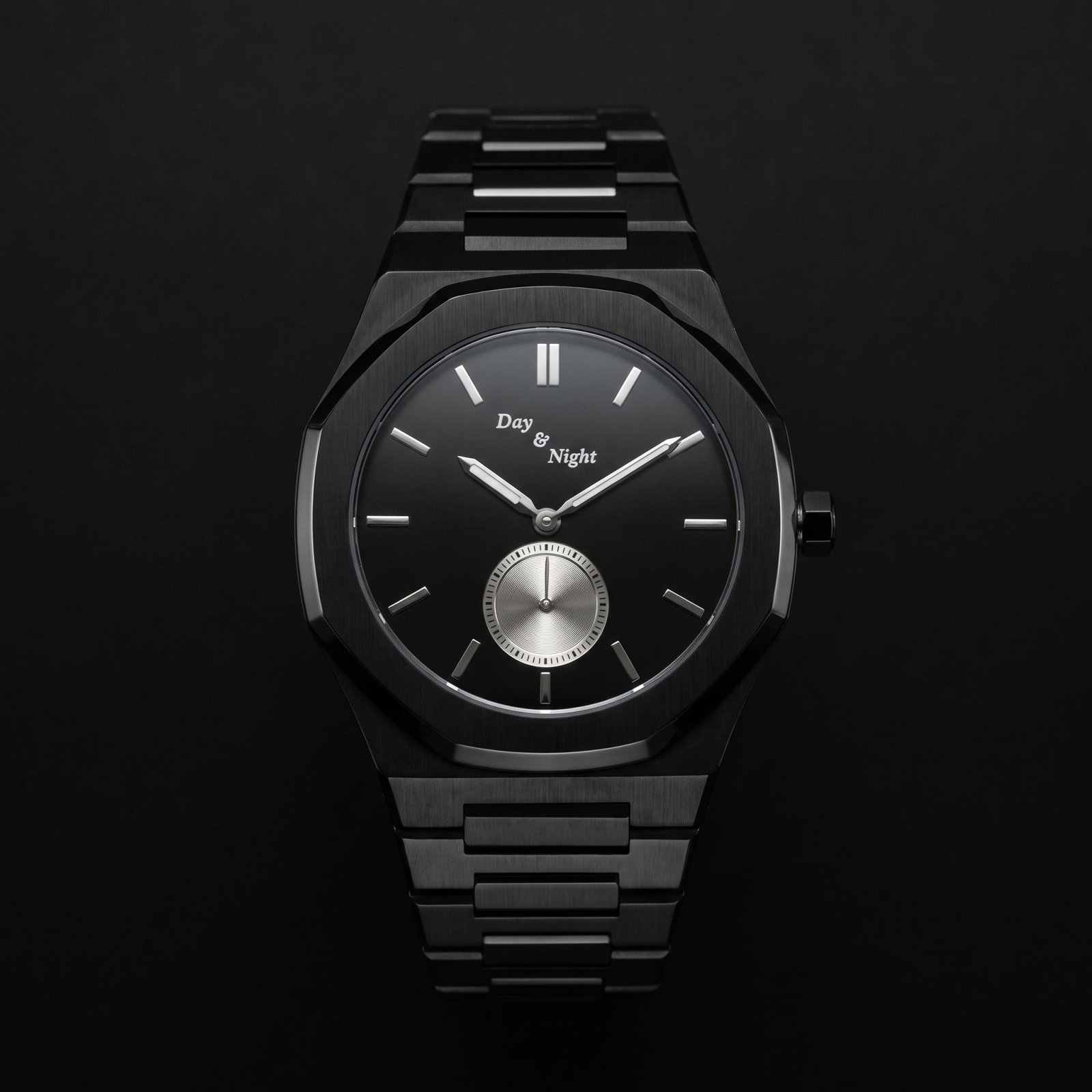
The black finish and stainless steel build suit daily wear on and off site, and the two-year warranty covers the movement. At $309.00, it sits between our automatic picks and the budget option below. Where it falls short of the Sango 878 models: no sapphire crystal is specified, so treat the crystal as more vulnerable to deep scratches over years of abrasive dust.
4. The Xerxes: Budget-Friendly Toughness in Stainless Steel
The Xerxes is the value pick. At $289.00, it brings a stainless steel case and a clean quartz movement to the table without the automatic premium. For anyone who wants a work watch that looks sharp and doesn't demand winding or servicing, this is the sensible entry point.
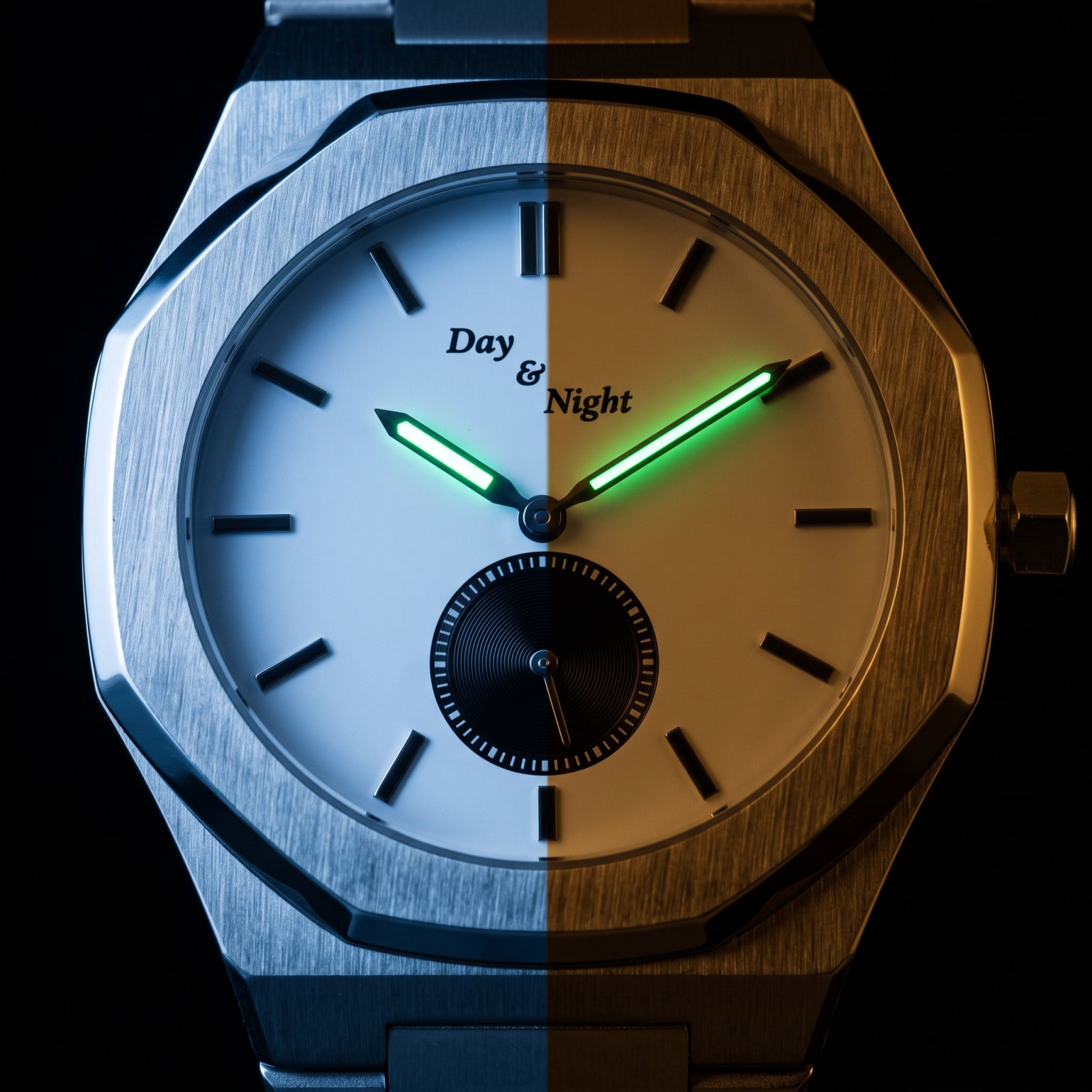
Silver stainless steel resists corrosion and holds up to the abrasion that comes with concrete, rebar, and gravel. The quartz movement keeps time accurately through vibration that would unsettle a mechanical watch. The trade-off is straightforward: you give up the sapphire crystal and the automatic craftsmanship of the Sango 878 line. For a first serious work watch, that's a fair deal.
5. The Nitocris: Refined Durability for Women on the Jobsite
The Nitocris is built for women who need a watch that survives the site and still looks refined at the end of the day. It's a stainless steel bracelet watch from the Queen Pharaoh Collection with an aqua blue dial and a quartz movement, priced at $289.00.
Quartz reliability means accurate timekeeping through impact and vibration, and the stainless steel case handles the daily grind of construction work. The two-year warranty backs the movement. It's the lightest-looking option in this lineup, but the materials underneath are the same work-grade stainless steel as the rest.
Shock-Resistant Watches: What Actually Protects the Movement
A shock-resistant watch protects its movement through an anti-shock setting, a raised bezel, and a case that keeps the crystal clear of flat surfaces. The anti-shock setting is the core: it suspends the movement so a sudden jolt compresses a spring instead of cracking a pivot. Three features do the heavy lifting:
- Anti-shock setting: lets the movement float and absorb impact instead of transmitting it to the gear train
- Protective bezel: sits above the crystal so the glass never takes a direct hit when the watch lands face-down
- Sapphire crystal: resists the scratches that abrasive dust and grit inflict on softer glass
Construction-Specific Hazards
Most durability guides stop at shock and water resistance. On a real site, the threats are more specific:
- Fine dust ingress: Concrete dust, drywall dust, and sand are fine enough to work past crown threads and case gaskets. Once inside, grit abrades the movement and seals. Keep the crown screwed down and rinse the watch after dusty shifts.
- Alkaline cement exposure: Wet cement and mortar are alkaline and can pit finishes and dry out rubber gaskets over time. Rinse promptly rather than letting residue cure on the case.
- Solvents and chemicals: Adhesives, sealants, and cleaning solvents can cloud a crystal, degrade a strap, or attack case finishes. If your trade puts you around solvents, a stainless steel case and a sapphire crystal are the most resistant combination.
- Abrasion: Rebar, brick, and gravel scratch softer materials quickly. A raised bezel and sapphire crystal take the abuse so the case and glass don't.
PPE and Jobsite Safety Compatibility
A watch is worn equipment, and it needs to work with the rest of your gear:
- Snag risk: A thick case, protruding crown, or loose strap can catch on gloves, sleeves, or machinery. Keep the case profile low, the crown guarded, and the strap snug. Avoid metal bracelets with loose links around rotating equipment.
- Glove and sleeve compatibility: A watch that sits too high on the wrist won't fit under a work glove cuff. A thinner case and a flexible strap make it easier to wear with gloves all day.
- Rotating machinery: Near drills, saws, lathes, and other rotating equipment, a watch can be a catch point. Many sites require removing jewelry and watches near exposed rotating parts. Follow your site's rules; a watch is never worth a hand.
- Magnetic and electrical fields: Strong magnets and energized equipment can affect a mechanical movement. Quartz is less susceptible, but no watch belongs near live electrical work beyond what your PPE allows.
Cleaning and Care After a Shift
A two-minute routine extends the life of any watch on this list more than any spec sheet can:
- Rinse the case and bracelet with fresh water to remove dust, cement residue, and sweat.
- Wipe dry with a soft cloth, paying attention to the crown, case back, and gaps around the bezel.
- Check that the crown is fully screwed down before the next shift.
- Inspect the strap for cracks or stretching and replace it before it fails.
- Store the watch somewhere dry, not in a damp locker or toolbox.
If you're ready to pick one up, first-time buyers can take 10% off Your First Timepiece from Day & Night Watch Co.
Frequently Asked Questions
What kind of watch can handle heavy construction work?
A watch built for heavy construction needs a stainless steel case, a scratch-resistant crystal like sapphire, and solid water resistance. Automatic movements with shock protection and quartz movements both work well. The Sango 878 Gunmetal Eclipse offers 316L stainless steel construction, sapphire crystal, and 100-meter water resistance, making it a strong option for demanding jobsite conditions.
Are digital or analog watches better for construction work?
Analog watches offer easier reading at a glance and hold up well when protected by sapphire crystal and a solid case. Digital watches provide extra functions like timers but often have plastic casings that crack under impact. For most construction workers, an analog watch with a stainless steel case and scratch-resistant crystal delivers the best balance of legibility and toughness.
Are smartwatches durable enough for construction work?
Most smartwatches use glass screens and plastic or aluminum cases that scratch and crack more easily than sapphire crystal and stainless steel. They also need frequent charging, which is impractical on long shifts. A traditional watch with a durable case and crystal, like The Thutmos3 or The Xerxes, avoids those problems and keeps running without daily charging.
What watch materials resist scratches and impacts?
Sapphire crystal ranks among the most scratch-resistant watch crystals available, far outperforming mineral glass and acrylic. For the case, 316L stainless steel resists corrosion and handles impact better than resin or plated metals. Titanium offers lighter weight with good strength. Silicone and resin straps absorb shock and resist sweat better than leather on a jobsite.
Should you wear a watch while operating construction equipment?
Wearing a watch on equipment is generally fine, but a loose bracelet or oversized case can snag on controls, cables, or moving parts. Choose a watch with a snug fit and a low-profile case. If your worksite requires removing jewelry near rotating equipment, follow those rules. A silicone or resin strap reduces snag risk compared to metal bracelets.


Leave a comment