


Last Updated: October 26, 2026
Quick Summary
Most automatic watch power reserve figures land between 36 and 48 hours, the mainstream range for common calibers. Some movements stretch to roughly 70 hours, while a smaller group of extended-reserve models claim 8 to 10 days. A 36-hour reserve is enough to avoid winding more than once a day.
- A 36-hour reserve is enough to avoid winding more than once a day for daily-wear watches.
- Advertised reserve assumes a full wind, and many automatics never reach that state in daily use.
- Wind the crown clockwise roughly 30 to 40 full turns and stop at firm resistance.
- Fewer than eight hours of active wear per day may not replenish the mainspring.
- Test your reserve once a year, since a gradual decline can signal that service is due.
Table of Contents
- What Is a Power Reserve on a Watch and Why It Matters
- Automatic Watch Power Reserve Hours: The Typical Range
- 7 Factors That Change How Long Your Watch Runs
- How to Wind an Automatic Watch Correctly
- Checking Your Real-World Reserve Against the Advertised Number
- When an Automatic Watch Winder Makes Sense
- Troubleshooting a Power Reserve That Falls Short
- Choosing a Timepiece That Matches Your Wearing Routine
- Frequently Asked Questions
What Is a Power Reserve on a Watch and Why It Matters
An automatic watch power reserve is the amount of time a fully wound mainspring can keep the movement running without any new energy input. In plain terms, it is your watch's battery-free fuel tank.
Why does that matter? Because an automatic watch is not truly automatic. It needs motion. Take it off Friday night, leave it in a drawer, and the spring drains whether you are wearing it or not.
The honest answer depends on the movement inside.
Automatic Watch Power Reserve Hours: The Typical Range
Most automatic watch power reserve figures land between 36 and 48 hours. That is the mainstream range for common calibers.
Here is the practical breakdown:
- 30 hours or less: modest reserve, common on older or entry calibers
- 36 to 42 hours: the everyday standard for most automatics
- 48 to 72 hours: comfortable for a weekend off the wrist
- 8 to 10 days: extended reserve, usually a premium feature
A 36-hour reserve is enough to avoid winding more than once a day, as Craft & Tailored's discussion of power reserve priorities points out. For a daily-wear watch, that is genuinely sufficient.
Here is the practical breakdown of what different power reserve figures mean.
| Reserve | What it means |
|---|---|
| 30 hours or less | Modest reserve, common on older or entry calibers |
| 36 to 42 hours | The everyday standard for most automatics |
| 48 to 72 hours | Comfortable for a weekend off the wrist |
| 8 to 10 days | Extended reserve, usually a premium feature |
7 Factors That Change How Long Your Watch Runs
Seven variables decide whether you get the advertised number or something well short of it. The first two carry the most weight, but the rest explain why two identical watches can behave differently.
Wearing Activity and Wrist Movement
The rotor only spins when your wrist moves. A desk job with steady typing generates far less winding energy than a day of walking, lifting, or commuting on foot.
This is the factor most new owners underestimate. A watch is not charging itself by sitting on your arm. It is charging itself from motion. Even eight hours of wear may not fully replenish a mainspring if most of that time is sedentary.
Movement Caliber and Mainspring Design
The caliber sets the ceiling. Mainspring length, thickness, and the gear train's efficiency all shape how much stored energy converts into running time. A well-designed 40-hour movement can outperform a poorly executed 60-hour one in real use.
Then there is the accuracy trade-off. Pushing a mainspring to deliver a very long reserve often means running it at lower torque near the end of the wind. That can affect timekeeping consistency. Reserve and accuracy are related, not independent.
Winding State: Fully Wound vs. Partially Wound
Advertised reserve assumes a full wind. In daily use, many automatics never reach that state. If you wear the watch for a few hours after a weekend off, the spring may be only half full, and you will see a shorter reserve than the spec sheet promises. This is normal, not a defect.
Temperature and Environmental Conditions
Extreme cold thickens lubricants and increases friction, which can shorten running time. Heat can also affect lubrication over time. Most wearers will not notice unless they spend long periods outdoors in severe conditions, but it is a real variable in observed reserve.
Age and Service Condition
As a movement ages, lubricants dry and friction increases. A watch that delivered 42 hours when new may drop to 36 or less after several years without service. This is one reason a short reserve can signal that service is due rather than a manufacturing fault.
Position and Resting Orientation
How you set the watch down matters less for reserve than for accuracy, but it can have a minor effect. Leaving a watch dial up versus crown down changes the load on certain pivots and can influence how efficiently the remaining energy is used. The effect is small, but it is one reason test results vary.
Magnetic Fields
Phones, speakers, and magnetic clasps can magnetize a movement. Magnetization primarily affects accuracy, but in some cases it can also alter running behavior and shorten observed reserve. A demagnetizer is inexpensive and often resolves the issue.
How to Wind an Automatic Watch Correctly
The right method is simple: unscrew or pull the crown to the winding position, turn it clockwise roughly 30 to 40 full turns, then push it back in.
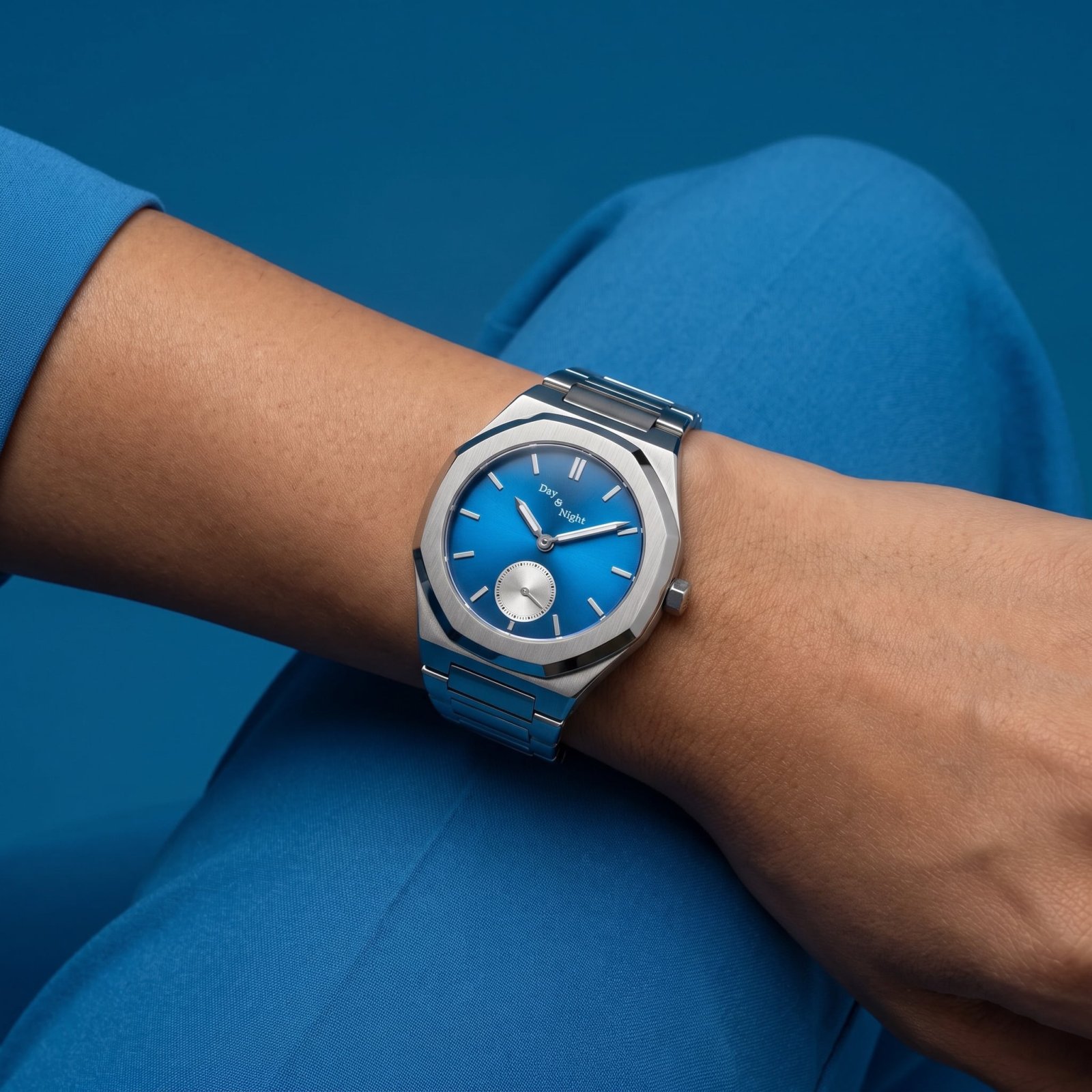
A few rules worth following:
- Wind in the morning so the spring starts the day full
- Never yank the crown; steady turns only
- Hand-winding is safe on movements designed for it, but the rotor does the work once you wear it
- If the watch has been sitting for weeks, give it a full wind before setting the time
Watch out: over-winding by force can damage the crown or stem. For the longer-term picture, our guide on how to maintain automatic watch movement covers service intervals and storage.
Checking Your Real-World Reserve Against the Advertised Number
Advertised reserve and real-world reserve are two different numbers. Here is how to test yours directly and interpret what you find.
The Full-Wind Stopwatch Test
- Wind the watch fully. Turn the crown clockwise until you feel firm resistance, usually 30 to 40 full turns. Do not force past that point.
- Note the exact time to the minute.
- Set it down, dial up, in a quiet spot. Do not wear it.
- Check it every few hours until the seconds hand stops.
- Record the total elapsed time.
That figure is your observed reserve. Compare it to the manufacturer's specification for your movement. A common pattern is for a watch rated at 40 hours to stop somewhere between 36 and 40 hours when fully wound and rested. If yours stops at 28, something is off.
Interpreting the Result
A short result does not always mean a fault. Consider these possibilities in order:
- Was it fully wound? A partial wind will always produce a shorter reserve. Repeat the test after a full wind to confirm.
- Was it truly at rest? Any movement during the test adds energy. Keep it still.
- How old is the watch? Age and service condition can reduce reserve by several hours. If the watch has not been serviced in many years, a shorter reserve may be expected.
- Is it magnetized? Magnetization usually affects accuracy more than reserve, but it can contribute. A demagnetizer is a low-cost check.
If the watch is fully wound, rested, and still falls well short of spec, and it is otherwise due for service, a watchmaker can measure amplitude and determine whether the mainspring or gear train needs attention.
Why Advertised Numbers Vary
Manufacturers measure reserve under controlled conditions: full wind, constant temperature, and a specific resting position. Real-world use introduces motion, temperature swings, and partial winding. That is why a watch that claims 42 hours may deliver 38 in daily life and still be perfectly healthy.
For context on overall movement longevity, see how long an automatic watch should last.
When an Automatic Watch Winder Makes Sense
An automatic watch winder is a motorized box that rotates your watch to keep it wound while stored. It solves one specific problem: keeping a watch running when you are not wearing it.
It makes sense if you:
- Rotate between several automatics and want each one ready to wear
- Own a watch with a calendar or moonphase that is tedious to reset
- Keep a dress watch for occasional wear only
It does not make sense if you wear one watch daily. Your wrist already does the job. Winders add cost, take up dresser space, and introduce one more thing that can fail. Skip them unless you genuinely rotate.
Troubleshooting a Power Reserve That Falls Short
A watch running short usually has one of four causes. Work through them in order.
- Insufficient wear: the most common culprit. Fewer than eight hours of active wear per day may not replenish the spring.
- Sedentary routine: typing and mouse work generate little rotor motion. Add a morning hand-wind.
- Magnetization: phones, speakers, and magnetic clasps can pull a movement off rate and, in some cases, affect running. A demagnetizer is inexpensive.
- Service due: dried lubricants increase friction and drain the reserve. Most automatics need service every several years.
If your watch is losing time as well as running short, our guide on why automatic watches lose time daily walks through accuracy tests and magnetization checks step by step.
Choosing a Timepiece That Matches Your Wearing Routine
Match the watch to your life, not to a spec sheet. That is the whole decision.
If you wear one watch every day, a standard 36 to 42-hour automatic is plenty. If you rotate across a collection, look for 48 hours or more, or budget for a winder.
The Sango 878 Collection runs on the NH38 automatic movement, wrapped in 316L stainless steel with sapphire crystal and water resistance to 100 meters. If you are still weighing your options, our roundup of the best automatic watches for professional men compares movement specs and dress-code fit. And if you are ready to start with your first automatic, you can take 10% off Your First Timepiece.
Best for: daily wearers who want one reliable automatic. Skip if: you need a 10-day reserve for a watch that lives in a safe.
Frequently Asked Questions
How long does a typical automatic watch run when fully wound?
Most automatic watches run between 36 and 48 hours on a full wind. Entry-level movements often sit near 38 to 40 hours, while some calibers reach 70 hours or more. Real-world time depends on how much wrist movement the watch received before you set it down.
What affects an automatic watch's power reserve?
Four things matter most: how active you are while wearing it, the caliber and mainspring inside, the watch's age and service history, and temperature. A desk job supplies far less rotor movement than a day of walking and lifting. Worn mainsprings and dried lubricants reduce reserve over time, which is why a watch that once ran 40 hours may drop to 30 before a service.
Will an automatic watch stop if I do not wear it?
Yes. An automatic watch only builds power while it moves, so it will stop once the mainspring unwinds. A watch with 40 hours of reserve stops roughly a day and a half after you take it off.
Does a watch winder extend an automatic watch's power reserve?
A winder does not extend the reserve itself; it keeps the mainspring topped up so the watch never stops. That saves you from resetting the time and date each time you switch watches. Turn counts vary by movement, so check your watch's manual before setting a winder's daily rotation. For a single daily-wear watch, a winder adds little. It earns its place when you rotate three or more pieces.
The real test of any automatic is whether it keeps up with your week. Pick a movement that matches your motion, wind it properly, and check its real reserve once a year. Day & Night Watch Co. builds timepieces for exactly that kind of ownership: the NH38A automatic movement, 316L stainless steel cases, sapphire crystal, and a two-year warranty behind every watch. Explore The Sango 878 Collection and find the one that fits how you actually live.


Leave a comment