


Table of Contents
- Automatic vs Quartz Watches for Daily Wear: The Short Answer
- How Each Movement Works (Without the Engineering Lecture)
- Automatic Watch Accuracy vs Quartz: What the Numbers Actually Mean
- Automatic Watch Power Reserve Explained (And What It Means for Daily Wear)
- How to Maintain an Automatic Watch: Service Intervals, Costs, and Daily Habits
- Daily Wear Realities: Magnetism, Weight, Travel, and Battery Disposal
- Cost of Ownership: What You Pay Upfront vs Over Ten Years
- Which Movement Fits Your Daily Routine?
- Frequently Asked Questions
Last Updated: September 17, 2026
Automatic vs Quartz Watches for Daily Wear: The Short Answer
The short answer to automatic vs quartz watches for daily wear: quartz wins on accuracy, cost, and zero maintenance, while automatic wins on craftsmanship, resale character, and the sweep of a mechanical second hand. This guide from Day & Night Watch Co. breaks down how each movement behaves on your wrist, not on a spec sheet.
Best Watch for Career Milestones Gift: 2026 Guide
How Each Movement Works (Without the Engineering Lecture)
A watch movement is the engine that drives the hands, and the two dominant types generate motion in completely different ways.
Inside a Quartz Movement
A quartz watch runs on a battery that sends current through a quartz crystal, which vibrates at a precise, consistent frequency. That oscillation drives a small motor that moves the hands in discrete one-second ticks. Fewer moving parts means less to wear out, and the system stays accurate for years without adjustment.
Inside an Automatic Movement
An automatic watch is mechanical, powered by a mainspring wound by the motion of your wrist through a rotor. Gears and jewels regulate the release of that stored energy, producing the smooth sweep second hand enthusiasts love. No battery, but no free lunch: leave it off your wrist and it stops.
Automatic Watch Accuracy vs Quartz: What the Numbers Actually Mean
Quartz is more accurate than automatic, and it is not close. A quartz movement typically drifts a few seconds per month, while a mechanical automatic is rated in seconds per day, roughly a minute or more across a month.
Here is what that gap looks like in practice:
Movement |
Typical Drift |
Reset Needed |
Best For |
|---|---|---|---|
Quartz |
Seconds per month |
Once or twice a year |
Set-and-forget wear |
Automatic |
Seconds per day |
Every few weeks |
Enthusiasts who enjoy ritual |
Automatic Watch Power Reserve Explained (And What It Means for Daily Wear)
Power reserve is how long an automatic keeps running once you take it off, typically around 40 hours for a standard caliber. That number decides whether your watch is still ticking on Monday morning.
How to Maintain an Automatic Watch: Service Intervals, Costs, and Daily Habits
An automatic watch needs a professional service every five to seven years, when a watchmaker cleans, lubricates, and regulates the movement. Skipping it lets old oil gum up the gears and grind down the caliber, turning a routine service into a major repair.
Best Watch for Career Milestones Gift: 2026 Guide
Daily habits matter just as much:
- Wind it gently, never force the crown past its natural stop
- Keep it away from strong magnets (more on that below)
- Rinse and dry the case after sweat or saltwater exposure
- Store it on a soft surface, not loose in a drawer with keys
- Have water resistance tested whenever the case is opened
Daily Wear Realities: Magnetism, Weight, Travel, and Battery Disposal
Spec sheets tell you how a movement is built; your actual day tells you how it behaves. These four factors decide whether a watch feels effortless or annoying by week's end, and most buying guides skip them entirely.
Magnetism: The Quiet Killer of Automatic Accuracy
A mechanical movement regulates time with a hairspring, a coiled metal ribbon thinner than a human hair. Near a strong magnetic field, its coils can stick together, shortening its effective length and making the watch run fast, sometimes by minutes per day, not seconds.
Weight and Ergonomics: What Hour Ten Feels Like
An automatic movement carries a rotor, a mainspring, and a denser gear train, and that mass sits on your wrist all day. On a steel bracelet, an automatic dive-style watch can run noticeably heavier than a comparable quartz piece, most obvious during long typing sessions, driving, or any task where your wrist rests on a hard surface.
Travel and Time-Zone Changes
This is where quartz quietly wins for frequent travelers. Crossing time zones, a quartz watch needs only the crown pulled and the hands reset. No winding, no date-jump confusion, no risk of the movement stopping mid-flight.
Battery Disposal and Long-Term Waste
A quartz watch consumes a small silver-oxide or lithium cell every two to three years. Those cells contain metals and should go to a battery recycler or a retailer that accepts them, not the household trash, roughly three to five cells per watch over a decade.
Cost of Ownership: What You Pay Upfront vs Over Ten Years
Sticker price is only the first number. The real comparison is what each movement costs to own, run, and eventually service across a decade of daily wear.
Upfront Cost
Quartz watches generally cost less because the movement is simpler and cheaper to produce. Automatic watches carry a premium for the mechanical engineering, rotor, jewels, and finishing that go into a self-winding caliber. At the entry tier that gap is often modest; at the luxury tier it widens sharply.
Running Costs
A quartz watch needs a battery replacement roughly every two to three years. A jeweler or watchmaker typically charges a small fee for the cell plus installation, and the work takes minutes. Over ten years, expect three to five swaps.
The Ten-Year Picture
Here is the shape of it, using typical patterns rather than a single quoted price:
Cost Category |
Quartz |
Automatic |
|---|---|---|
Upfront purchase |
Lower |
Higher |
Battery / power source |
Cell every 2-3 years |
None |
Routine service |
Not required |
Full service every 5-7 years |
Typical decade service events |
3-5 battery swaps |
1-2 full services |
Water resistance testing |
At battery swap |
At each service |
Resale character |
Limited |
Often stronger |
What Actually Drives the Difference
The gap is not the purchase price alone. It is the service model. Quartz is designed to be replaced at the movement level if it ever fails; automatic is designed to be maintained. That is why a quartz watch can be nearly free to run for years and then simply be swapped out, while an automatic asks for periodic investment to stay healthy.
Automatic Watches from Day & Night Watch Co.
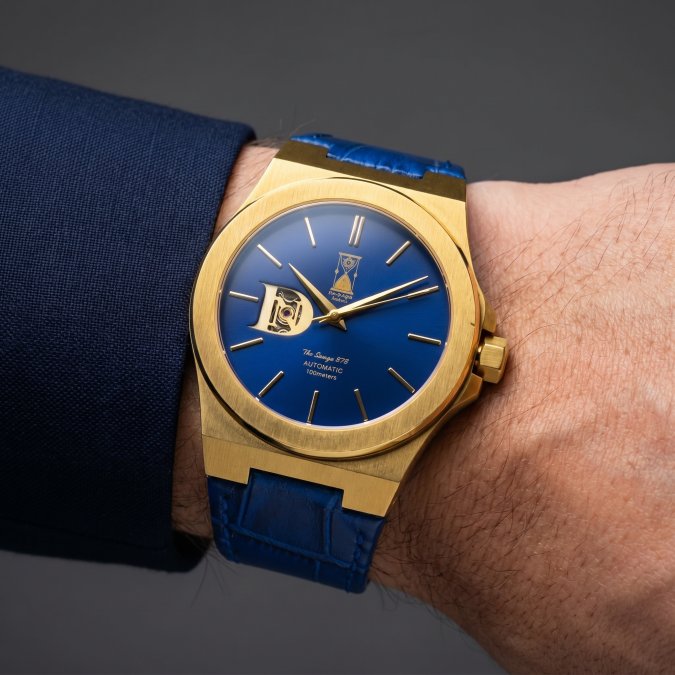
Our automatic line centers on the Sango 878 collection, each piece powered by the Seiko NH38 movement and built from 316L stainless steel with scratch-resistant sapphire crystal. The Sango 878 Crimson Dawn, Gunmetal Eclipse, and Midnight Current all list at $369.00, with water resistance up to 100 meters and a two-year warranty.
Quartz Watches from Day & Night Watch Co.
The Pharaoh and Queen Pharaoh collections run on precision quartz movements, also in 316L stainless steel with sapphire crystal and a two-year warranty. The Thutmos3 lists at $309.00, The Tutankhamun at $319.00, and The Djoser, The Hatshepsut, and The Xerxes at $289.00 each. Water resistance reaches 50 meters. If you want set-and-forget reliability with the same case materials, this is where to look.
Collection |
Movement |
Price |
Water Resistance |
Warranty |
|---|---|---|---|---|
Sango 878 |
Automatic (NH38) |
$369.00 |
100 m |
2 years |
Thutmos3 |
Quartz |
$309.00 |
50 m |
2 years |
Tutankhamun |
Quartz |
$319.00 |
50 m |
2 years |
Djoser / Xerxes / Nitocris / Hatshepsut |
Quartz |
$289.00 |
50 m |
2 years |
Which Movement Fits Your Daily Routine?
Match the movement to your habits, not the hype. If you wear one watch every day and want it to just work, quartz is the pragmatic pick. If you enjoy the ritual of winding, the sweep of the second hand, and a piece that ages with you, automatic earns its keep.
Here is a quick decision framework:
- One watch, worn daily, minimal fuss: quartz
- Rotation of several watches: quartz, or automatic with a winder
- Frequent travel and time-zone changes: quartz
- Milestone gift or heirloom intent: automatic
- Construction or field work: either, given sapphire crystal and steel, but quartz saves reset time
Frequently Asked Questions
Is it better to buy a quartz or automatic watch for daily wear?
Neither is universally better. A quartz watch wins on convenience: it runs on a battery, needs almost no attention, and stays accurate to within seconds per month. An automatic watch wins on craftsmanship and longevity: no battery changes, a sweeping second hand, and a movement that can be serviced and passed down. For most people, the deciding factor is whether you value low-maintenance reliability or the experience of wearing a mechanical watch.
What is the downside of an automatic watch?
Automatic watches require movement to stay wound. If you leave one on a nightstand for two days, it stops, and you reset the time and date when you pick it up again. They are also less accurate than quartz, typically losing or gaining a few seconds per day, and they need professional servicing every five to seven years. They are also more sensitive to strong magnetic fields from laptops, speakers, and phone cases.
Are automatic watches durable enough for everyday use?
Yes, with reasonable care. Modern automatic movements handle desk work, commuting, and light outdoor activity without issue. The bigger durability factor is the case and crystal, not the movement. Watches built from 316L stainless steel with sapphire crystal resist scratches and daily knocks far better than mineral glass. Avoid wearing any mechanical watch during high-impact activities like jackhammering or contact sports.
Do automatic watches lose time if not worn daily?
They do not lose accuracy from sitting, but they do run down. Most automatic movements have a power reserve of around 40 hours, so a watch worn every other day typically keeps running. Leave it unworn for three or more days and it stops. If you rotate between several watches, a watch winder keeps them running, though many collectors simply reset the time when they pick up a stopped watch.
What are the main maintenance differences between quartz and automatic watches?
Quartz watches need a battery replacement every two to three years, which is quick and inexpensive. Automatic watches need no battery but require professional servicing every five to seven years to clean, lubricate, and regulate the movement. That service costs more than a battery swap. In exchange, a well-maintained automatic movement can run for decades, while a quartz movement is often replaced rather than repaired when it fails.
How does the cost of ownership compare between quartz and automatic watches?
Quartz watches cost less upfront and cost little to run: a battery every few years and occasional gasket checks. Automatic watches cost more upfront and carry a larger service bill every five to seven years, but they hold value better and can be serviced indefinitely. Over a ten-year span, a quartz watch is cheaper to own; over thirty years, a serviced automatic often becomes the better long-term value.


Leave a comment