


Table of Contents
- Why Automatic Watches Are Worth It: The Case for Mechanical Craftsmanship
- Automatic vs Quartz Watches: Accuracy, Convenience, and Cost
- How Long Do Automatic Watches Run? Power Reserve and Winding Explained
- The Downsides of Automatic Watches: What to Know Before You Buy
- How to Set Time on an Automatic Watch: A Step-by-Step Guide
- Total Cost of Ownership: Purchase Price, Servicing, and Long-Term Value
- Is an Automatic Watch Worth It for You? A Lifestyle Decision Framework
- Frequently Asked Questions
Last Updated: October 8, 2026
Why Automatic Watches Are Worth It: The Case for Mechanical Craftsmanship
An automatic watch is a mechanical timepiece powered by the motion of your wrist rather than a battery, and that single design choice is why automatic watches are worth it for buyers who want a watch that lasts decades instead of years. At Day & Night Watch Co., we build and sell both automatic and quartz timepieces, so we see exactly where each type earns its place on a wrist. Below, we break down the real trade-offs: accuracy, servicing, total cost, and the lifestyle factors that decide whether mechanical is right for you.
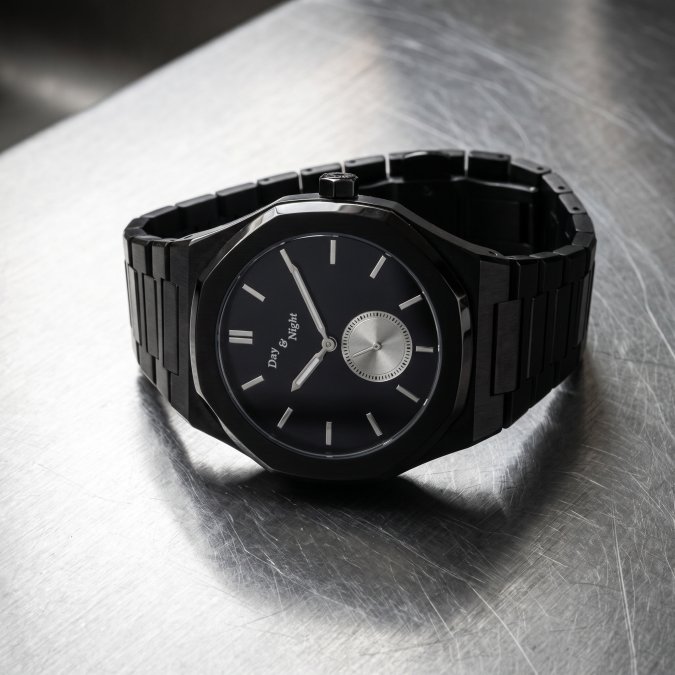
Here is the honest version most buying guides skip: an automatic watch is not more accurate than a quartz watch, and it never will be. It is worth owning for different reasons entirely.
The appeal comes down to three things:
- A movement driven by gears, a rotor, and a mainspring rather than a battery
- Craftsmanship you can see through a caseback and feel in the winding action
- A serviceable mechanism that a watchmaker can repair and regulate for generations
Automatic vs Quartz Watches: Accuracy, Convenience, and Cost
Quartz wins on accuracy and convenience; automatic wins on craftsmanship and longevity. A quartz movement uses a battery and an oscillating crystal to keep time within a few seconds per month, while a mechanical automatic typically drifts a handful of seconds per day. That gap is real, and it matters if you need split-second precision.
What most comparisons leave out is what "a handful of seconds per day" actually looks like in practice. A well-regulated automatic movement commonly lands somewhere in the range of about -10 to +15 seconds per day, and a movement that has been adjusted to chronometer-grade tolerances can hold closer to -4 to +6 seconds per day.
Four things move the rate once the watch is on your wrist:
- Position. A watch resting dial-up, dial-down, crown-up, or crown-down will run at slightly different rates. Overnight resting position is a real variable, which is why some owners park the watch in the position that offsets its daily drift.
- Wear pattern. A watch worn daily stays near full wind and tends to run more consistently. One worn twice a week runs at lower mainspring tension, where amplitude drops and the rate can wander.
- Temperature. Mechanical lubricants thicken in cold and thin in heat, so a watch left in a hot car or worn through a cold commute can drift more than one kept at room temperature.
- Magnetism. A watch that has been near a speaker, a magnetic phone mount, or a laptop lid magnet can pick up residual magnetism and start running fast, sometimes by minutes per day, until it is demagnetized.
That last point is the one buyers rarely hear. A sudden, large accuracy change is usually magnetism, not a worn-out movement, and a watchmaker can typically diagnose and correct it in a single visit.
Where automatic pulls ahead is ownership character. There is no battery to replace, no dead watch on the nightstand because you forgot to swap a cell.
| Factor | Automatic | Quartz |
|---|---|---|
| Power source | Wrist movement | Battery |
| Accuracy | Seconds per day | Seconds per month |
| Servicing | Mechanical service | Battery replacement |
| Longevity | Generations with care | Limited by electronics |
| Character | Mechanical craftsmanship | Practical precision |
How Long Do Automatic Watches Run? Power Reserve and Winding Explained
Most automatic watches run for roughly 38 to 42 hours on a full wind, which is the figure to know before you buy. That window is called the power reserve: the amount of time a watch keeps running once you take it off. The Seiko NH38 movement in The Sango 878 sits in this range, so a watch worn daily stays wound, while one left on a shelf will stop within about two days.

Two mechanisms keep it going. The rotor, a weighted half-disc that spins with wrist movement, winds the mainspring automatically. Manual winding through the crown does the same job by hand when you pick the watch up after a break.
How long an automatic watch runs comes down to two habits:
- Wear it regularly, and the rotor keeps the mainspring topped up
- Store it for a week, and expect to reset and wind it before wearing
The Downsides of Automatic Watches: What to Know Before You Buy
The downsides of automatic watches are real, and pretending otherwise does buyers a disservice. They drift in accuracy, they stop when unworn, they cost more to service than a quartz watch costs to maintain, and mechanical movements are sensitive to strong magnetic fields from speakers, laptops, and phone magnets.
None of these are dealbreakers. They are simply the price of owning a mechanical object. The mistake is buying an automatic expecting quartz convenience, then resenting it for behaving exactly as designed.
How to Set Time on an Automatic Watch: A Step-by-Step Guide
Setting an automatic watch takes about a minute once you know the order of operations. The key is to wind it first, set the time before the date, and avoid forcing anything.
Total time: About 1 minute.
- Wind the crown 20 to 30 turns to give the mainspring tension.
- Pull the crown to the first position and set the date to yesterday.
- Pull to the second position and advance the hands until the date flips, confirming midnight.
- Set the correct time, then push the crown back in.
Expected result: The watch runs, the date is correct, and the movement is unharmed.
Total Cost of Ownership: Purchase Price, Servicing, and Long-Term Value
Total cost of ownership is where the automatic-versus-quartz debate actually gets decided, and it is the part most buying guides wave away with a sentence. A quartz watch is cheaper up front and cheap to keep running, but its electronics eventually fail and often cannot be economically repaired.
The useful way to compare them is by what each one asks of you over a realistic holding period.
Quartz, over roughly ten years:
- A battery replacement every two to three years, done at a jeweler or watch kiosk
- A gasket and seal check whenever the case is opened, since water resistance depends on those seals
- Eventually, a failed circuit board or stepper motor. At that point the repair often costs more than the watch is worth, so the watch is replaced rather than fixed
The quartz path is low-friction and low-cost per year, but it has a terminal event. The watch does not get maintained; it gets retired.
Automatic, over roughly ten years:
- A full mechanical service at intervals most watchmakers put in the range of every five to seven years, or sooner if the watch starts losing significant time or the winding feels gritty
- That service typically means full disassembly, cleaning, re-lubrication, gasket replacement, and re-regulation, which is why it costs meaningfully more than a battery swap
- Between services, the only routine cost is your time: winding, setting, and resetting after the watch has been off the wrist
The automatic path costs more per event but has no terminal event. The movement can be serviced again, and again, and the case and bracelet outlast several service cycles.
That difference is the whole argument. You are paying for a mechanism that can be maintained rather than a module that gets thrown away.
Two practical notes that affect the math:
- Movement availability matters. A widely produced movement is easier and cheaper to service because parts are common. A rare or discontinued movement can mean longer waits and higher labor, because the watchmaker has to source or fabricate parts.
- Local watchmaker access matters. If there is no independent watchmaker nearby, service means shipping the watch out and waiting. That is a convenience cost, not a dollar cost, but it is real.
For a closer look at how we build that durability in, see the American Society for Testing and Materials overview of stainless steel standards, the same family of 316L stainless steel we use in our cases.
Is an Automatic Watch Worth It for You? A Lifestyle Decision Framework
An automatic watch is worth it if you wear a watch most days, value mechanical craft, and plan to keep it for years. It is not worth it if you want set-and-forget accuracy or wear a watch only occasionally.
Use this framework:
- Daily wearer who wants a legacy piece: automatic. The rotor stays wound, and the watch ages with you.
- Occasional wearer who wants zero fuss: quartz. No resetting, no winding.
- Desk professional wanting presence: automatic. The sweeping second hand and sapphire crystal read as intentional.
- Someone hard on their hands: either, if the crystal is sapphire. Scratch resistance matters more than movement type here.
Our own line splits the same way. The Sango 878 collection runs on the automatic NH38 movement, while The Pharaoh and Queen Pharaoh collections use precision quartz. Both are built from 316L stainless steel and sapphire crystal, so the movement is the real decision, not the durability. If you are ready to make that decision, you can take 10% off Your First Timepiece when you order.
The honest challenge is that most people buy on looks and regret the movement later. Decide first how you will actually wear the watch, then choose the mechanism that fits. At Day & Night Watch Co., we build both paths with 316L stainless steel cases, sapphire crystal, and a two-year warranty, so the quality holds whichever movement you pick. Explore The Sango 878 for automatic craft or The Pharaoh Collection for quartz precision, and start with a timepiece built to outlast the trend that sold it to you.
Frequently Asked Questions
What is the downside of an automatic watch?
Automatic watches require regular wear to stay powered, typically running 38 to 42 hours on a full wind. They need servicing every 5 to 8 years, and they are less accurate than quartz, usually within -10 to +15 seconds per day. They are also sensitive to strong magnetic fields and impacts. However, these trade-offs are often accepted for the craftsmanship and emotional connection they provide.
Are automatic watches worth buying?
For many people, yes. An automatic watch offers mechanical craftsmanship, a sweeping second hand, and a connection to traditional watchmaking that quartz cannot match. It also avoids battery changes and can last for decades with proper care. If you value precision above all, a quartz watch may be better. But if you appreciate engineering and a tangible heirloom, an automatic watch is worth the investment. Brands like Day & Night Watch Co. offer automatic models such as The Sango 878 starting at $369.
How accurate are automatic watches compared with quartz watches?
Automatic watches typically run within -10 to +15 seconds per day, while quartz watches are accurate to about 15 seconds per month. That means a quartz watch can be up to 30 times more accurate. However, many automatic movements can be regulated by a watchmaker to improve timekeeping. For daily wear, the difference is minor unless you require split-second precision.
Do automatic watches need batteries?
No. Automatic watches are powered by the movement of your wrist, which winds the mainspring. There is no battery to replace. This is one reason they are considered more sustainable and convenient over time. However, if you do not wear the watch regularly, it will stop running and need to be reset. A watch winder can keep it running when not worn.


Leave a comment