


Table of Contents
- What You'll Need: Essential Cleaning Materials and Tools
- Step-by-Step Stainless Steel Watch Care Process
- Best Cleaning Solution for Watch Bracelets
- Daily Watch Maintenance Routine
- How to Remove Scratches from Stainless Steel Watch
- Frequency and Long-Term Storage Maintenance
- Protecting Your Watch: Water Resistance and Crown Safety
- Common Mistakes to Avoid
- Frequently Asked Questions
Last Updated: September 3, 2026
What You'll Need: Essential Cleaning Materials and Tools
Proper stainless steel watch care requires only basic household materials that cost very little.
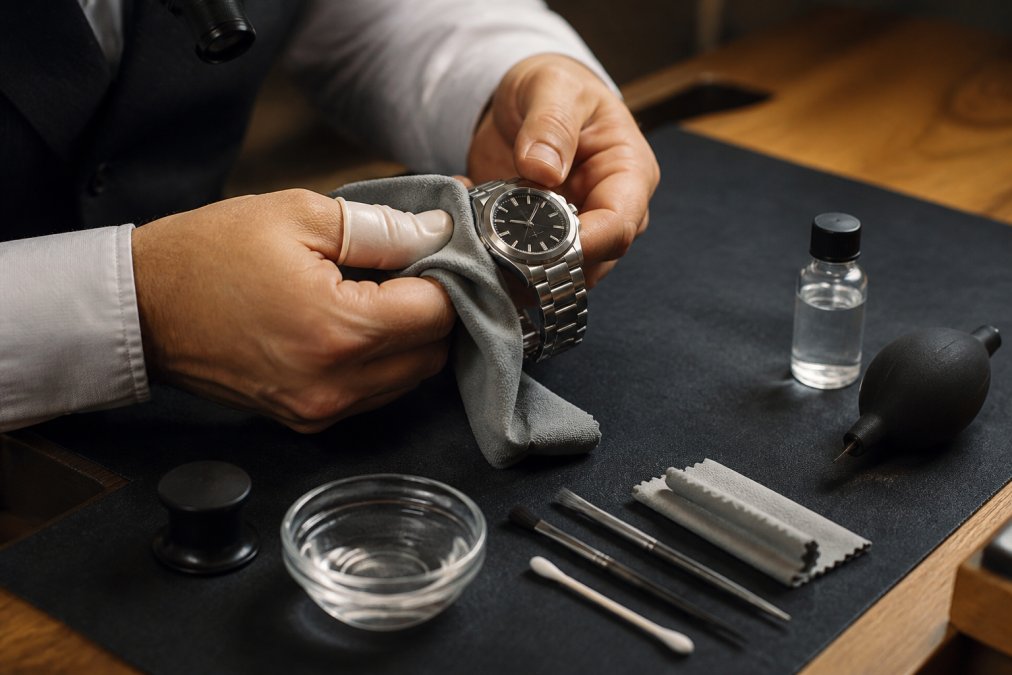
Use only a microfiber cloth for drying and polishing. Regular towels and paper towels leave lint and scratch the case.
Use mild dish soap for washing. Avoid antibacterial or heavily perfumed soaps. A soft nylon-bristled toothbrush is essential for reaching between links and under the crown where corrosion starts.
Use lukewarm water as your cleaning medium. Tap water works fine for routine maintenance.
An ultrasonic cleaner is optional for harsh conditions, but a soft toothbrush handles most situations.
For minor scratches, use a microfiber polishing cloth. For deeper scratches, a light polishing compound formulated for stainless steel may help, but professional service is often worthwhile.
Store materials in a dry container away from sunlight, keeping the microfiber cloth separate from other supplies.
Step-by-Step Stainless Steel Watch Care Process
Preparing Your Watch for Cleaning
Check your watch's water resistance rating before cleaning. Most modern watches handle brief freshwater immersion at 50 meters or higher (iso.org). Below 30 meters, use dry cleaning only.
Verify the crown is fully screwed down. A loose crown is the fastest way to introduce moisture into the movement. Turn it clockwise until you feel slight resistance.
Remove the watch from your wrist and place it on a clean, lint-free surface. If the bracelet is removable, this is an ideal time to separate it from the case. This gives you access to the lugs (the attachment points) where sweat and lotion buildup accumulates.
Washing the Case and Bracelet
Fill a bowl with lukewarm water and add two drops of mild dish soap. Hot water can damage the crystal adhesive and gasket materials (peer-reviewed research).
Submerge the bracelet and scrub between each link with the soft toothbrush, paying special attention to the underside where sweat leaves mineral deposits. This is where oxidation begins.
Brush the lugs, case sides, and crown with light pressure. The crown area deserves extra attention as lotion and skin oils accumulate there.
For brushed finishes, brush in the direction of the grain to prevent trapping particles.
For heavier buildup, submerge for two to three minutes to soften residue without aggressive scrubbing.
Rinsing and Drying Thoroughly
Rinse thoroughly under lukewarm water, rubbing away all soap residue to prevent dulling the finish.
Pat dry immediately with the microfiber cloth. Moisture left on stainless steel causes water spots and can initiate corrosion.
Pay special attention to the crown, caseback, and spaces between links. Work the cloth into links by flexing the bracelet slightly.
Dry the sapphire crystal last to ensure no moisture sits on the edges where it meets the case.
Let the watch sit on the cloth for five minutes before wearing to allow residual moisture to evaporate.
Best Cleaning Solution for Watch Bracelets
The best cleaning solution is lukewarm water with a single drop of mild dish soap, which removes oils and sweat without damaging the gasket or finish.
Commercial watch cleaners offer no advantage over basic dish soap for routine maintenance.
Use one drop of soap in a bowl of water. Avoid lemon-scented products, which contain citric acid and dull the finish.
After saltwater exposure, rinse with distilled water to remove mineral deposits that accelerate oxidation.
For routine daily wear, soap and water are sufficient. Professional cleaning is needed only after neglect or harsh exposure.
Daily Watch Maintenance Routine
A simple daily routine prevents buildup and extends your watch's appearance.
Each evening, wipe the case and bracelet with a dry microfiber cloth to remove sweat, lotion, and dust. This prevents most corrosion and dullness.
Weekly, perform thorough dry cleaning with the microfiber cloth. Visible residue signals the need for full wet cleaning.
Check the crown weekly. If it turns too easily or feels gritty, the gasket may be compromised and professional service is necessary.
Store your watch in a dry place, ideally a watch box or drawer with a soft cloth. Avoid bathrooms where humidity fluctuates.
After exercise or humid environments, rinse with lukewarm water and dry immediately, as sweat accelerates corrosion.
How to Remove Scratches from Stainless Steel Watch
Many minor scratches can be addressed without professional service.
Surface-level scratches often disappear with gentle polishing using a microfiber cloth. Many are oxidation rather than gouges.
For deeper scratches, use a light polishing compound formulated for stainless steel, applying it with gentle circular motions. This works well on brushed finishes.
Polished-finish cases show scratches clearly; polishing compounds may reduce appearance but rarely eliminate deep scratches.
Scratches on sapphire crystals are permanent. Crystal replacement requires professional service.
If a scratch is deep enough to catch a fingernail, polishing won't help. Professional refinishing is the realistic option.
Bracelet scratches on outer surfaces can be polished, but scratches on link sides are difficult to address and benefit from professional service.
Frequency and Long-Term Storage Maintenance
Cleaning frequency depends on environment and usage.
For office wear, clean every two to three weeks. For exercise or humid environments, clean weekly. After saltwater exposure, clean the same day.
Dry clean daily or every other day, especially during exercise, to prevent buildup.
For long-term storage, ensure the watch is completely dry. Store in a cool, dry place away from direct sunlight.
For storage over six months, remove the watch monthly to allow moisture to evaporate and prevent gasket cracking.
For automatic watches, wind gently by hand before long storage to keep the movement lubricated and prevent stiction.
Store the original box and papers, which add value and provide ideal storage conditions.
Protecting Your Watch: Water Resistance and Crown Safety
Water resistance is a specification, not a guarantee. A 50-meter rating means splashes and brief freshwater immersion, not swimming or diving.
The rating is based on static pressure, not dynamic pressure. Saltwater is more corrosive and damages gaskets faster (nist.gov).
The crown is the most vulnerable component. Ensure it's fully screwed down before water exposure to prevent expensive damage.
After saltwater exposure, rinse immediately with fresh water. Saltwater initiates corrosion within hours, especially at the crown and case-bracelet gap.
Crown gaskets degrade every three to five years. Have older watches inspected professionally, as failing gaskets provide no water protection.
Avoid extreme temperature changes, which cause air inside the case to contract and expand, pulling moisture through microscopic gaps.
Common Mistakes to Avoid
The most common mistake is using the wrong cloth. Paper towels and regular towels scratch stainless steel. Use only microfiber or air dry completely.
Over-screwing the crown strips threads and can crack it. Turn until you feel resistance; gentle pressure is enough.
Neglecting spaces between bracelet links is where most corrosion starts. Spend extra time brushing these gaps.
Don't use generic kitchen stainless steel compounds; they're too aggressive. Use watch-specific compounds formulated for watch finishes.
Avoid storing watches in bathrooms where humidity causes condensation. Use a bedroom closet or airtight container with silica gel.
Don't assume scuffs or dull spots are permanent; many are oxidation that polishing restores.
Proper stainless steel watch care isn't complicated, but it does require consistency. The watches crafted at Day & Night Watch Co., built from 316L stainless steel with sapphire crystal, are designed to withstand decades of daily wear when maintained correctly. A few minutes of routine care each week prevents the buildup that leads to corrosion and dullness. By following the process outlined above, you're protecting an investment in a timepiece that can genuinely become an heirloom. The difference between a watch that looks new after five years and one that looks worn comes down to whether the owner established a maintenance habit early. Start that habit now, and your watch will reward you with both appearance and reliable performance for decades to come.
Frequently Asked Questions
What is the best thing to clean my stainless steel watch with?
Mild dish soap mixed with lukewarm water is the safest choice for stainless steel watch care. Use a soft microfiber cloth or soft toothbrush to gently scrub the case and bracelet, then rinse thoroughly with clean water. Avoid harsh chemicals and abrasive materials that can damage the finish. For stubborn residue or lotion buildup, a dedicated watch cleaning solution works well, but always follow the manufacturer's instructions.
How often should you clean a stainless steel watch band?
Clean your watch bracelet weekly if you wear it daily, especially if you're exposed to sweat, saltwater, or dust. More frequent cleaning prevents corrosion and oxidation on the stainless steel links. If you work in construction or spend time outdoors, consider cleaning it twice weekly. Regular maintenance preserves the brushed steel or polished steel finish and extends the life of your timepiece significantly.
Can I use rubbing alcohol to clean a stainless steel watch?
Rubbing alcohol can damage certain watch components, particularly gaskets and seals that protect against water resistance. Stick to mild dish soap and water for routine cleaning. If you need a stronger solution for disinfection, use isopropyl alcohol sparingly on the case only, avoiding the crown, gasket, and bracelet links. Always rinse thoroughly with fresh water afterward to prevent chemical damage to the stainless steel finish.
Does sweat damage stainless steel watch bracelets?
Yes, sweat can accelerate corrosion and oxidation on stainless steel if left unattended. Salt and minerals in sweat create residue that builds up on the bracelet links and case. Rinse your watch with fresh water after exercise or exposure to sweat, then dry it completely with a microfiber cloth. This simple step prevents long-term damage and maintains the polished or brushed steel appearance. Regular cleaning as part of your daily watch maintenance routine eliminates this risk.
This article was written using GrandRanker


Leave a comment