


Table of Contents
- What Separates Quality Watch Craftsmanship From Marketing Hype
- Step 1: Inspect the Movement, Case Back, and Crown Feel
- Step 2: What Is 316L Stainless Steel in Watches and Why It Matters
- Step 3: Automatic vs Quartz Watch Durability Explained
- Step 4: Dial, Hands, and Bezel Alignment Checks
- Your Luxury Watch Inspection Checklist for Buying Online
- Testing for Counterfeit vs. Poor Quality: Two Different Problems
- Frequently Asked Questions
Last Updated: September 21, 2026
What Separates Quality Watch Craftsmanship From Marketing Hype
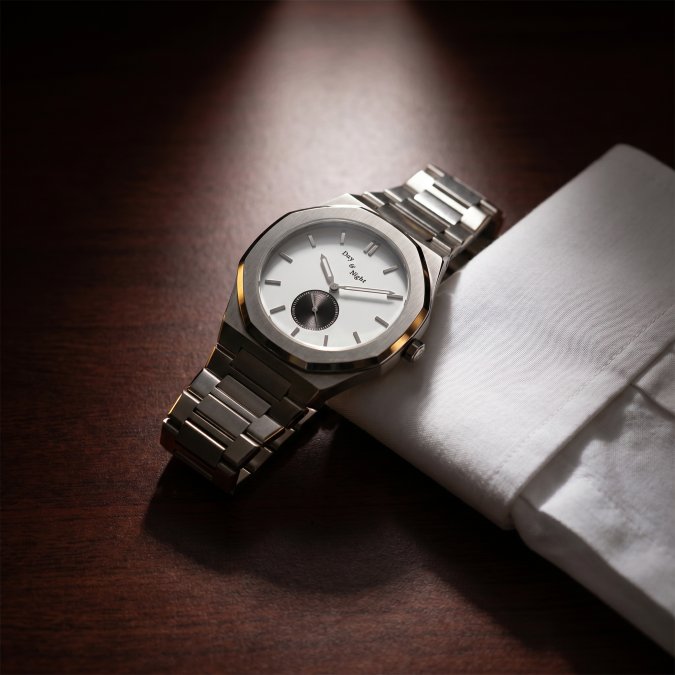
Anyone can print "heirloom quality" on a box. Fewer can survive a jeweler's loupe. That gap is where watch craftsmanship lives, and where this guide from Day & Night Watch Co. will train your eye. Spotting quality watch craftsmanship comes down to details marketing copy cannot fake: how the movement sits in the case, how surfaces catch light, and how the crown feels between your fingers.
Best Watch for Career Milestones Gift: 2026 Guide
You do not need a workbench, just ten minutes, decent light, and a checklist. Below, we break down each inspection step the way a watchmaker would run it.
Step 1: Inspect the Movement, Case Back, and Crown Feel
Start at the back, where honesty shows. A screw-down case back with crisp, evenly cut threads signals a maker who expects the watch to last. A snap-on back that flexes under thumb pressure is a shortcut.
Then check the crown. It should turn with light, even resistance and click into position with a clear stop. Gritty rotation, wobble, or looseness points to poor assembly. A quality screw-down crown engages in two to three smooth rotations before seating, not one grindy half-turn.
Serviceable vs. Disposable Movements: The Question Most Guides Skip
Here is the test that separates a watch you keep from one you replace: can the movement be serviced, or is it a sealed module built to be swapped?
How to tell which one you are holding:
- Check the caliber name. A published movement number (NH35, 2824, Miyota 9015) lets you look up serviceability in seconds; "Japanese automatic movement" alone is a red flag.
- Look for a display case back. Not proof of quality, but a maker willing to show the movement is usually proud of it.
- Ask about parts availability. A watchmaker who can order a new balance staff or mainspring can keep it running for decades.
- Watch for glued-in movements. Some ultra-cheap watches glue the movement into a plastic spacer, a disposable design by definition.
- Crown: smooth rotation, firm click stops, no wobble, two to three turns to seat
- Case back: crisp threads, flush fit, no flex
- Rotor: spins freely, no grinding sound
- Hands: aligned and steady after an hour of running
- Movement: published caliber name, serviceable design, parts available
Step 2: What Is 316L Stainless Steel in Watches and Why It Matters
316L stainless steel is a low-carbon, corrosion-resistant steel alloy containing molybdenum, used in watch cases for its toughness and skin-friendly properties. The "L" stands for low carbon, which makes it easier to machine and weld, and it resists pitting from sweat and salt far better than cheaper alloys.
Brushed vs Polished Finishing: Reading the Case Surfaces
Finishing separates care from speed. Brushed surfaces should show fine, parallel grain under direct light; polished surfaces should mirror without wavy distortion.
- Brushed: consistent grain direction, no swirl marks
- Polished: sharp reflections, no orange-peel texture
- Transitions: clean, straight boundaries between finishes
- Edges: chamfered and smooth, not sharp enough to catch fabric
Step 3: Automatic vs Quartz Watch Durability Explained
Automatic vs quartz watch durability comes down to moving parts versus electronics. An automatic caliber is mechanical, powered by a rotor that winds the mainspring as you move. A quartz watch runs on a battery and a vibrating crystal, with far fewer moving parts.
- Automatic: no battery, serviceable, holds emotional and resale value
- Quartz: accurate, low maintenance, easier and cheaper to replace
- Automatic: sensitive to hard shocks and magnetism
- Quartz: sensitive to battery leaks if left sitting for years
Step 4: Dial, Hands, and Bezel Alignment Checks
Alignment is the fastest quality test you can run, thirty seconds. Look straight down at the dial: the 12 o'clock marker should line up with the crown below it, the date window should sit square in its cutout, and the bezel should click into position with the marker at dead center.
The Loupe Inspection Guide: How to Check a Dial Like a Watchmaker
Most guides say "look closely", useless advice. Here is the method watchmakers use, runnable with a $15 10x jeweler's loupe and a phone camera.
What to look for at 10x:
- Dial printing: Letters should have sharp, clean edges. Fuzzy or bleeding text means cheap pad printing. Check that the brand name and depth rating text are level and consistent in weight.
- Indices: Each applied marker should sit flat against the dial with no visible glue squeeze-out. Look at the base of each marker, a shadow line means it is lifting.
- Hands: Check the edges of the hour and minute hands for burrs, uneven lume fill, or paint that has crept onto the metal. The seconds hand should reach its target marker exactly, not stop short or overshoot.
- Date window: The cutout edges should be crisp, not ragged. The date wheel should sit flush, not recessed or floating. Numbers should be centered with even margins.
- Rehaut: The inner ring should be evenly finished all the way around. A wavy or uneven rehaut is a sign of a cheaply stamped case.
Lume Application and Bezel Action Under Magnification
Lume application is where sloppy work hides in plain sight. Under a loupe, good lume sits inside its frame with clean edges; bad lume bleeds over the border, looks lumpy, or fades unevenly. Charge it with a phone flashlight for 30 seconds, then kill the lights: quality lume glows evenly across every marker, while poor lume shows patchy brightness or markers that barely glow.
- Lume: even fill, clean borders, no overflow, uniform glow after charging
- Printing: crisp letters, level baselines, consistent thickness
- Indices: seated flat, evenly spaced, aligned to the dial, no glue visible
- Date wheel: centered in the window, no clipping, flush fit
- Bezel: firm clicks, even spacing, no lateral play, marker aligns at 12
Your Luxury Watch Inspection Checklist for Buying Online
Buying online removes your hands from the equation, so your checklist has to work harder. Ask the seller for specific photos and video, then score the answers. A serious seller sends them without hesitation.
Check |
What to Look For |
Red Flag |
|---|---|---|
Case back |
Crisp threads, flush fit |
Flexes under thumb pressure |
Crown |
Smooth rotation, firm stops |
Gritty, wobbly, loose |
Case finishing |
Crisp brushed/polished seams |
Smudged transition lines |
Bezel |
Clicks into alignment |
Marker sits off center |
Dial and hands |
Sharp printing, true alignment |
Fuzzy text, drifting hands |
Crystal |
Clear, minimal distortion |
Cloudy edges, deep scratches |
Bracelet |
Solid end links, tight fit |
Rattle, gaps at the lugs |
Clasp |
Firm snap, secure release |
Loose hinge, weak spring |
Testing for Counterfeit vs. Poor Quality: Two Different Problems
A counterfeit copies a famous design. A poorly made watch is an honest design built badly. Both fail inspection, but for different reasons, and telling them apart changes how you shop.
Here is the practical split:
- Counterfeit signs: misspelled text, wrong logo proportions, mismatched serial numbers, cheap movement behind a premium name
- Poor-quality signs: uneven finishing, gritty crown, rattling bracelet, lume applied off-center
- Both: misaligned bezel, cloudy crystal, weak clasp spring
Frequently Asked Questions
How can you tell if a watch movement is high quality?
Start with the seconds hand sweep. A mechanical movement glides smoothly; a quartz ticks once per second. Then check the case back for a named caliber, such as the Seiko NH38 used in the Sango 878. A named, serviceable movement tells you parts and regulation are available years later. Also wind the crown and feel for consistent resistance, and listen for a clean rotor spin with no grinding. Rough winding or a rattling rotor points to poor assembly.
Does a heavy watch always mean better quality?
No. Weight signals material density, not build quality. A solid 316L stainless steel case with solid end links feels substantial, but a heavy watch with hollow bracelet links, a stamped clasp, and loose spring bars is still cheaply made. Judge weight alongside balance: a well-built watch sits centered on the wrist without the case flopping forward. A light titanium watch can outlast a heavy, poorly assembled one.
What role does sapphire crystal play in watch durability?
Sapphire crystal ranks around 9 on the Mohs hardness scale, so it resists the scratches that dull mineral glass within months. Many sapphire crystals also carry an anti-reflective coating, which cuts glare and keeps the dial legible in sunlight. For anyone whose hands take a beating at work, sapphire is the practical choice. It can still crack under a hard direct impact, but it will not haze over from daily contact like mineral crystal does.
How do you inspect watch finishing and dial details for quality?
Use a 10x loupe and a bright, angled light. Check that applied indices sit flat and evenly spaced, that no glue residue shows around the markers, and that printed text is crisp with no bleeding edges. Run your eye along the case flanks: brushed surfaces should show parallel grain, and the transition to polished surfaces should be a sharp line, not a smeared blend. Misaligned bezels or a date window that sits off-center are assembly faults.


Leave a comment