


Last Updated: November 2, 2026
Quick Summary
A quartz movement is a timekeeping system that uses a battery, a quartz crystal, and an electronic circuit to keep time. The crystal vibrates at a precise frequency when current passes through it, and that vibration drives the hands. Quartz watches are accurate, low-maintenance, and reliable.
- The crystal commonly vibrates 32,768 times per second, and a chip divides that to one pulse per second.
- A quartz seconds hand ticks in discrete steps, while an automatic hand sweeps smoothly.
- A quartz watch battery typically lasts between one and three years depending on features.
- Replace the cell at the first sign of a slowing seconds hand, or every two to three years.
- Quartz watches account for roughly 70% of total watch shipments by volume.
Table of Contents
- What Quartz Movement Means on a Watch
- How Does a Quartz Watch Work?
- Quartz vs Automatic Watch: What Actually Changes on Your Wrist
- Does a Quartz Watch Need a Battery?
- How Long Does a Quartz Watch Battery Last?
- Why Quartz Still Dominates the Watch Market
- Caring for a Quartz Watch: Service, Water Resistance, and Daily Wear
- Choosing Your First Quartz Timepiece
- Frequently Asked Questions
What Quartz Movement Means on a Watch
A quartz movement is a timekeeping system that uses a battery, a quartz crystal, and an electronic circuit to keep time. The crystal vibrates at a precise frequency when current passes through it, and that vibration drives the hands.
The quartz approach dominates for a reason.
Here is the short version. Quartz movement means the watch is powered by a battery and regulated by a vibrating crystal rather than a wound spring. It is accurate, low-maintenance, and reliable.
How Does a Quartz Watch Work?
A quartz watch works by sending an electrical current from a battery through a quartz crystal, causing it to vibrate at a high, stable frequency. A circuit counts those vibrations and converts them into regular pulses that move the hands. The crystal is the heart of the system: it vibrates thousands of times per second, and because that rate barely changes with temperature or position, the watch keeps remarkably steady time. Industry analysis from Col & MacArthur's 2026 quartz vs automatic comparison confirms that piezoelectricity, the trait where the quartz crystal vibrates when electrified, is what separates quartz timekeeping from the balance wheel oscillation used in mechanical watches.
The Step-by-Step Energy Path
Most explanations list the parts but skip the sequence. Here is the full path from battery to hands, in order:
- Battery, The silver-oxide or lithium cell supplies a steady low-voltage current.
- Circuit board, The electronic circuit regulates that current and sends it to the crystal.
- Quartz crystal, The crystal vibrates at a fixed frequency (commonly 32,768 times per second) when electrified.
- Integrated circuit, A chip counts those vibrations and divides them down to one pulse per second.
- Stepping motor, Each pulse drives the motor to rotate in discrete steps.
- Gear train, The motor turns a series of gears that reduce the motion to the correct speed for the hands.
- Hands, The gears move the seconds, minutes, and hours hands in precise increments.
That one-tick-per-second motion is why quartz seconds hands step rather than sweep. Some specialized movements use non-standard frequencies to produce a smoother glide, but the stepping motor remains the standard. For a deeper look at the mechanism, our guide on the movement behind the watch: quartz walks through each component.
The Crystal, the Circuit, and the Stepping Motor
Three components do the visible work. The crystal provides the heartbeat. The circuit counts the beats and divides them into one pulse per second. The stepping motor receives that pulse and turns the gears that move the hands, one tick at a time.
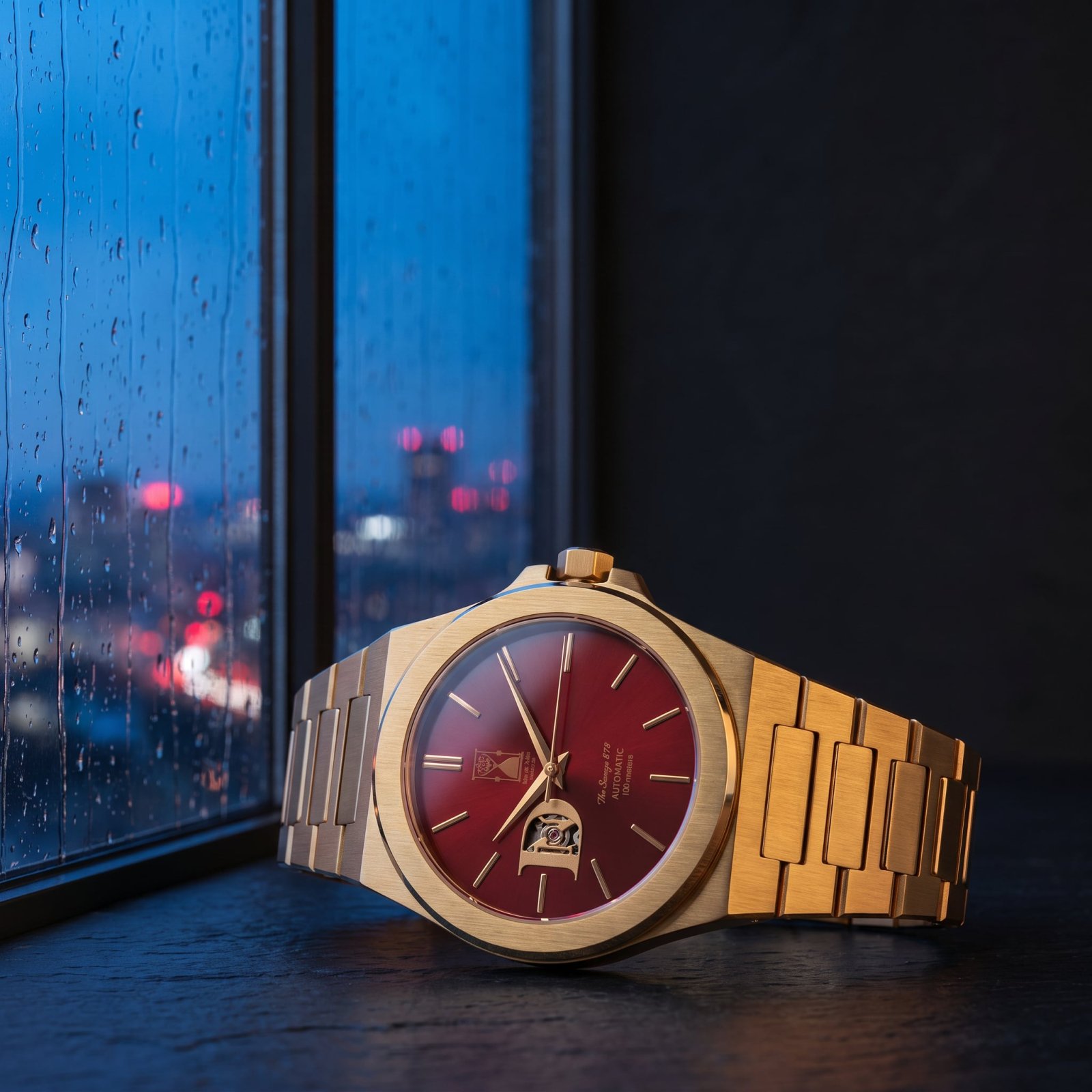
Watch out: if the battery is low, the seconds hand may begin to slow or stutter before the watch stops, which is a sign to replace the cell.
Here is the full energy path from battery to hands, in order.
| Step | Component | What it does |
|---|---|---|
| 1 | Battery | Supplies steady low-voltage current |
| 2 | Circuit board | Regulates current and sends it to crystal |
| 3 | Quartz crystal | Vibrates at fixed frequency, commonly 32,768 times per second |
| 4 | Integrated circuit | Counts vibrations, divides them to one pulse per second |
| 5 | Stepping motor | Each pulse drives motor to rotate in discrete steps |
| 6 | Gear train | Reduces motion to correct speed for hands |
| 7 | Hands | Move seconds, minutes, hours in precise increments |
Quartz vs Automatic Watch: What Actually Changes on Your Wrist
The real difference between a quartz and an automatic watch is what powers it and what that demands of you. An automatic watch winds itself from your wrist motion and runs on a mainspring. A quartz watch runs on a battery and asks nothing beyond an occasional replacement.
Accuracy favors quartz. A quartz movement typically drifts only a few seconds per month, a level of precision mechanical movements cannot match, according to Day & Night Watch Co.'s movement chronicles. An automatic watch is a mechanical system with a rotor, gear train, and escapement, and it will drift more over the same period. Neither is "better" in the abstract.
Accuracy and the Sweep of the Seconds Hand
Watch the seconds hand and you can often tell the movement type at a glance. A quartz hand ticks in discrete steps. An automatic hand sweeps in a smooth arc because the balance wheel oscillates continuously rather than stepping.
If you are weighing the two for daily wear, our comparison of automatic watches vs. quartz covers durability, maintenance, and which suits an office-to-outdoors routine.
Does a Quartz Watch Need a Battery?
Yes. A quartz watch needs a battery, and that battery is the source of the electrical current that drives the entire timekeeping system. Without it, the crystal stops vibrating and the watch stops.
This is the clearest practical distinction from an automatic watch, which never needs a battery because it generates power from wrist movement. A quartz watch is entirely dependent on its cell. When the battery drains, the watch simply stops, and a replacement restores it.
There is no winding, no rotor, and no power reserve to manage. You wear it, it runs, and every few years you have the cell swapped. That simplicity is the point.
How Long Does a Quartz Watch Battery Last?
A quartz watch battery typically lasts between one and three years, depending on the movement, the battery type, and how many features the watch runs. A simple three-hand watch usually sits at the longer end; a model with a light, chronograph, or alarm draws more and drains faster.
Factors That Affect Battery Life
Several variables shorten or extend how long a cell lasts:
- Movement complexity, Complications like chronographs, alarms, and backlights draw more current.
- Temperature, Extreme heat stresses the cell and accelerates drain; cold can temporarily reduce voltage.
- Storage habits, A watch left running in a drawer drains just as fast as one on the wrist.
- Battery type, Silver-oxide cells hold voltage more steadily than alkaline alternatives.
Extending Battery Life
A few habits extend battery life:
- Pull the crown out when storing a watch for long periods to stop the movement.
- Avoid leaving the watch in extreme heat, which stresses the cell.
- Replace the battery at the first sign of a slowing seconds hand rather than waiting for a full stop.
Troubleshooting a Stopped or Under-Powered Watch
If a quartz watch stops, the battery is the first suspect, but not the only one. A common pattern is a watch that stops intermittently before dying completely, often a sign of a failing cell rather than a movement fault. Before replacing the battery, check that the crown is fully pushed in and that the watch is not in a setting position that halts the movement.
Watch out: a dead battery left inside a watch for months can leak and damage the movement. If a watch stops and you do not plan to wear it soon, have the cell removed rather than letting it sit.
When to Replace the Battery
Replace the cell at the first sign of a slowing or stuttering seconds hand, or every two to three years as preventive maintenance. At each battery change, ask for a gasket inspection, the seal that keeps water out ages along with the cell.
Why Quartz Still Dominates the Watch Market
Quartz remains the majority of watches sold worldwide because it delivers reliable timekeeping at every price point. According to Business Research Insights' watch market report, quartz watches account for roughly 70% of total watch shipments by volume. That share has held steady even as mechanical watches enjoy renewed interest among enthusiasts.
The reason is straightforward. Most buyers want a watch that looks right and tells the correct time without daily attention. Quartz delivers that with minimal ownership cost. A mechanical watch rewards the enthusiast who enjoys winding, servicing, and the character of a movement. Both have a place; they simply serve different priorities.
Caring for a Quartz Watch: Service, Water Resistance, and Daily Wear
Quartz watches need less service than mechanical ones, but they are not maintenance-free.
Water resistance matters more than most owners realize. A rating printed on the dial reflects laboratory testing, not a permanent guarantee, and seals degrade over time. Our guide to water resistant watches for swimming daily explains what the ratings actually mean in practice.
For daily wear, wipe the case and bracelet with a soft cloth, keep the watch away from strong magnets, and store it somewhere dry. Sapphire crystal resists scratches well, but the case and seals still deserve attention.
Choosing Your First Quartz Timepiece
Pick a quartz watch the way you would pick any daily tool: by fit, finish, and how it holds up, not by the movement label alone. A quartz movement gives you accuracy and low maintenance, which frees you to choose on design and build quality.
At Day & Night Watch Co., our quartz models are built for exactly that. The Pharaoh Collection, including The Xerxes and The Thutmos3, pairs precision quartz movements with 316L stainless steel cases and sapphire crystal.
If you are ready to choose, browse the full collection and find the piece that fits your wrist and your routine. And if you are ordering your first watch from us, you can take 10% off Your First Timepiece to make that first quartz piece an easier decision.
Frequently Asked Questions
Is a quartz watch more accurate than an automatic watch?
Yes, in everyday use. A quartz movement uses a battery to send current through a quartz crystal, which vibrates at a high frequency and regulates timekeeping to within a few seconds per month. A mechanical automatic movement relies on a balance wheel and mainspring and typically drifts more over the same period. That accuracy gap is the main practical reason quartz watches remain the default for people who want to set a watch and forget it.
Do quartz watches tick once per second?
Most do. The stepping motor in a standard quartz movement advances the seconds hand once per second, which is the familiar tick. Some specialized quartz movements run at non-standard frequencies such as 262,142Hz to produce a smoother sweep that looks closer to a mechanical watch. Either way, the timekeeping is still regulated by the crystal, not by a balance wheel.
How often does a quartz watch battery need to be replaced?
Plan on roughly two to three years for most quartz watches, though it varies with the movement and how many functions the watch runs. A seconds hand that jumps in two-second increments is the usual warning that the battery is low. Have the battery changed by a watchmaker who can also check the case gasket, since opening the case is the moment water resistance is most at risk.
Does a quartz watch need winding or wearing to keep running?
No. A quartz watch runs on its battery and does not need wrist movement or winding to stay powered, which is the key difference from a self-winding automatic. If you set it down for a week, it keeps time. The trade-off is that the battery will eventually need replacing, while an automatic keeps running as long as you wear it or wind it.
A quartz watch asks little and delivers steady accuracy for years. The challenge is finding one whose build matches its movement, with a case and crystal that hold up as well as the timekeeping does. Day & Night Watch Co. builds quartz timepieces on 316L stainless steel and sapphire crystal, backed by a two-year warranty and water resistance rated for daily wear. Get started with Day & Night Watch Co. and choose a watch built to keep pace with everything your day demands.


Leave a comment