


Table of Contents
- Quick Comparison: 5 Durable Watches for Active Professionals
- What Separates the Most Durable Watches From the Rest
- The Thutmos3: Bold Quartz Durability for Under $310
- The Sango 878 Collection: Automatic Toughness in Three Colorways
- The Xerxes: Entry-Level Quartz With a Stainless Steel Case
- Quartz vs. Automatic Watch Durability: Which Movement Lasts Longer?
- Why a Sapphire Crystal Watch Resists Scratches Better Than Mineral Glass
- How to Care for a Watch So It Survives Years of Daily Wear
- Frequently Asked Questions
Last Updated: October 12, 2026
Quick Comparison: 5 Durable Watches for Active Professionals
If you work with your hands, you already know most watches give up long before you do. At Day & Night Watch Co., we build timepieces for people who need a durable watch that survives real work and still looks sharp in a meeting.
| Watch | Movement | Case Material | Crystal | Price | Best For |
|---|---|---|---|---|---|
| The Thutmos3 | Quartz | 316L stainless steel | Sapphire | $309 | Bold everyday wear |
| The Sango 878 Crimson Dawn | Automatic (Seiko NH38) | 316L stainless steel | Sapphire | $369 | Warm-toned statement piece |
| The Sango 878 Gunmetal Eclipse | Automatic (Seiko NH38) | 316L stainless steel | Sapphire | $369 | Neutral, low-profile wear |
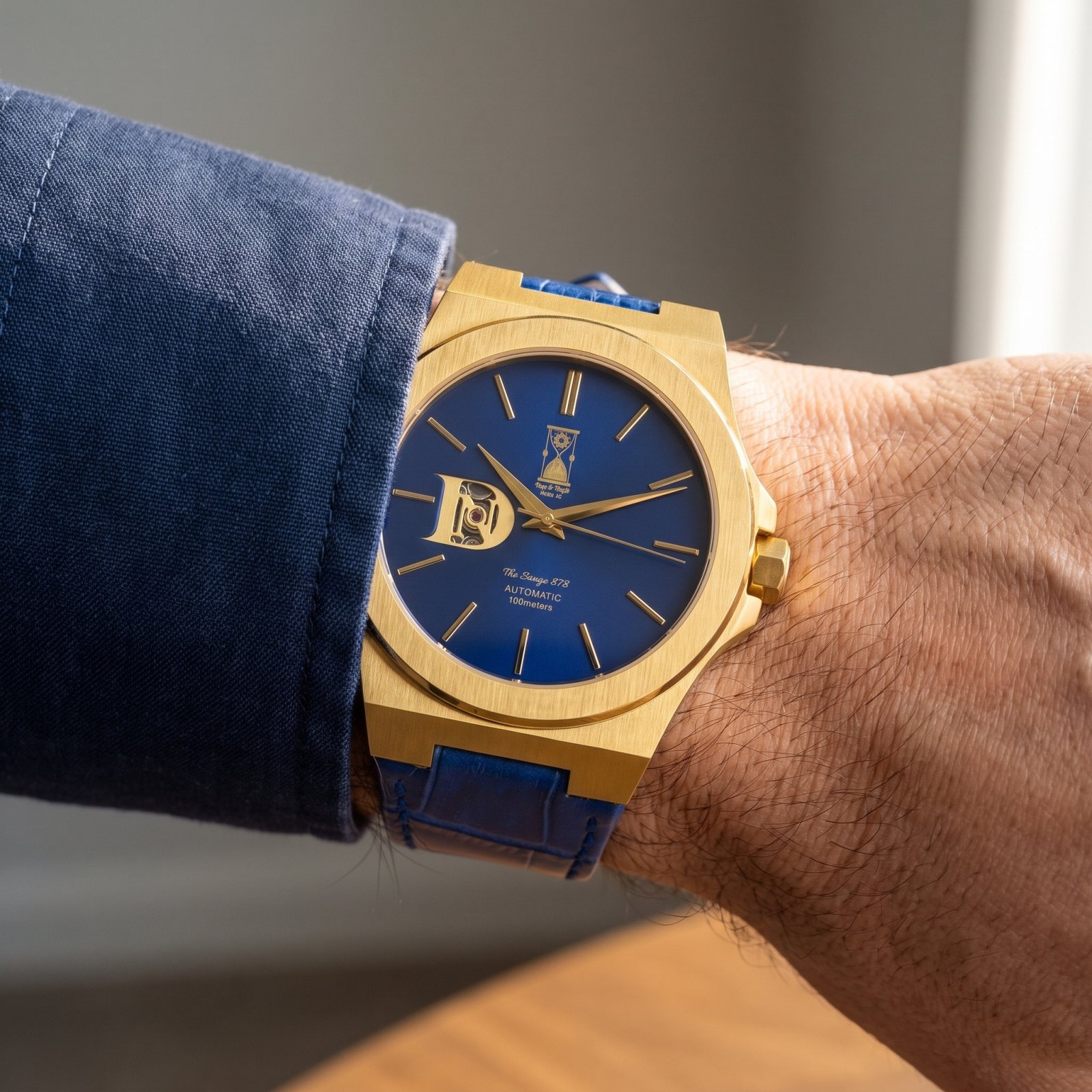
| The Sango 878 Midnight Current | Automatic (Seiko NH38) | 316L stainless steel | Sapphire | $369 | Blue-and-gold contrast |
| The Xerxes | Quartz | 316L stainless steel | Sapphire | $289 | Entry-level durability |
Every model here shares the same foundation: a 316L stainless steel case and a sapphire crystal. That combination is what separates a watch you replace every two years from one you hand down.

What Separates the Most Durable Watches From the Rest
A durable watch is a timepiece whose case, crystal, and movement resist impact, water, dust, and daily abrasion over years of use, not just a warranty period.
Case Construction, Crystal, and Water Resistance Ratings
Stainless steel, specifically 316L, resists corrosion and takes impact without deforming. Resin and plastic cases flex and scratch easily; titanium saves weight but costs more and dents more readily.
The crystal matters just as much.
Water resistance ratings tell you what a watch can handle: 50 meters covers splashes and rain, 100 meters handles swimming and heavy washing. For active professionals, 100 meters is the safer floor.
Matching the Watch to the Hazard, Not the Job Title
"Construction" is not one environment. Hazards change with the task, and so do the features that matter:
- Concrete and masonry: fine alkaline dust packs into links and crown threads. A screw-down crown and a bracelet you can rinse clean beat a leather strap that holds grit.
- Demolition and framing: constant impact and vibration. A quartz movement has no rotor or balance wheel to disturb, which makes it the lower-risk choice around repeated shock.
- Carpentry and finish work: abrasion from sawdust and tool contact. Sapphire crystal and a brushed steel case hide scratches that would ruin a polished plated finish.
PPE, Snagging, and Glove Compatibility
A watch is the one piece of gear on your wrist that can catch on something. Loose bracelet links, protruding crowns, and long strap tails snag on rotating machinery, ladder rungs, and moving parts.
Gloves change the fit equation. A thick work glove pushes the watch against the back of the hand, making a bulky case uncomfortable within an hour.
Analog, Digital, and Smartwatch Trade-Offs
On a jobsite, simple timekeeping often beats features. A basic analog or digital watch does one thing reliably and does not compete for your attention. Smartwatches add notifications, GPS, and touchscreens, useful in some roles, fragile and distracting in others.
If your work involves rotating machinery or strict PPE rules, a simple, low-profile analog watch is usually the safer and more appropriate choice.
The Thutmos3: Bold Quartz Durability for Under $310
The Thutmos3 is our pick for maximum toughness with zero maintenance fuss. Its quartz movement has no rotor to knock loose and no mainspring to wear, so it simply keeps running.
The black stainless steel bracelet and case give it a weighty, deliberate presence without looking fragile.
Where it falls short: quartz watches lack the sweeping second hand and mechanical character that automatic enthusiasts value. If you want a movement you can feel working, look at The Sango 878 instead.

Guide to watch water resistance ratings
The Sango 878 Collection: Automatic Toughness in Three Colorways
The Sango 878 is the core of our automatic lineup, and all three colorways share the same Seiko NH38 movement inside a 316L stainless steel case.

Automatic movements have fewer electronics to fail, and a watchmaker can regulate or rebuild them rather than replace them. The trade-off: an automatic needs to be worn or wound to keep running, and it drifts a few seconds a day.
The Sango 878 Crimson Dawn, Gunmetal Eclipse, and Midnight Current
Each colorway targets a different wardrobe. The Crimson Dawn pairs a rose gold finish with a warm, confident look that reads well in client-facing settings. The Gunmetal Eclipse stays neutral and understated, the safest choice if you wear one watch with everything.
All three carry a two-year warranty and the same sapphire crystal. Pick based on what you wear most, not on which one photographs best.
The Xerxes: Entry-Level Quartz With a Stainless Steel Case
The Xerxes is the most affordable way into a genuinely tough watch at $289.
For a first serious watch, that is the right trade: you get the two components that actually determine durability and skip mechanical complexity you may not want yet.
The honest limitation: the Xerxes offers less visual drama than the Sango 878 collection. It is a quiet, capable watch rather than a conversation piece.
Quartz vs. Automatic Watch Durability: Which Movement Lasts Longer?
Quartz movements generally last longer between services because they have far fewer moving parts, while automatic movements are more repairable and can be rebuilt indefinitely by a skilled watchmaker. Both can serve for decades with maintenance.
Overview of quartz and mechanical watch movements
The practical differences break down like this:
- Shock tolerance: Quartz wins. No rotor or balance wheel to disturb.
- Service interval: Quartz needs only a battery change. Automatic benefits from servicing every several years.
- Repairability: Automatic wins. Parts are mechanical and can be replaced.
For a construction site or a job that involves constant vibration, quartz is the lower-risk choice. For an office role with weekend outdoor use, automatic is entirely reasonable.
Why a Sapphire Crystal Watch Resists Scratches Better Than Mineral Glass
A sapphire crystal watch resists scratches because sapphire ranks near the top of the Mohs hardness scale, well above the mineral glass on most budget watches.
Mineral glass is cheaper and easier to replace, but picks up fine scratches from keys, tools, and rough surfaces within months.
This is the single upgrade we refuse to compromise on. A scratched crystal makes an otherwise excellent watch look tired, and replacing mineral glass repeatedly costs more than buying sapphire once.
How to Care for a Watch So It Survives Years of Daily Wear
Caring for a watch on a jobsite is different from caring for one in an office. Concrete dust, alkaline cement, solvents, and abrasive grit attack a watch in ways rain and sweat never will. These habits actually extend service life.
End-of-Shift Cleaning Routine
Fine dust is the quiet killer. Concrete and drywall dust work into bracelet links, crown threads, and the gap between bezel and case, then grind against surfaces every time you move your wrist. A thirty-second routine prevents most of it:
- Rinse the case and bracelet under lukewarm fresh water, never salt water, never a pressure washer
- Work a soft-bristle toothbrush into the bracelet links and around the crown to lift packed dust
- Dry with a microfiber cloth, paying attention to the crown and caseback threads
Cement, Chemicals, and Solvents
Wet cement is alkaline and mildly caustic. Prolonged skin contact is a hazard in its own right, and residue left on a case and bracelet etches plated finishes and dries into a hard crust inside links.
Solvents, degreasers, and fuel attack gaskets, which are what actually keep water out. A watch rated to 100 meters is not rated against a soak in solvent.
Abrasion, Impact, and Storage
A sapphire crystal resists scratches, but the case and bracelet still pick up dents and scuffs from rebar, tools, and equipment. That is normal wear, not damage. What matters is protecting the crystal and crown:
- Store the watch in a padded pouch or case, not loose in a tool bag
- Keep the crystal clear of swinging tools, rotating machinery, and dropped materials
- Avoid leaving the watch on a dashboard or windowsill in direct sun, heat degrades gaskets over time
Total Cost of Ownership
Purchase price is the smallest part of what a watch costs over ten years. The line items that matter:
- Battery replacement on a quartz model like The Thutmos3 or The Xerxes, a routine, low-cost service every few years
- Servicing on an automatic like The Sango 878, a mechanical service interval measured in years, not months, but a real cost when it comes
- Strap and bracelet replacement, the part that wears fastest and is most often neglected
A watch that costs more up front but needs less servicing, holds its finish, and can be rebuilt rather than replaced usually wins on ten-year cost, the argument for sapphire and 316L steel over mineral glass and plated cases.
Watch care and maintenance guidance
Our two-year warranty covers manufacturing defects, and our care guide walks through the rest. If you are ready to pick your first serious work watch, you can take 10% off Your First Timepiece to make that first step easier.
Frequently Asked Questions
What kind of watch can handle heavy work and daily wear?
A watch built with a stainless steel case, sapphire crystal, and a water resistance rating of at least 100 meters handles most active work. The Sango 878 models meet those marks with 100-meter water resistance and 316L stainless steel. Quartz models like The Xerxes and The Thutmos3 trade automatic movements for simpler servicing and fewer moving parts, which suits buyers who want low-maintenance reliability.
Are sapphire crystal watches scratch-resistant?
Sapphire crystal ranks near the top for scratch resistance among watch glass options, well above mineral crystal and acrylic. A sapphire crystal watch resists the daily abrasion that comes from tools, door frames, and rough surfaces. It is not unbreakable, so a hard direct impact on the crystal edge can still crack it, but routine scratching from keys, concrete dust, or metal contact is rarely a problem.
Are quartz or automatic watches better for active lifestyles?
Quartz movements have fewer moving parts and no winding mechanism, so they tolerate neglect and irregular wear well. Automatic movements draw power from wrist motion and suit people who wear the same watch daily. For quartz vs. automatic watch durability, neither fails faster on principle; the deciding factor is how consistently you wear the watch and whether you keep up with battery replacement or servicing.
How do you care for a watch to make it last longer?
Rinse the case and bracelet with fresh water after exposure to sweat, dust, or salt, then dry with a soft cloth. Wipe the crystal with a microfiber cloth rather than a sleeve. Have gaskets checked and seals tested periodically, especially before swimming season. Store the watch away from magnets and extreme heat. Follow the brand's care guide, and note that The Sango 878 and The Pharaoh Collection carry a two-year warranty covering manufacturing defects.
Can you wear a dress watch during physical work?
You can, but match the watch to the task. A slim dress watch with a leather strap and low water resistance is a poor fit for concrete dust, chemicals, or impact. A stainless steel case with a sapphire crystal and a secure bracelet or strap handles active work far better. If the job involves heavy vibration or repeated knocks, a quartz model with fewer internal components is the safer daily choice.
Your hands take a beating, and your watch should keep up without looking like it belongs in a toolbox. Day & Night Watch Co. builds every timepiece from 316L stainless steel and sapphire crystal, with automatic Seiko NH38 movements in The Sango 878 collection and precise quartz in The Thutmos3 and The Xerxes. Get started with Day & Night Watch Co. and choose a watch built to represent your standards for years.


Leave a comment