


Table of Contents
- Defining Heirloom Quality: Beyond the Marketing Label
- Mechanical vs Quartz for Longevity: Which Movement Endures?
- Material Quality and Case Construction: Built for Decades of Wear
- Serviceability and Repairability: The True Test of an Heirloom
- How to Maintain a Mechanical Watch for Generational Transfer
- Understanding Watch Service Intervals for Long-Term Care
- The Role of Brand Heritage and Design in Heirloom Status
- Conclusion: Choosing a Legacy You Can Pass Down
- Frequently Asked Questions
Last Updated: September 9, 2026
Defining Heirloom Quality: Beyond the Marketing Label
An heirloom watch is a precision timepiece engineered with durable materials and a serviceable movement, designed to function accurately for decades and carry meaning across generations. True heirloom quality demands specific, verifiable traits rather than a heritage logo. At Day & Night Watch Co., we believe the label must be earned through construction, repairability, and timeless design.
A watch only becomes an heirloom if it survives daily wear, keeps accurate time, and can be repaired decades from now. The watch industry has shifted toward disposable designs, but a genuine heirloom resists that trend through mechanical longevity and material integrity.
Below, we break down the defining traits that separate a true heirloom from a marketing claim, with practical guidance on maintenance, service intervals, and what to look for in a timepiece built for generational transfer.
Mechanical vs Quartz for Longevity: Which Movement Endures?
Mechanical movements, whether automatic or manual wind, offer superior longevity compared to quartz because they can be repaired indefinitely by skilled watchmakers. A quartz watch runs on a battery and an integrated circuit; when the circuit fails, replacement parts often no longer exist. Mechanical calibers, by contrast, rely on gears and springs that trained professionals can clean, adjust, and rebuild essentially forever.
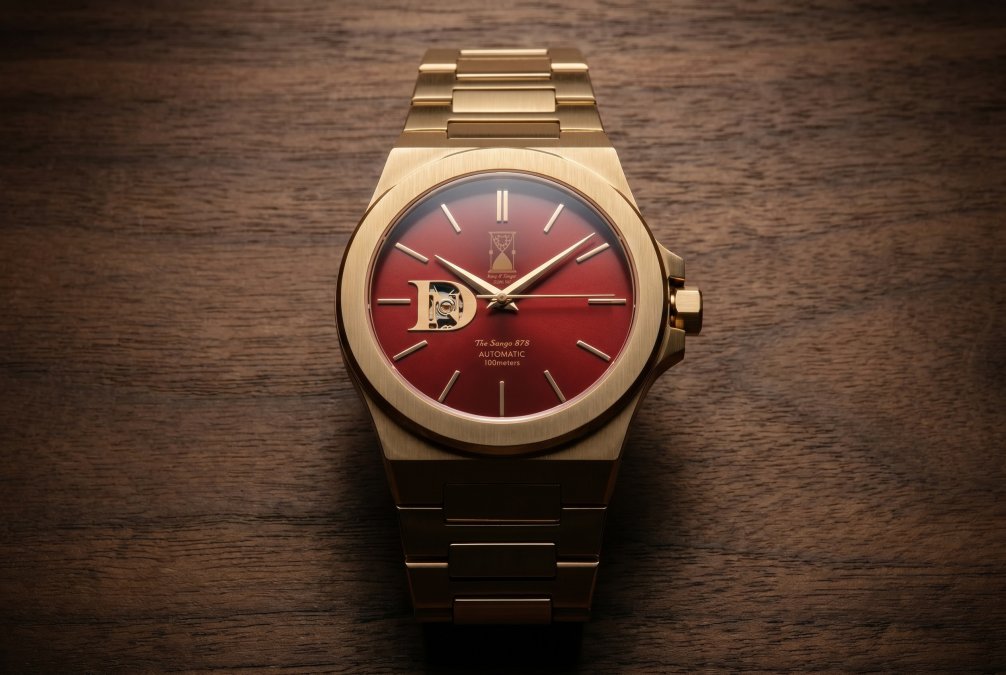
An automatic movement like the Seiko NH38, found in the Sango 878 collection, winds itself through wrist motion and requires no battery changes. Its components are standardized and widely available, meaning serviceability remains viable for generations.
Quartz movements offer accuracy and low maintenance, but the heirloom lifecycle favors mechanical: a quartz watch may last 20 years, while a well-maintained mechanical caliber can run for 100 or more with periodic servicing.
Material Quality and Case Construction: Built for Decades of Wear
The case and crystal determine whether a watch survives daily life or shows its age within a few years. Heirloom construction relies on corrosion-resistant metals and scratch-proof surfaces that maintain their appearance through decades of wear and tear.
316L stainless steel is the benchmark for heirloom cases. This marine-grade alloy resists corrosion from sweat, moisture, and environmental exposure. Case construction should feature solid machining, tight tolerances, and secure crown threading to preserve water resistance over time.
Sapphire crystal ranks near diamond on the hardness scale, resisting scratches from everyday contact. A watch with sapphire crystal will look nearly new after ten years, while softer materials accumulate visible damage quickly.
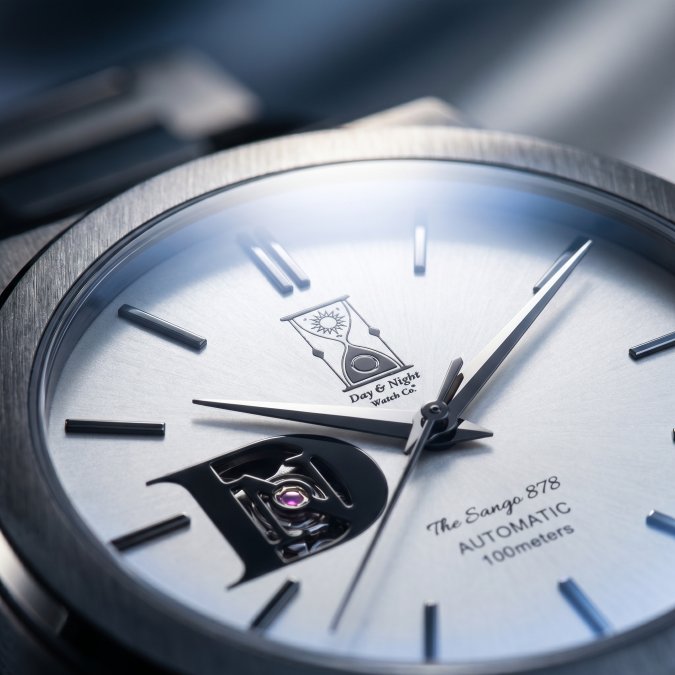
Water resistance also factors into longevity. A rating of at least 50 meters protects against rain and hand washing, while 100 meters, as found in the Sango 878, handles swimming and active use.
Serviceability and Repairability: The True Test of an Heirloom
A watch that cannot be repaired is not an heirloom, regardless of its materials or brand name. Serviceability is the single most decisive factor in whether a timepiece survives the generational transfer.
Three elements determine repairability: movement availability, parts supply, and watchmaker familiarity. Movements like the Seiko NH38 are produced in massive quantities and used across countless brands, guaranteeing parts availability for decades. Obscure in-house calibers, while prestigious, often become unserviceable when manufacturers discontinue parts.
Brand reputation matters less than movement accessibility. Independent watchmakers can service standard calibers anywhere, while proprietary movements may require shipping to the manufacturer indefinitely.
Watches built around widely used mechanical calibers represent the most practical heirloom investment, combining the repairability of standard parts with the longevity of mechanical construction.
How to Maintain a Mechanical Watch for Generational Transfer
The real test of heirloom quality is what happens in the decades after purchase. A watch that sits in a drawer for 15 years will not be ready for the next generation unless you follow a deliberate stewardship protocol for storage, rotation, and environmental control.
The 20-Year Stewardship Protocol
1. Decide on a wear cycle, not a storage cycle. The lubricants inside the movement need motion to stay distributed. Commit to wearing the watch at least one day per week to keep the oils from settling into a hard film. If you cannot wear it weekly, use a quality watch winder in cycles (e.g., 8 hours on, 16 hours off) to avoid over-stressing the mainspring.
2. Control the storage environment with precision. The enemy of a dormant mechanical watch is humidity, temperature swings, and magnetic fields. Store the watch in a sealed container with a silica gel desiccant pack in a room between 60°F and 75°F. Avoid attics, basements, and bathrooms; use a dedicated watch box with a gasket seal, not the original cardboard box.
3. Magnetism is a silent killer. Over years of casual exposure to smartphones and speakers, a mechanical movement can become magnetized, causing the watch to run fast, sometimes by minutes per day. If you notice sudden timekeeping errors, a watchmaker can perform a 5-minute demagnetizing pass.
4. Pre-service before long-term storage. If the watch will not be worn for six months or more, have it serviced first to ensure fresh lubricants and supple gaskets. Then wind it fully once a month and let it run down naturally to prevent the mainspring from taking a permanent 'set'.
5. Create a maintenance log. For a true heirloom, the service history is as important as the movement itself. Keep a simple notebook or digital file that records:
- Date of purchase and original serial number
- Every service date and what was done (e.g., 'full overhaul, new mainspring')
- Any parts replaced (crown, crystal, gaskets)
- Water resistance test results
- Any notable events (e.g., 'dropped on tile floor, checked by watchmaker, no damage')
This log becomes part of the watch's provenance. When you hand it to your child or grandchild, they are not just receiving a timepiece, they are receiving a documented history of care.
The Annual 15-Minute Check
Once a year, perform a simple home inspection:
- Check the crown: Does it screw down smoothly? Any resistance or grinding means the crown tube needs attention.
- Check the crystal: Look for hairline scratches under bright light. Sapphire is nearly scratch-proof, but the anti-reflective coating can wear.
- Check the bracelet or strap: Are the spring bars secure? Is the leather cracking? A failed spring bar is the most common cause of a dropped watch.
- Check the timekeeping: Over 24 hours, note the deviation. A well-serviced mechanical watch should stay within +10 to -5 seconds per day. If it drifts beyond that, it is time for a service.
This protocol is the difference between handing down a watch that runs perfectly on the first wind and handing down one that requires a $400 restoration before it can be worn.
American Watchmakers-Clockmakers Institute guidelines on long-term mechanical watch storage
Understanding Watch Service Intervals for Long-Term Care
Watch service intervals follow a predictable schedule based on usage and movement type. Understanding this rhythm helps you budget for maintenance.
Most manufacturers recommend servicing a mechanical watch every three to five years. This involves disassembling the movement, cleaning each component, replacing worn parts, and re-lubricating. A full service typically costs less than replacing the watch, which is why mechanical construction supports heirloom status.
Maintenance Task |
Recommended Frequency |
Impact on Longevity |
|---|---|---|
Full movement service |
Every 3-5 years |
Prevents wear damage; extends movement life |
Water resistance test |
Annually |
Preserves case integrity |
Gasket replacement |
With each service |
Maintains moisture protection |
Professional cleaning |
Every 2 years |
Removes dust and debris |
Storage check |
Monthly |
Ensures proper winding and condition |
Quartz watches require less frequent intervention, typically battery replacement every few years. However, the movement itself has a finite lifespan, making quartz a poor candidate for multi-generational ownership.
The Role of Brand Heritage and Design in Heirloom Status
Brand heritage and design are the emotional magnets of an heirloom watch, but a heritage logo does not make a movement serviceable. The real differentiator is the legal and documentary framework that turns a nice watch into a transferable legacy.
Why Quartz Fails the Heirloom Test (and What It Means for Design)
Quartz movements are structurally time-limited. The circuit is a sealed semiconductor component that cannot be repaired when it fails, typically after 15 to 25 years, and replacement circuits are only manufactured as long as the movement is in production. Once a quartz caliber is discontinued, the watch becomes a permanent repair project.
A quartz watch can be a beautiful object, but its movement has a hard expiration date. A mechanical movement, by contrast, can be disassembled, cleaned, and rebuilt indefinitely by a skilled watchmaker. The design of a true heirloom must be built around a movement that can outlive its original manufacturer's parts supply.
The Documentation Gap: Provenance as a Legal Asset
Provenance is what survives in a court of law. To pass a watch down without disputes over ownership, value, or authenticity, you need a paper trail.
Here is what a complete heirloom documentation package looks like:
- Original purchase receipt or invoice, establishes date of acquisition and original price
- Certificate of authenticity or warranty card, proves the watch is genuine and matches its serial number
- Service records, every receipt from a watchmaker, showing the movement was maintained
- A written 'letter of intent', a simple, signed statement from you to the recipient, explaining the watch's history and your wish for it to stay in the family
- Photographs, dated photos of you wearing the watch at significant life events (weddings, graduations, anniversaries)
A signed and dated letter of intent can prevent ambiguity about who the watch is meant for. If you have multiple children, specify the intended recipient in writing.
The Appraisal and Insurance Question
A formal appraisal from a certified watch appraiser establishes a baseline value for insurance and estate discussions. Most homeowner's insurance policies cap watch coverage at $1,500 to $2,500; a separate scheduled personal property rider is the standard way to cover a watch valued above that threshold.
Keep the appraisal updated every five years. Watch values fluctuate with market trends, and an outdated appraisal can cause problems if the watch is lost, stolen, or contested during an estate settlement.
Design That Survives Decades, Not Just Seasons
The most successful heirloom watches share three concrete design traits:
- High contrast legibility, a dial you can read at a glance, in any light, without squinting
- Proportional restraint, a case diameter that fits the average wrist without being oversized or undersized (typically 38mm to 42mm for men's watches, 30mm to 36mm for women's)
- Neutral colorways, silver, black, white, or deep blue dials that do not clash with changing fashion palettes
A watch with these traits will look appropriate at a board meeting in 2026 and at a family reunion in 2056. A trendy colored dial or oversized case will look dated within a decade, diminishing its emotional resonance as a legacy piece.
Internal Revenue Service guidance on gifting personal property and valuation for estate purposes
Conclusion: Choosing a Legacy You Can Pass Down
Selecting a watch with heirloom quality requires evaluating concrete traits: mechanical serviceability, durable materials, timeless design, and honest documentation. Day & Night Watch Co. builds timepieces around these principles, crafting each watch from 316L stainless steel and sapphire crystal with movements designed for decades of reliable service.
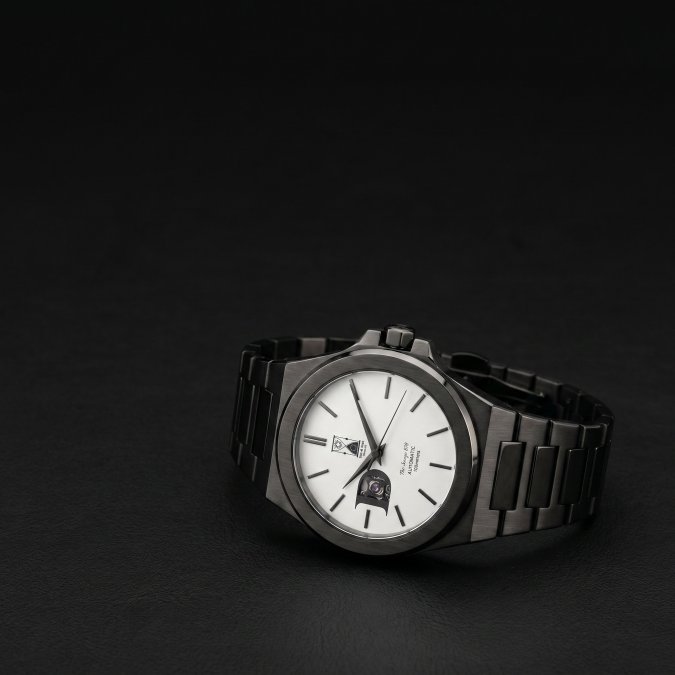
The Sango 878 collection, powered by the automatic Seiko NH38 caliber, represents a practical entry point into heirloom ownership. With water resistance to 100 meters and a two-year warranty, it offers the construction and repairability that define a legacy piece. For those seeking precision quartz reliability, the Pharaoh collection delivers the same material quality in a battery-powered format.
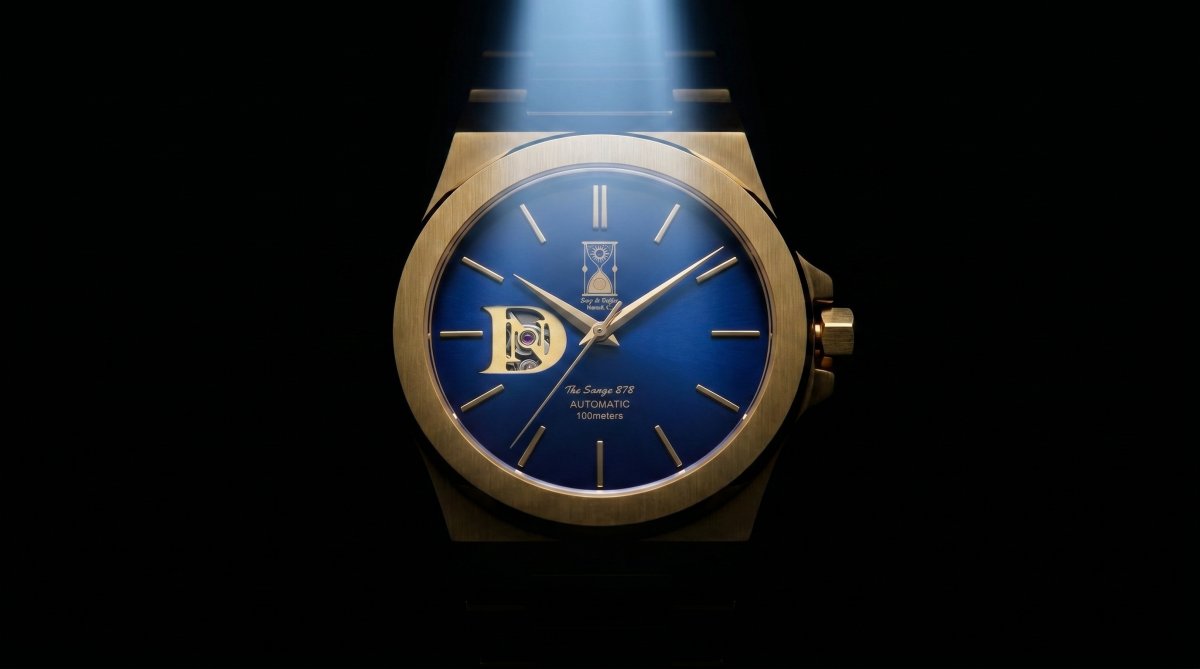
Get started with Day & Night Watch Co. and choose a timepiece engineered to represent your standards for generations to come.
Frequently Asked Questions
Do quartz watches make good heirlooms?
Quartz watches can last decades with battery changes. When a quartz movement fails, it is often more economical to replace the entire movement than to repair it. Mechanical and automatic movements, by contrast, are designed for serviceability. A skilled watchmaker can rebuild a mechanical caliber. If you are choosing a watch to pass down, a mechanical movement offers longevity and repairability.
What materials are essential for a long-lasting watch?
For a watch to survive daily wear for decades and still look presentable, the case and bracelet should be 316L stainless steel or a precious metal like gold. 316L steel resists corrosion and maintains its finish. The crystal should be sapphire, which is highly scratch-resistant and will remain clear for a lifetime. These materials ensure the watch's structure and appearance endure, making them foundational to heirloom quality.
How can you tell if a watch is high quality?
High-quality construction shows in several ways. The case should feel solid with crisp, even finishing. The crystal should be sapphire, which resists scratches. The movement, whether automatic or manual wind, should be a recognized caliber from a reputable manufacturer. Pull the crown: it should engage smoothly. Finally, verify water resistance for everyday protection. These factors combined indicate a watch built to a standard that supports generational transfer.
How often should I service my mechanical watch?
If your watch runs fast or slow, or if the power reserve drops, it may be time for service.


Leave a comment