


Table of Contents
- What Modern Collectors Want From a Tissot Alternative
- Tissot vs Seiko Automatic Watches Comparison: What the Spec Sheets Reveal
- Best Affordable Automatic Watches Under $400 for Everyday Wear
- Boutique Watch Brands for Collectors: What You Gain, What You Give Up
- Quartz Alternatives That Still Look the Part
- Maintenance, Resale Value, and the Real Cost of Ownership
- Frequently Asked Questions
Last Updated: September 14, 2026
What Modern Collectors Want From a Tissot Alternative
The search for a tissot alternative for modern watch collectors usually starts the same way: you want Swiss-adjacent credibility, an automatic movement, and a bracelet that doesn't rattle, but the spec sheet in front of you keeps landing on the same compromises. At Day & Night Watch Co., we hear this constantly from buyers who have outgrown their first quartz watch and want something with more presence on the wrist.
The mass-market Swiss formula was built for volume. That's not a criticism, it's a design brief. When a heritage brand produces hundreds of thousands of units per year, every component gets optimized for cost at scale: stamped clasps, mineral or lightly treated crystals, and movements chosen because they're cheap to service in bulk, not because they're interesting to own.
Where the Mass-Market Swiss Formula Falls Short
Three things tend to disappoint collectors first. The bracelet is usually the weakest link, with pressed clasps and minimal articulation that feel hollow compared to the case. Second, lume and dial finishing are often an afterthought on entry models. Third, and this matters most over time, the movement inside is frequently a closed-architecture caliber that limits how much a watchmaker can adjust or repair it down the road.
None of that makes those watches bad. It makes them a starting point, not a destination.
The Specs That Actually Decide the Purchase
Four numbers separate a watch you'll keep from one you'll flip within a year:
- Case diameter and lug-to-lug: a 40mm case with a 48mm lug-to-lug wears very differently than a 40mm case with a 52mm span
- Crystal material: sapphire crystal resists scratching in a way mineral glass simply does not
- Movement architecture: an open, widely serviced caliber like the Seiko NH38 keeps long-term ownership simple
- Water resistance: 100 meters covers swimming and daily wear; 50 meters covers handwashing and rain
Tissot vs Seiko Automatic Watches Comparison: What the Spec Sheets Reveal
The Tissot vs Seiko automatic watches comparison is the entry point for most collectors, and the honest answer is that they optimize for different things. Tissot leans on Swiss heritage and finishing consistency. Seiko leans on movement innovation and, critically, an open supply of calibers that independent brands can build around.
That second point is the one most buyers miss. The Seiko NH38 movement inside our Sango 878 is a workhorse caliber that any competent watchmaker can service, regulate, and source parts for. That accessibility is a genuine long-term advantage, and it's a big part of why so many boutique brands build their automatics around Seiko movements rather than closed Swiss calibers.

| Feature | Seiko NH38 Automatic | Typical Entry Swiss Automatic |
|---|---|---|
| Movement type | Automatic, hacking, hand-winding | Automatic, varies by model |
| Serviceability | Widely serviced, open parts supply | Often brand-restricted |
| Crystal on comparable models | Sapphire on many boutique builds | Mineral or treated glass common |
| Bracelet articulation | Varies by brand | Pressed clasps common |
| Water resistance | Up to 100m on many builds | 50m typical on entry models |
Neither column wins outright. If resale liquidity and brand recognition matter most to you, the heritage name has the edge. If you care about what's actually inside the case and how easy it is to maintain, the NH38 platform is the more collector-friendly choice.
Best Affordable Automatic Watches Under $400 for Everyday Wear
The best affordable automatic watches under $400 are the ones that get the fundamentals right: a serviceable movement, sapphire crystal, 316L stainless steel, and a bracelet that doesn't feel like an afterthought. Price stops being the story once those four boxes are checked.
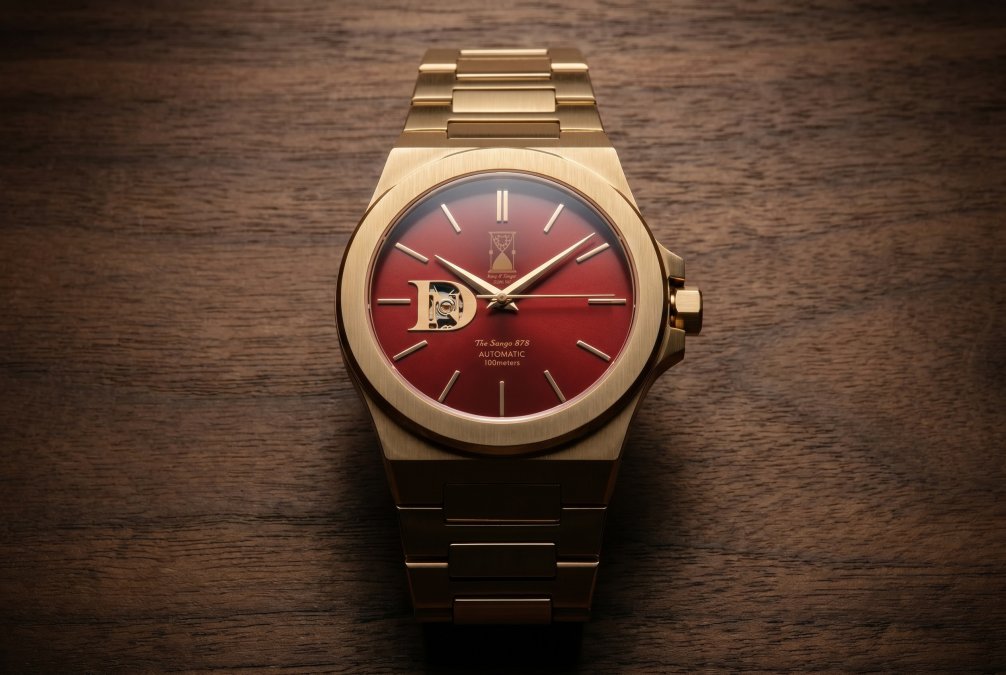
This is the price band where the boutique approach genuinely outperforms. You're not paying for a marketing budget or a flagship store lease. You're paying for the movement, the case, and the crystal, which is exactly where the money should go on a daily wearer.
The Sango 878 Collection: Three Colorways, One Movement
Our Sango 878 Collection is built around the Seiko NH38 automatic movement, 316L stainless steel, and sapphire crystal, with water resistance up to 100 meters and a two-year warranty. Three colorways cover most wardrobes:
- The Sango 878 Crimson Dawn ($369) pairs a rose gold finish with a warm, confident dial for dressier days
- The Sango 878 Gunmetal Eclipse ($369) goes gunmetal and silver for a sharper, more technical look
- The Sango 878 Midnight Current ($369) combines blue and gold for the most classic of the three
All three share the same movement, case architecture, and crystal, so the choice comes down to finish rather than capability. If you're new to mechanical watches, our guide to automatic vs quartz movements explains what you're actually gaining.


Boutique Watch Brands for Collectors: What You Gain, What You Give Up
Boutique watch brands for collectors trade brand recognition for specification density, and that trade is usually worth making if you know exactly what you're giving up. The honest version of the trade looks like this:
What you gain
- A better movement-to-price ratio. At the same retail price, a boutique build typically puts more of the budget into the caliber, crystal, and bracelet because there's no flagship lease or global ad spend to amortize.
- Sapphire crystal as standard rather than a mid-tier upgrade. On many heritage entry models, sapphire appears only once you step up a tier or two.
- Solid-link bracelets with machined clasps instead of stamped ones, which matters more than any dial detail once the watch is on your wrist for eight hours.
- A direct relationship with the brand, you email the people who built it, not a regional service center.
What you give up
- Instant recognition. Nobody at a dinner party reads a boutique logo the way they read a heritage one.
- Secondary-market liquidity. Fewer buyers know the model, so a sale takes longer and the spread between what you paid and what you recover is wider.
- A century of design continuity. Heritage brands iterate on a known language; boutiques start from zero each release, which is exciting but less predictable.
The Serviceability Math Nobody Prints
This is where the boutique case gets stronger than most guides admit. A closed, brand-restricted Swiss caliber often has to go back to the brand's own service network, where a full service can run several hundred dollars and take weeks. An open-architecture caliber like the Seiko NH38 inside our Sango 878 can be serviced by any competent independent watchmaker, and replacement movements are widely available through parts distributors at a fraction of a full service cost. For a collector planning to own a watch for a decade, that difference compounds.
A common pattern among long-term owners: the first service on a closed caliber costs more than the first service on an open one, and the turnaround is longer. Neither is a dealbreaker, but it changes the true cost of ownership, which is the number that actually matters.
Resale Reality, Stated Plainly
Resale value tracks brand recognition more than specification. A heritage name will typically recover a larger share of retail on the secondary market simply because more buyers recognize it. Boutique watches hold value based on how well a specific model ages, a limited colorway that develops a following can do surprisingly well, while a generic one may not. If you're buying to flip, that asymmetry matters. If you're buying to wear for a decade, it barely registers.
What most guides miss is that the gap is narrowing. As the Swiss watch industry's own export data shows, the volume end of the Swiss market has been under pressure for years, and that pressure has pushed buyers toward smaller brands that compete on specification rather than heritage. The collector who understands this is the one who ends up with a better watch for the same money.
Quartz Alternatives That Still Look the Part
Quartz alternatives make sense when you want the look and build quality of a mechanical watch without the maintenance rhythm that comes with an automatic. The trade is real and worth stating in numbers rather than vibes.
How the two ownership models actually compare
- Accuracy: A quartz movement typically drifts a few seconds per month, while a mechanical automatic commonly runs within a handful of seconds per day. Over a year, that's a meaningful difference in how often you reset the time.
- Service cadence: An automatic benefits from a full service roughly every five to seven years. A quartz movement generally needs only a battery change every two to three years plus a gasket inspection to keep water resistance intact.
- Cost profile: The automatic's service is the larger single expense; the quartz's battery changes are smaller but recurring. Neither is expensive in absolute terms, but the shapes of the two cost curves are different, and that matters if you own several watches.
- Failure mode: When a quartz movement finally fails, replacement is often cheaper than repair. When an automatic fails, the fix depends on parts availability, which is why open-architecture calibers are easier to live with long term.
The Pharaoh Collection: Quartz Done With Mechanical-Grade Build
Our Pharaoh Collection covers this ground well. The Thutmos3 ($309) brings a black stainless steel bracelet design with modern character. The Djoser ($289) leans into heritage inspiration with a polished rose gold finish, while The Xerxes ($289) keeps things clean in silver. The Tutankhamun ($319) rounds out the collection in gold.
Every piece in the Pharaoh Collection is built from 316L stainless steel with sapphire crystal and a two-year warranty, so the case and crystal quality matches our automatics. The difference is purely in the movement and how you maintain it, the parts you see and touch every day are held to the same standard.
The Long-Term Cost Angle Most Guides Skip
Here's the part competitors leave out: the true cost of a watch isn't the sticker price, it's the sticker price plus a decade of ownership. A quartz piece at $289 with a battery change every couple of years and a gasket inspection lands in a very different total-cost bracket than an automatic at the same price that needs a full service in year five. Run that math before you decide which movement type fits your habits, not your aspirations.
Maintenance, Resale Value, and the Real Cost of Ownership
Maintenance and resale value are the two topics competitors skip, and they're the two that determine whether a watch was actually a good buy. An automatic movement benefits from servicing roughly every five to seven years, while a quartz movement needs only a battery change and occasional gasket inspection. Neither is expensive in absolute terms, but the automatic carries a higher long-term ownership cost.
Resale value follows brand recognition more than specification. A heritage name will typically hold value better on the secondary market simply because more buyers recognize it. Boutique watches tend to hold value based on how well the specific model ages, which is harder to predict. If you're buying to flip, that matters. If you're buying to wear for a decade, it matters far less.
guidance from the American Gem Society on caring for fine jewelry and watches offers a useful reminder that regular cleaning and inspection extend the life of any metal and crystal build, regardless of brand. The practical takeaway: a watch you maintain is a watch you keep.
Choosing a tissot alternative for modern watch collectors isn't about finding a cheaper copy. It's about deciding which compromises you're willing to accept and which specifications you refuse to give up. At Day & Night Watch Co., we build for the second group: 316L stainless steel, sapphire crystal, the Seiko NH38 automatic movement in the Sango 878, and a two-year warranty across every piece. Explore The Sango 878 Collection or the Pharaoh Collection and find the timepiece that earns its place on your wrist for the next decade, not the next season.
Frequently Asked Questions
What are some good alternatives to Tissot watches for modern collectors?
Modern collectors often look for the same core specs Tissot offers, Swiss or Japanese movements, sapphire crystal, and stainless steel cases, but from smaller brands. Day & Night Watch Co. builds its Sango 878 collection around the Seiko NH38 automatic movement with 316L stainless steel and sapphire crystal at $369. The trade-off is brand recognition: you get comparable materials without paying for decades of advertising spend.
Is it worth moving from a mass-produced watch to a boutique brand?
It depends on what you value. Mass-produced watches win on resale liquidity and service networks. Boutique brands win on exclusivity and often on specs per dollar. A $369 Sango 878 Gunmetal Eclipse, for example, uses the same NH38 movement found in watches costing more, and comes with a two-year warranty. If you plan to flip the watch later, stick with heritage names. If you plan to wear it daily, boutique offers more watch for the money.
What features should modern collectors prioritize when choosing an alternative watch?
Start with four specs: movement type, crystal material, case material, and water resistance. An automatic movement like the Seiko NH38 gives you a sweeping seconds hand and no battery changes. Sapphire crystal resists scratches far better than mineral glass. 316L stainless steel holds up to daily wear. For water resistance, 100 meters covers swimming and showering; 50 meters handles splashes and rain. Match these to how you actually wear the watch.
What are the best everyday automatic watches for under $1,000?
Under $1,000 you can find solid automatics from both heritage and boutique brands. The key is checking the movement, case size, and lug-to-lug measurement against your wrist. Day & Night Watch Co.'s Sango 878 line sits at $369 with a Seiko NH38 movement, sapphire crystal, and 100-meter water resistance. That leaves budget for a second strap or a service fund. Try watches on when possible, or buy from brands with clear return policies.
How does Day & Night Watch Co. compare to entry-level luxury brands?
Entry-level luxury usually means a recognizable name and a higher price. Day & Night Watch Co. competes on materials and movement rather than heritage. Every watch uses 316L stainless steel and sapphire crystal, with automatic or quartz movements and a two-year warranty. Prices range from $289 for the Djoser to $369 for the Sango 878. You are paying for the watch itself, not the logo on the dial.


Leave a comment