


Table of Contents
- Is a Luxury Watch a Real Investment or Speculation?
- Best Starter Luxury Watches for First-Time Buyers
- Understanding Luxury Watch Resale Value and Market Trends
- Pre-Owned Luxury Watches: Finding Value in the Secondary Market
- Watch Authentication and Appraisal: Protecting Your Purchase
- Building Your Luxury Watch Strategy: Budget, Holding Period, and Exit Planning
- Frequently Asked Questions
Last Updated: October 12, 2026
Is a Luxury Watch a Real Investment or Speculation?
A luxury watch investment isn't like buying Treasury bonds or index funds. It's more like art or real estate: you're betting someone else will value it as much as you do.
Some luxury watches appreciate, others depreciate, and a few hold steady. The difference comes down to brand reputation, reference rarity, condition, and market demand. Entry-level luxury timepieces in the $300-500 range typically hold their value better than you'd expect.
A luxury watch can be both a daily-wear asset and a financial holding. The best luxury watch investments for beginners combine wearability with realistic upside: you genuinely enjoy wearing it, and if it appreciates, that's a bonus.
Best Starter Luxury Watches for First-Time Buyers
Entry-level luxury watches are where most beginners should start: proven movements, durable materials, and brand recognition without the $5,000+ price tag of established Swiss houses. The best starter luxury watches share three traits: reliable movements, sapphire crystal, and 316L stainless steel construction.
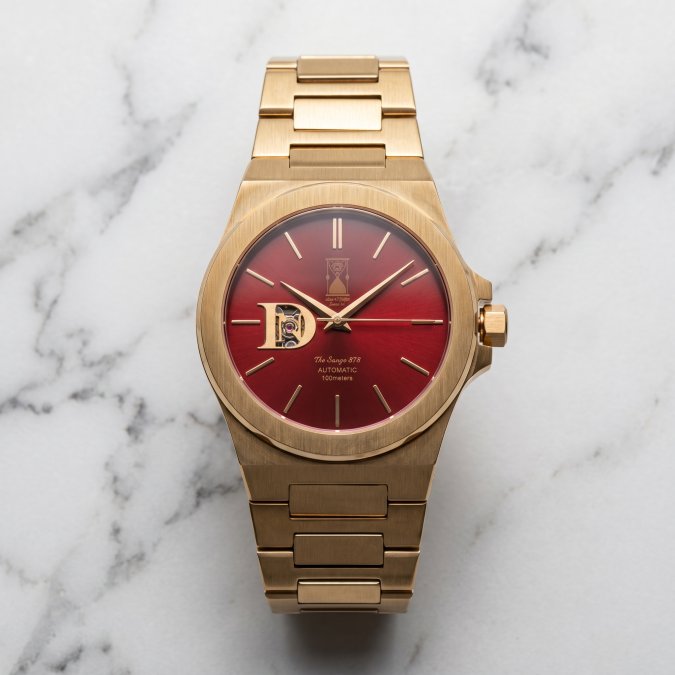
The Sango 878 Collection: Automatic Precision for Daily Wear
The Sango 878 is built on the Seiko NH38 automatic movement. It features scratch-resistant sapphire crystal and a 316L stainless steel case rated for 100 meters of water resistance.
The Sango 878 Collection comes in multiple colorways, including The Sango 878 Crimson Dawn, The Sango 878 Gunmetal Eclipse, and The Sango 878 Midnight Current, each with the same core specs and two-year warranty. The automatic movement winds itself through wrist motion and requires no battery.

What makes The Sango 878 compelling for luxury watch investment purposes is its entry-level positioning: solid engineering at a price point that lets you learn the market without significant financial risk.
Entry-Level Luxury: What to Look For
When evaluating a starter luxury watch, focus on these factors:
- Movement type: Automatic movements (like the NH38) command more collector interest than basic quartz and typically hold value better.
- Case material: 316L stainless steel is the standard for luxury watches, resisting corrosion and scratches better than lower grades.
- Crystal: Sapphire crystal is non-negotiable, scratch-resistant and clear over decades.
- Water resistance: 100 meters is sufficient for daily wear and occasional swimming.
- Brand recognition: Choose brands with established communities and service infrastructure so you can get your watch serviced in 10 years.
- Warranty: A two-year warranty signals the maker stands behind their work.
The mistake most beginners make is chasing brand names they recognize from advertisements. Instead, research which watches hold value by looking at sold listings, not asking prices.
Understanding Luxury Watch Resale Value and Market Trends
Resale value depends on three forces: brand equity, condition, and market liquidity.
The real math of a watch investment
Start with the purchase price, then layer on the costs that most beginners ignore:
- Sales tax: Depending on your state, you may pay 6-9% at purchase. On a $400 watch, that's $24-36 you never recover.
- Insurance: Expect to pay roughly 1-2% of the watch's value annually, 5-10% of the purchase price over a five-year hold.
- Servicing: Mechanical watches need servicing every 5-7 years. A basic automatic service typically runs $150-300 at an independent watchmaker.
- Selling fees: Online marketplaces charge 10-15% of the sale price. Dealers buy at wholesale, often 30-50% below retail. Auction houses charge seller's premiums that can exceed 20%.
- Bid-ask spread: On entry-level watches, the spread between what a dealer pays you and what they sell it for can be 20-30%.
A worked example
Suppose you buy a $400 watch, pay $32 in sales tax, insure it for five years at 1.5% annually ($30), and service it once for $200.
What this means for beginners
If your goal is financial return, entry-level watches are a poor vehicle. The costs eat the gains. If your goal is enjoyment plus partial value retention, the math is more forgiving.
The best luxury watch investments for beginners have active secondary markets and low servicing costs, enough trading volume that you can actually sell when ready.
2026 market context
In 2026, the luxury watch market is shifting: the sports-watch speculative bubble has cooled and prices that peaked in 2023-2024 have normalized.
Pre-Owned Luxury Watches: Finding Value in the Secondary Market
The pre-owned market is where real value lives: a pre-owned luxury watch can cost 30-50% less than retail with identical functionality, because the previous owner already absorbed the depreciation curve. Condition is everything. A watch with light case scratches but a pristine dial and working movement beats a heavily polished case with a damaged movement, polishing removes material and shortens lifespan.
Provenance matters: documentation, original box and papers, and service history add 10-20% to resale value and make the watch easier to sell later. The best pre-owned luxury watches come from authorized dealers, reputable resellers, or collectors with documented ownership. When you're ready to start your collection, 10% off Your First Timepiece can help you acquire a quality piece.
Watch Authentication and Appraisal: Protecting Your Purchase
Authentication is non-negotiable when buying pre-owned. Counterfeit luxury watches are sophisticated, a casual glance won't reveal the fraud.
Start with movement inspection. Authentic movements have specific finishing, engravings, and component quality; counterfeits cut corners because most buyers never open the case. Ask the seller for movement photos and compare them to reference images from the manufacturer or collector communities, discrepancies are red flags.
Case construction is another authentication point: examine the case back engraving for crispness and consistent serial numbers, and check that dial printing is sharp and evenly applied.
When in doubt, get a professional appraisal. A certified appraiser can authenticate your purchase and establish its value for insurance purposes.
Building Your Luxury Watch Strategy: Budget, Holding Period, and Exit Planning
A repeatable model-selection checklist
Before you buy any watch, run it through this checklist:
- Production volume: Limited runs and discontinued models tend to hold value better than mass-produced references that stay available for years.
- Demand depth: Are there active collector communities discussing this reference? Thin demand means a thin market when you sell.
- Condition: Original condition beats polished. Unpolished cases with honest wear are more desirable than over-polished cases that have lost their edges.
- Reference history: Look at sold prices over the past three years. A reference with stable or rising sold prices is safer than one with volatile or declining prices.
- Comparable sales: Find at least five recent sold listings for the same reference in similar condition and average them. That's your realistic market value, not the asking price.
- Price paid: Buying below the comparable sales average gives you a margin of safety. Buying above means you're paying for someone else's profit.
Liquidity and realistic exit planning
Liquidity is how quickly you can convert your watch to cash without a large discount. Selling routes differ:
| Selling Route | Time to Sell | Typical Net to You | Best For |
|---|---|---|---|
| Online marketplace | 1-4 weeks | 85-90% of sale price | Patient sellers who can handle shipping and buyer questions |
| Dealer buyout | 1-3 days | 50-70% of retail | Sellers who need cash fast and accept a discount |
| Auction house | 2-6 months | 70-80% of hammer price | Rare or high-value pieces with collector demand |
| Private sale | 1-8 weeks | 90-100% of agreed price | Sellers with established collector networks |
Most beginners overestimate how quickly they can sell. A watch that looks liquid in a forum thread may sit for months once listed.
Budget reality
Start with the amount you'd be comfortable losing.
Holding period
Most luxury watches take 3-5 years to stabilize in value: the first year is the steepest depreciation, and by year three the curve flattens.
Diversification limits
Don't put all your capital into one watch. A portfolio of 3-5 watches across different brands and categories is more resilient than a single reference.
Portfolio tracking
Keep a simple record for each watch: purchase date, price, all costs (tax, shipping, servicing, insurance), and eventual sale price and fees.
| Strategy Element | Action | Timeline |
|---|---|---|
| Budget Allocation | Commit capital you can hold for 3+ years | Before purchase |
| Model Selection | Run the six-point checklist | Before purchase |
| Research Phase | Study comparable sales and market trends | 4-8 weeks |
| Authentication | Get professional appraisal before buying | At purchase |
| Holding Period | Plan minimum 3-5 years of ownership | At purchase |
| Exit Strategy | Decide on sales method (dealer, online, auction) | Before purchase |
| Documentation | Maintain original box, papers, and service records | Throughout ownership |
| Performance Tracking | Record all costs and sale proceeds | Ongoing |
A luxury watch investment for beginners succeeds when you combine realistic expectations with careful selection and honest cost modeling.
Frequently Asked Questions
Are luxury watches a good investment for beginners?
Luxury watches can appreciate in value, but they're best viewed as long-term holdings rather than quick financial gains. Entry-level luxury watches like The Sango 878 offer durability and brand stability, making them lower-risk choices. Success depends on brand reputation, condition, limited production status, and holding period. Most collectors see the strongest returns after 5-10 years of ownership. Treat your purchase as a lifestyle investment first, financial appreciation second.
What should you check before buying a pre-owned luxury watch?
Examine the case for scratches and damage, verify the movement works smoothly, and check that the sapphire crystal is clear and undamaged. Request the watch's service history and original box and papers if available, as these significantly affect resale value. Confirm authenticity through the serial number and reference number. Buy from reputable dealers or independent sellers with strong transaction records. Consider having a professional appraisal done before committing to a significant purchase.
How do you evaluate a luxury watch's resale value?
Resale value depends on brand reputation, condition, reference number, production rarity, and market demand. Check recent auction results and comparable sales on secondary markets to establish a realistic price range. Watches in excellent condition with original box and papers command 60-75% of retail price. Limited production models and discontinued references typically hold value better. Factor in service history and any repairs, a well-maintained watch with documented care retains value longer than one with unknown provenance.
What makes a luxury watch collectible?
Collectible watches combine strong brand reputation, limited production numbers, distinctive design or rare reference numbers, and consistent collector demand. Automatic movements and premium materials like sapphire crystal and 316L stainless steel appeal to serious collectors. Watches that mark personal milestones or represent brand heritage tend to appreciate. The Sango 878 collection, for example, combines precision automatic movement with durable construction, creating appeal among both daily-wear enthusiasts and collectors seeking investment-grade timepieces with practical utility.
How much should a beginner budget for a luxury watch investment?
Entry-level luxury watches typically range from $300 to $1,500, offering a balance between quality craftsmanship and manageable risk. The Sango 878 collection starts at $369, providing automatic movement and premium materials at an accessible price point. Budget for additional costs: insurance (1-2% of value annually), maintenance and servicing ($200-$500 every 5-7 years), and potential dealer or auction fees (5-10% on resale). Start with one quality watch rather than multiple lower-quality pieces, a single well-chosen timepiece builds better collector credibility and holds value more reliably.
Should you buy new or pre-owned luxury watches as a beginner?
New watches offer warranty protection and guaranteed authenticity, making them ideal for beginners building confidence. Pre-owned watches can offer better value, typically 20-40% below retail, if purchased from reputable dealers. New purchases like The Sango 878 include a two-year warranty and verified craftsmanship, reducing authentication risk. Pre-owned pieces require careful appraisal and provenance verification. Start with new if you're unsure about condition assessment; transition to pre-owned once you understand what to inspect and how to verify authenticity.


Leave a comment