


Table of Contents
- What You'll Need Before You Start
- Is Sapphire Crystal Scratch Proof? The Truth About Hardness
- How to Clean Watch Crystal Safely: Step-by-Step
- Removing Scratches from Sapphire Crystal: What Works and What Doesn't
- AR Coating and Bezel Protection: The Maintenance Most Owners Skip
- Water Resistance, Gaskets, and Crown Care After Cleaning
- What to Avoid: Chemicals, Abrasives, and Thermal Shock
- Your Sapphire Crystal Watch Maintenance Routine
- Frequently Asked Questions
Last Updated: September 16, 2026
What You'll Need Before You Start
Maintaining a sapphire crystal watch starts with the right tools, not the hardest abrasive you can find. Gather these first:
- Lint-free microfiber cloth (two: one dry, one damp)
- Mild liquid soap and a bowl of lukewarm water
- Soft-bristle brush (a clean makeup brush works)
- Isopropyl alcohol (70% or higher) for residue
- Painter's tape to mask the bezel during any polishing
- Distilled water for the final rinse
Is Sapphire Crystal Scratch Proof? The Truth About Hardness
No. Sapphire crystal is scratch resistant, not scratch proof, and that distinction matters for how you care for it. Synthetic sapphire ranks 9 on the Mohs scale, second only to diamond at 10, according to Mohs hardness scale reference. Only diamond, silicon carbide, and a few industrial abrasives can cut it.
Sapphire vs Mineral Glass: What the Difference Means for Care
Mineral glass sits around 5 to 6 on the Mohs scale, so it scratches from everyday grit and polishes out with relative ease. Sapphire resists that grit but cannot be polished at home once genuinely scratched. Mineral glass is softer and cheaper to replace; sapphire is harder, clearer, and best protected rather than repaired. If you own a sapphire crystal watch, your maintenance strategy shifts from fixing damage to preventing it.
How to Clean Watch Crystal Safely: Step-by-Step
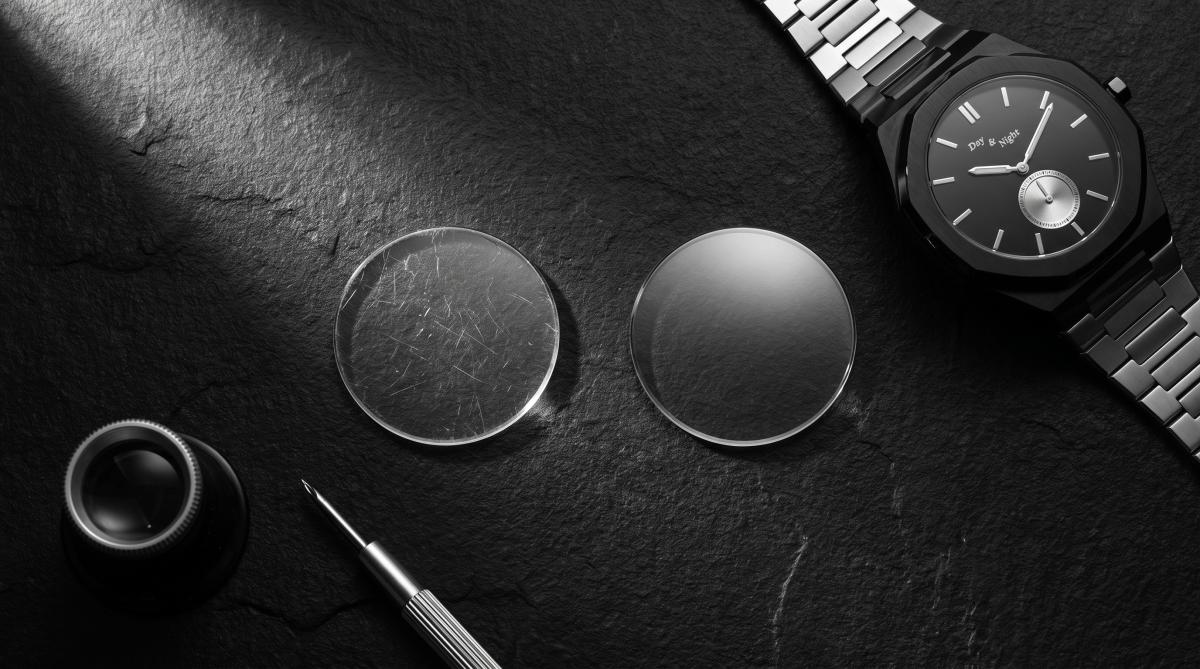
Sapphire Crystal vs Mineral Glass Durability Guide 2026
- Check water resistance. Confirm the crown is pushed in or screwed down and the caseback is sealed. If the watch isn't rated for water, clean with a barely damp cloth only.
- Wipe loose grit first. A dry, lint-free microfiber cloth removes dust before it becomes an abrasive.
- Mix mild soapy water. A drop of dish soap in lukewarm water is enough.
- Brush gently in circular motions. Use the soft brush around the bezel and lugs, not hard pressure on the crystal.
- Rinse with distilled water. Tap water leaves mineral spots that look like scratches.
- Dry immediately. A second dry microfiber cloth prevents water spots and residue.
Removing Smudges, Residue, and Stubborn Stains
For fingerprints and oily smudges, a dry microfiber cloth in circular motions usually finishes the job. For sticky residue, dampen a corner of the cloth with isopropyl alcohol and wipe once, then dry. Stubborn film near the gasket line often needs the soft brush and soapy water rather than more solvent. If residue survives both, stop. Repeated solvent exposure is what damages anti-reflective coating, and a cloudy AR layer is worse than a faint smudge.
Removing Scratches from Sapphire Crystal: What Works and What Doesn't
Removing scratches from sapphire crystal is mostly a myth at the DIY level, and understanding why saves you from making the damage worse. Sapphire ranks 9 on the Mohs scale, second only to diamond at 10. Only diamond, silicon carbide, and a few industrial abrasives can cut it. Hand-buffing with a mild abrasive does almost nothing to the sapphire surface, but it can strip the anti-reflective coating sitting on top of it, which is the damage most owners actually cause.
Diagnose Before You Touch It
Most marks that look like scratches are not scratches. Run this check first:
- Residue or oil: Wipe with a dry microfiber cloth. If the mark moves or disappears, it was never damage.
- Coating wear: Look under a bright light at a low angle. A hazy patch, rainbow sheen, or fine spiderweb lines that shift as you tilt the watch point to the AR coating, not the sapphire.
- Real sapphire scratch: Drag a fingernail across the mark. If your nail catches, the damage is deep enough to be in the crystal itself.
Why DIY Polishing Usually Fails
Polishing works by abrading the surface down to the level of the scratch. On mineral glass, which sits around 5 to 6 on the Mohs scale, that is achievable with cerium oxide and patience. On sapphire, the abrasive has to be harder than the crystal, which means diamond compound, a polishing wheel, and real technique. Hand-buffing with diamond paste produces a slow, uneven result and risks coating damage long before it smooths the scratch.
What actually happens when owners try:
Approach |
Result on Sapphire |
Verdict |
|---|---|---|
Diamond paste by hand |
Slow, uneven, risks coating damage |
Not recommended |
Cerium oxide polish |
Works on mineral glass, not sapphire |
Wrong material |
PolyWatch-style creams |
Designed for acrylic, useless here |
Skip |
Professional lapidary service |
Can refinish the surface |
Best option |
Crystal replacement |
Restores clarity fully |
Often cheaper than repair |
When to Seek Professional Help
A professional lapidary or watchmaker can refinish a sapphire surface. If the scratch is deep, if the crystal is chipped at the edge, or if the damage sits over the dial, replacement may be a more suitable path. A chipped edge also threatens the case seal, so have it assessed before the next water contact.
AR Coating and Bezel Protection: The Maintenance Most Owners Skip
Anti-reflective coating is the layer most owners damage without realizing it, and almost no guide explains how to tell coating wear apart from a real crystal scratch. External AR coating is a thin deposited film that sits on top of the sapphire. It is far softer than the crystal beneath it, which is why a scratch that appears "on" a sapphire crystal watch is frequently in the coating instead.
How to Tell AR Coating Wear from a Crystal Scratch
Before you touch anything, run this visual diagnostic:
- Look at the crystal under a single bright light at a low angle. Coating wear shows up as a faint, hazy patch, a rainbow sheen, or a cluster of fine spiderweb lines that shift as you tilt the watch.
- Breathe on the crystal. A real scratch in the sapphire stays visible through the fog. Coating wear often disappears or blurs because the fog fills the shallow coating texture.
- Drag a fingernail across the mark. If your nail catches, the damage is deep enough to be in the sapphire. If it glides over, the mark is almost certainly in the coating or is residue.
- Wipe with a dry microfiber cloth. If the mark moves or vanishes, it was oil or residue, not damage.
A common pattern is a watch owner who polishes a "scratch" that was actually coating wear, then wonders why the crystal looks worse. Polishing removes the coating around the mark and leaves a visible halo.
Cleaning an AR-Coated Crystal Safely
Stick to soapy water and a lint-free microfiber cloth for routine cleaning. Avoid alcohol, acetone, and any ammonia-based cleaner unless a stubborn residue demands a single, brief alcohol wipe, then rinse and dry immediately. Repeated solvent exposure is what dulls and lifts the coating. Never use an abrasive polish, a polishing wheel, or a scouring pad on an AR-coated crystal.
Protecting the Bezel During Any Work
The bezel sits millimeters from the crystal and takes the collateral damage from any polishing attempt. Mask it with painter's tape before you touch the crystal, because a polished bezel next to a scuffed crystal looks worse than the original scratch. Tape also keeps abrasive compounds out of the case seam, where they can migrate toward the gasket and compromise water resistance.
Water Resistance, Gaskets, and Crown Care After Cleaning
Water resistance depends on gaskets and case integrity, not on the crystal alone. Every time you unscrew a crown or open a caseback, you risk disturbing the seal that keeps moisture out. After cleaning, always confirm the crown is fully seated and the gasket area is dry.
A few habits protect water resistance:
- Rinse and dry the crown threads after contact with saltwater or chlorine
- Never operate the crown underwater, even on a 100-meter-rated watch
- Have gaskets inspected during any professional servicing
- Avoid thermal shock, such as moving from a hot shower to cold water, which stresses seals
What to Avoid: Chemicals, Abrasives, and Thermal Shock
Three categories of damage account for most sapphire crystal problems, and all three are avoidable. Harsh chemicals like acetone, ammonia, and bleach attack AR coating and gaskets. Abrasives like diamond paste and household scouring pads either do nothing to sapphire or damage the coating and bezel around it. Thermal shock, from sudden temperature swings, stresses the crystal and the seals simultaneously.
Your Sapphire Crystal Watch Maintenance Routine
A simple routine keeps a sapphire crystal watch clear for decades. Wipe the crystal daily with a dry microfiber cloth, do a full soapy-water clean monthly, and inspect the crown, gasket area, and AR coating every few months. Schedule professional servicing on the manufacturer's recommended interval, and address chips or deep scratches with a watchmaker.
Frequently Asked Questions
What is the best way to clean a sapphire crystal on a watch?
Use lukewarm soapy water, a soft brush, and a lint-free microfiber cloth. Dampen the cloth, wipe the crystal in circular motions, then dry immediately. For smudges, a small amount of isopropyl alcohol on a microfiber cloth works, but avoid soaking the case. Never use acetone or abrasive cleaners, as they can damage anti-reflective coatings and gaskets. A sapphire crystal watch stays clear with this simple routine.
Does sapphire crystal scratch easily?
No. Synthetic sapphire ranks 9 on the Mohs scale, just below diamond. Only diamond, silicon carbide, and a few other materials can scratch it. Everyday items like keys, coins, and desk edges will not leave marks. However, sapphire is brittle and can chip or crack under sharp impact. The sapphire crystal watch resists scratches well, but it is not indestructible.
Can you use alcohol wipes on a sapphire watch crystal?
Yes, but with care. Isopropyl alcohol removes oils and residue without harming sapphire. Use a 70% solution on a microfiber cloth, not a soaked wipe. Avoid letting alcohol seep into the case, as it can dry out gaskets over time. After wiping, dry the crystal with a clean cloth. For routine cleaning, mild soapy water is safer for the watch's seals.
How do you repair a scratched sapphire crystal?
Deep scratches in the sapphire require professional servicing, as DIY polishing can distort clarity. If the scratch is in the AR coating, a watchmaker may recoat or replace the crystal.


Leave a comment