


Table of Contents
- Why a Day and Night Watch Belongs in Your Rotation
- How a Day-Night Indicator Works (And What It Doesn't Do)
- The Sango 878 Collection: Automatic Watches for Men Who Want Presence
- Quartz Watches for Men: The Pharaoh and Queen Pharaoh Collections
- Sapphire Crystal Watches: Why Scratch Resistance Matters Daily
- Men's Watches Under $500: Full Pricing and Spec Breakdown
- Which Day and Night Watch Fits Your Life? A Buyer's Decision Guide
- Conclusion
- Frequently Asked Questions
Last Updated: October 19, 2026
Why a Day and Night Watch Belongs in Your Rotation
A day and night watch makes the passage of a full day visible on your wrist, usually through a day-night complication, a 24-hour dial, or a sun and moon display.
The category splits into two families. The first is the day-night complication, a small aperture or subdial that shows a sun during daylight and a moon or stars after dark. The second is the 24-hour watch, where the hour hand completes one rotation per day instead of two.
How a Day-Night Indicator Works (And What It Doesn't Do)
A day-night indicator is a rotating disc or hand that tracks a 24-hour cycle and shows whether it is currently day or night. On most watches the disc advances once every 24 hours, driven by the same movement that powers the main time display.
The Mechanism Behind the Indicator
Most day-night indicators use a dedicated disc printed with a sun on one half and a moon (or stars) on the other, connected to the hour wheel via a gear train that reduces the 12-hour rotation of the hour hand to a 24-hour cycle. In an automatic watch, the disc moves continuously, so the transition from sun to moon is gradual. In a quartz watch, the disc often jumps in discrete steps, making the change more abrupt but also more precise.
Day-Night Indicator vs. 24-Hour Watch
A 24-hour watch, by contrast, uses a single hour hand that completes one rotation every 24 hours. The dial is marked 0-23 (or 1-24), so the hand points directly to the current hour in a 24-hour format, eliminating the ambiguity of AM/PM. A day-night indicator, on the other hand, is a complication added to a standard 12-hour watch. It doesn't change how you read the time; it simply adds a visual cue for day or night.
Here's a direct comparison:
Feature |
Day-Night Indicator |
24-Hour Watch |
|---|---|---|
Time reading |
Standard 12-hour dial |
24-hour dial (0-23) |
Additional info |
Sun/moon disc shows day or night |
Hand position indicates hour directly |
Typical use |
Dress watches, travel watches |
Pilot, military, field watches |
Complexity |
Added module or disc |
Modified movement or gearing |
Legibility |
Requires interpreting the disc |
Requires familiarity with 24-hour scale |
What It Doesn't Do
A day-night indicator does not tell you the exact time of sunrise or sunset. It is a general indicator, not an astronomical instrument, and it doesn't account for seasonal variations in daylight hours, the disc rotates uniformly regardless of latitude or time of year. Treat it as a visual cue, not a calculator.
The Sango 878 Collection: Automatic Watches for Men Who Want Presence
The Sango 878 is our flagship line of automatic watches for men, and every variant runs the Seiko NH38 movement inside a 316L stainless steel case with sapphire crystal over the dial.
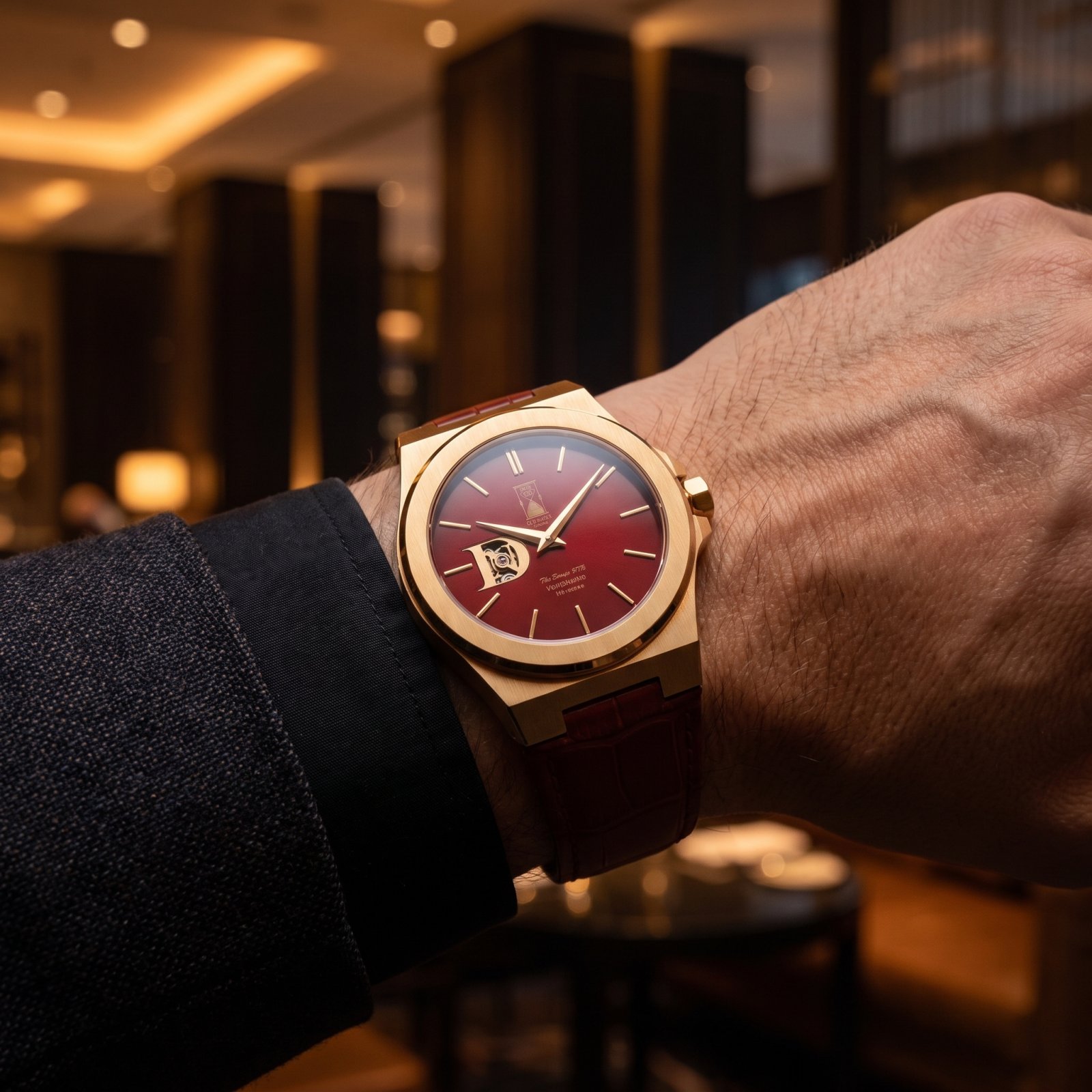
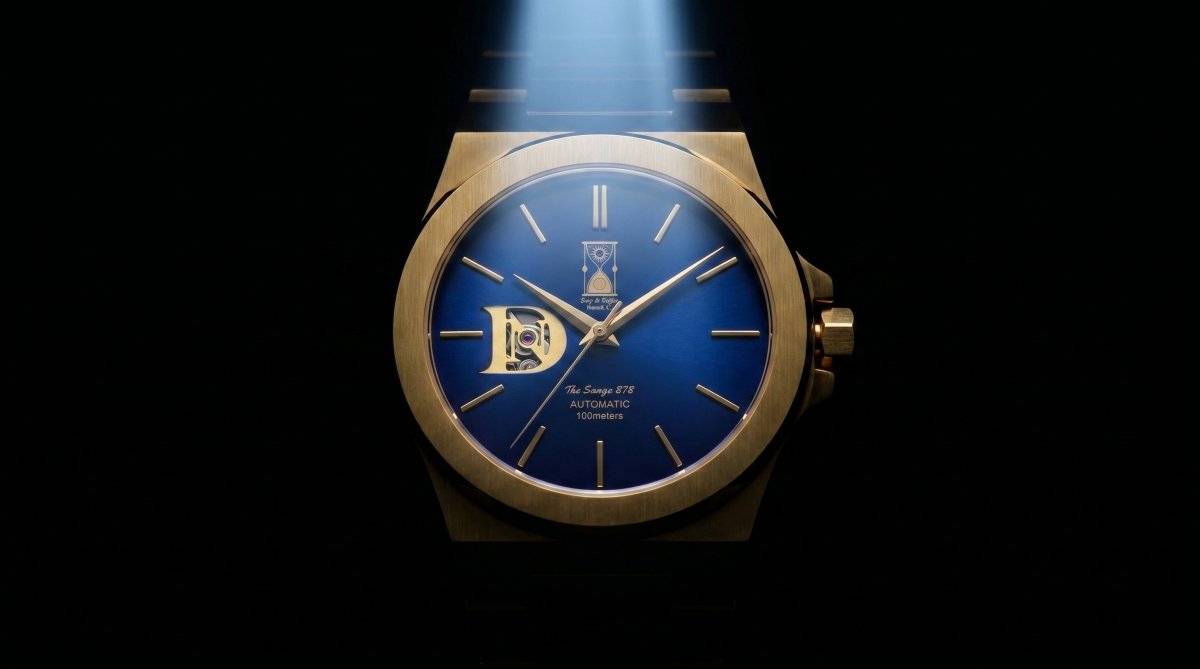
The Sango 878 Crimson Dawn
The Crimson Dawn pairs a rose gold finish with a deep red dial that reads warm in daylight and almost black in low light. It is the most expressive of the three, and the one we would point a first-time automatic buyer toward.
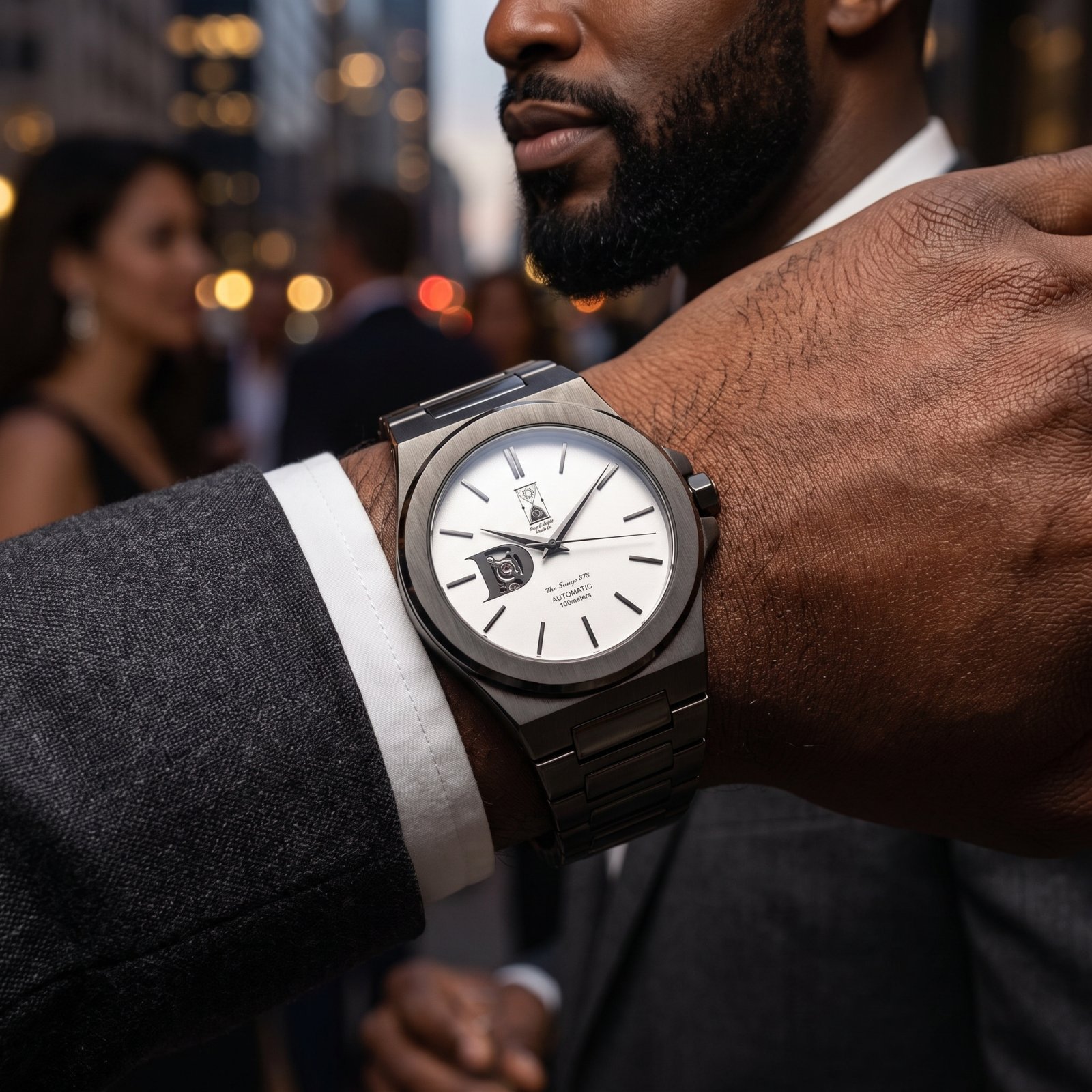
The Sango 878 Gunmetal Eclipse
The Gunmetal Eclipse swaps the warmth for a cooler silver and gunmetal palette. It is the most versatile of the lineup and the easiest to wear with a suit or a weekend jacket.
The Sango 878 Midnight Current
The Midnight Current brings a blue dial with gold accents, and it is the boldest dial of the collection. Blue and gold is a classic pairing for a reason: it reads formal without feeling stiff. Water resistance across the Sango 878 line runs to 100 meters.
Quartz Watches for Men: The Pharaoh and Queen Pharaoh Collections
Quartz watches for men and women make up the other half of our catalog, and they solve a different problem. An automatic movement rewards daily wear because your motion keeps it wound.
The Pharaoh Collection is our men's quartz line, and The Thutmos3 is the model we recommend most often for daily wear. It uses a black dial and a stainless steel bracelet, with 50 meters of water resistance and a two-year warranty.
Sapphire Crystal Watches: Why Scratch Resistance Matters Daily
Sapphire crystal watches solve the single most common complaint we hear from owners of older timepieces: a scratched, hazy dial that makes a good watch look tired. Sapphire ranks just below diamond on the hardness scale, which is why it resists the everyday scrapes that mark mineral glass.
That matters most for people whose hands take a beating. A sapphire crystal will shrug off a brush against a door frame or a desk edge.
Men's Watches Under $500: Full Pricing and Spec Breakdown
Men's watches under $500 is where most buyers actually shop. Every watch in our catalog sits below that line, so you are choosing between movement types and finishes rather than between price tiers.
Model |
Price |
Movement |
Case Material |
Crystal |
Best For |
|---|---|---|---|---|---|
The Sango 878 Crimson Dawn |
$369.00 |
Automatic (Seiko NH38) |
316L stainless steel |
Sapphire |
Statement wear, rose gold |
$369.00 |
Automatic (Seiko NH38) |
316L stainless steel |
Sapphire |
All-around daily wear |
|
The Sango 878 Midnight Current |
$369.00 |
Automatic (Seiko NH38) |
316L stainless steel |
Sapphire |
Formal and bold dials |
The Thutmos3 |
$309.00 |
Quartz |
316L stainless steel |
Sapphire |
Low-maintenance daily wear |
The Nitocris |
$289.00 |
Quartz |
316L stainless steel |
Sapphire |
Elegant everyday wear |
Two things stand out in that table. First, the gap between the entry quartz model and the flagship automatic is only $80, which is unusually narrow for this category.
Which Day and Night Watch Fits Your Life? A Buyer's Decision Guide
Choosing a day and night watch comes down to more than just movement type. Fit, comfort, legibility, and your daily routine all play a role. Here are the practical considerations, sizing, wrist comfort, and real-world use cases.
Sizing and Comfort
Case diameter is the first thing to check. The Sango 878 models measure 40mm in diameter and 12mm thick, a versatile size that suits most wrists.
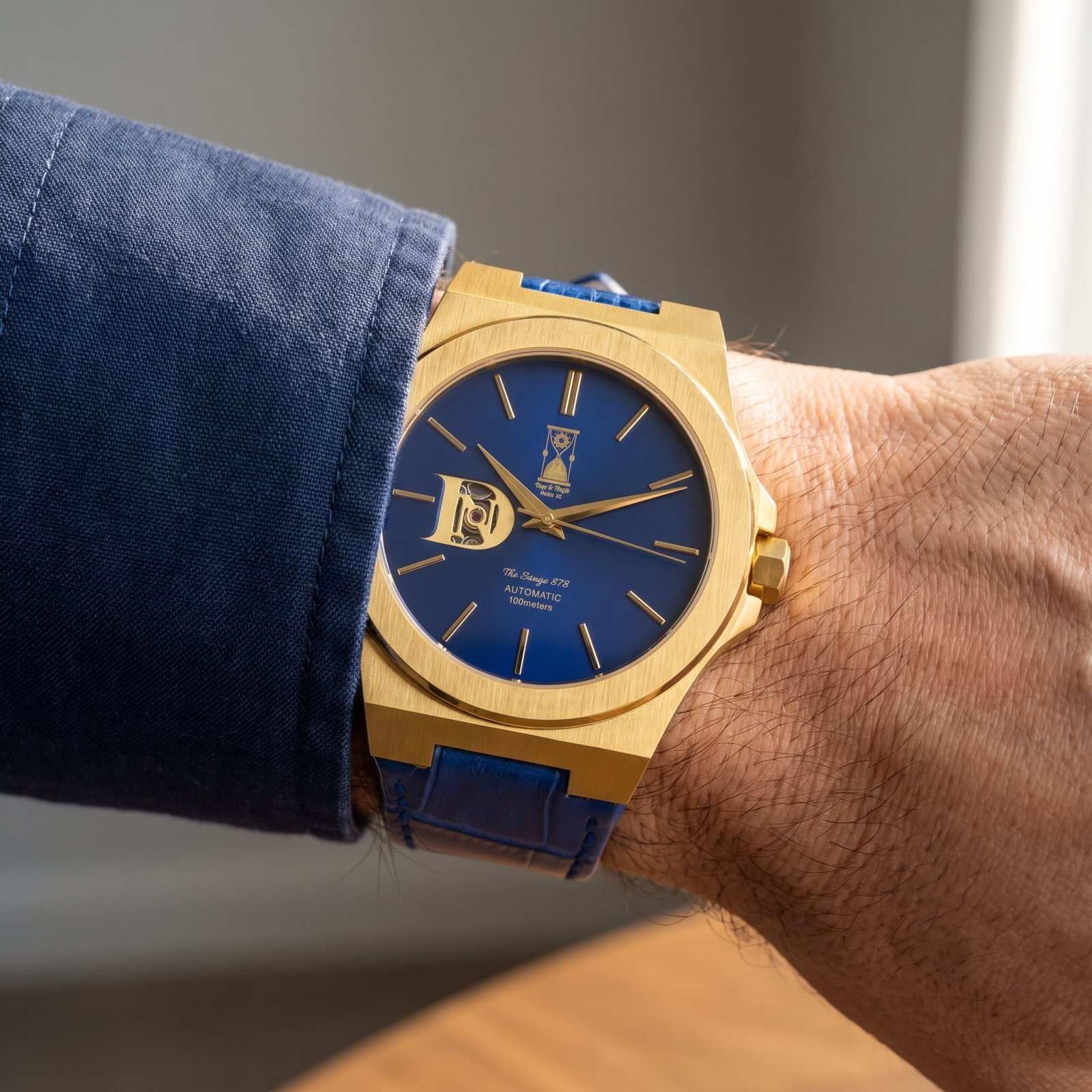
Lug-to-lug distance also matters. A long lug-to-lug can make a watch wear larger than its diameter suggests. The Sango 878 has a lug-to-lug of 48mm, which fits comfortably on wrists 6.5 inches and up. For smaller wrists, the 45mm lug-to-lug of The Thutmos3 is more accommodating.
Legibility and Ease of Reading
A day-night indicator adds visual interest, but it shouldn't compromise readability. The Sango 878 uses applied indices and hands with plenty of luminous material, so you can read the time in low light, and the day-night disc sits at 6 o'clock, unobtrusive but visible. On The Thutmos3, the dial is clean and highly legible, with large numerals and a simple date window.
Use Case Scenarios
- Daily office wear: The Gunmetal Eclipse is the most versatile, with its neutral palette and slim profile. It slips under a cuff and looks appropriate in any professional setting.
- Travel: If you frequently cross time zones, a quartz watch like The Thutmos3 is ideal, set it and go, no need to wind or reset. The day-night indicator helps you keep track of home time.
- Formal occasions: The Midnight Current with its blue dial and gold accents adds a touch of elegance without being flashy.
- Active lifestyle: With 100 meters of water resistance, the Sango 878 can handle swimming and snorkeling, though it's not a dive watch. The quartz models offer 50 meters, suitable for showering and light water activities.
Budget Considerations
All our watches sit under $500, with the quartz models starting at $289 and the automatics at $369. The $80 difference buys you a mechanical movement and a more intricate dial. If you appreciate the craftsmanship and the sweeping seconds hand, the automatic is worth it. If you prefer low maintenance and precision, the quartz models are the practical choice.
Still unsure? Start with the movement question: automatic watches for men appeal to those who like a mechanical object that runs on motion, while quartz appeals to those who want set-and-forget reliability.
Conclusion
The hardest part of buying a day and night watch is not finding one. It is deciding which version of "day and night" you actually want on your wrist. At Day & Night Watch Co., we build every piece from 316L stainless steel and sapphire crystal, back it with a two-year warranty, and price the full range between $289 and $369 so the decision stays about taste rather than budget.
Frequently Asked Questions
What is the difference between a day and night watch and a 24-hour watch?
A day and night watch typically shows a 12-hour dial with a day-night indicator, like a sun and moon display or a shaded arc that tracks the 24-hour cycle. A 24-hour watch uses a single hand that makes one full rotation per day, with the dial marked 0-24. The day and night watch keeps standard 12-hour timekeeping while adding a visual cue for AM versus PM, which is more familiar for everyday wear. The Sango 878 and The Thutmos3 use the standard 12-hour format with distinct dial designs suited to day and evening wear.
Are automatic or quartz watches better for everyday wear?
Both work for daily wear, but they suit different habits. Automatic watches for men, like The Sango 878 powered by the Seiko NH38 movement, draw energy from wrist motion and need no battery, though they stop if unworn for a couple of days and require resetting. Quartz watches for men, like The Thutmos3 and The Nitocris, run on a battery and hold accurate time for years with minimal attention. If you wear one watch daily and enjoy mechanical craftsmanship, automatic is rewarding. If you rotate watches or want grab-and-go reliability, quartz is simpler.
Is sapphire crystal worth it in a watch?
Yes, if you want a dial that stays clear over years of daily wear. Sapphire crystal watches resist scratches far better than mineral glass or acrylic, which matters for anyone who works with their hands or wears a watch continuously. The trade-off is cost, but every model in the Day & Night Watch Co. lineup uses sapphire crystal, so the clarity is standard across The Sango 878, The Pharaoh, and The Queen Pharaoh collections. For a timepiece you intend to keep and pass down, sapphire is the practical choice.
What should I look for in a men's watch under $500?
Prioritize the case material, crystal, movement, and water resistance. Look for 316L stainless steel, which resists corrosion and holds its finish, and sapphire crystal for scratch resistance. Decide between automatic and quartz based on whether you want mechanical character or battery-powered convenience. Check water resistance: 50 meters handles splashes and rain, while 100 meters, as on The Sango 878, covers swimming and heavier daily exposure. Finally, confirm the warranty. Day & Night Watch Co. offers a two-year warranty on every model, including The Nitocris at $289 and The Sango 878 at $369.
How do I choose a watch that works for both day and night?
Pick a dial and finish that read well in both bright offices and dim evening settings. High-contrast hands and markers improve legibility after dark, while a restrained case finish moves easily from work to dinner. The Sango 878 Midnight Current pairs a blue dial with gold accents for evening presence, while The Sango 878 Gunmetal Eclipse keeps a neutral silver-and-gunmetal look that suits any hour. Consider strap comfort too, since a bracelet that fits well stays wearable from morning meetings through late dinners without adjustment.


Leave a comment